
Swedish retail giant IKEA is rewriting its global expansion playbook as it deploys a massive investment of over ₹20,000 crore (approximately $2.4 billion USD) to capture the rapidly growing Indian home furnishings market. By shifting away from its traditional suburban mega-store model and standard European product designs, the company is actively tailoring its offerings to the unique cultural, spatial, and economic realities of Indian households. This strategic pivot, unfolding across major metropolitan hubs like Mumbai, Bengaluru, and Delhi-NCR, marks one of the most significant localization efforts in the multinational’s history.
Challenging the Traditional DIY Model
For decades, IKEA built its global empire on the pillars of flat-pack packaging, self-assembly (do-it-yourself), and massive out-of-town warehouse stores. When the retailer entered the Indian market, however, it quickly encountered a consumer base accustomed to personalized service, bespoke carpentry, and fully assembled furniture delivery. DIY culture is virtually non-existent in India, where affordable local labor makes custom-built furniture the historical norm.
Furthermore, the physical environment of Indian homes demanded a structural reassessment of IKEA’s product durability. High humidity levels, seasonal monsoons, and the frequent use of wet-mopping for floor cleaning meant that standard particle-board furniture risked rapid deterioration. To survive, the Swedish giant had to adapt its materials and services to withstand local climatic conditions and consumer expectations.
Adapting to Compact, Multifunctional Spaces
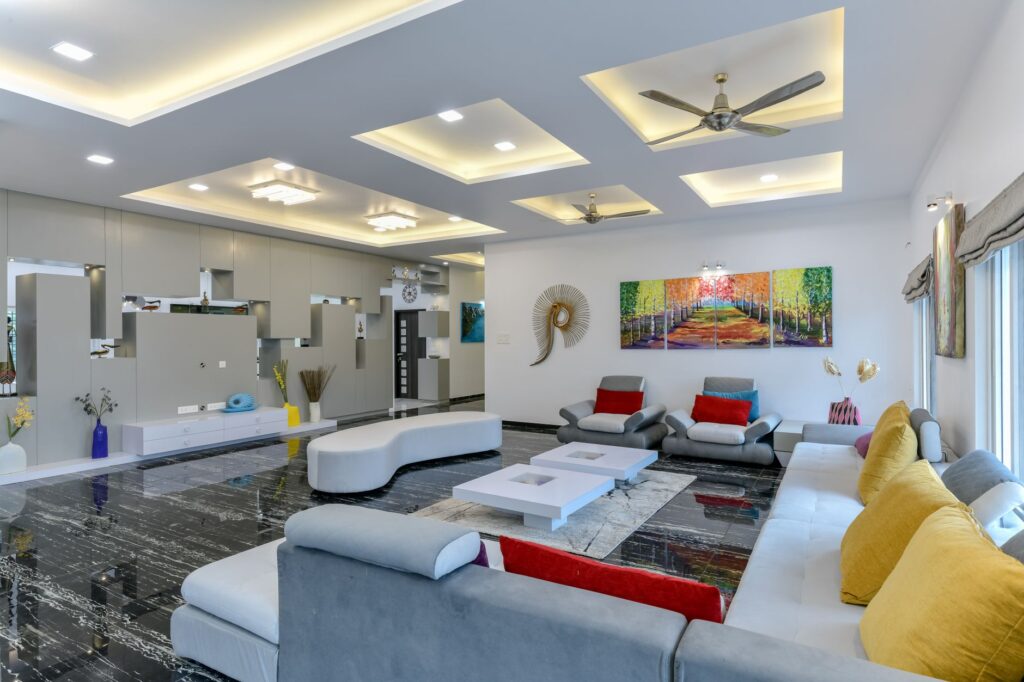
To address these unique needs, IKEA is placing the living room at the absolute center of its Indian product strategy. Unlike European homes, where bedrooms and private spaces often receive equal design priority, the Indian living room serves as the ultimate multi-generational social hub. It is a space where families dine, socialize, entertain guests, and occasionally sleep.
Consequently, the retailer has introduced customized furniture lines featuring increased durability, higher ground clearance to facilitate easy cleaning, and modular designs. Sofas with integrated storage and extendable dining tables have become top sellers in dense urban centers where apartment sizes are shrinking. IKEA has even modified its famous kitchen cabinets, lowering the height of countertops to better accommodate the average height of Indian homemakers.
The Shift to Small-Format Urban Stores
Recognizing that navigating congested Indian traffic to reach suburban warehouses can deter shoppers, IKEA is also pivoting toward small-format city stores. These smaller outlets, located within major shopping malls, act as experiential touchpoints where customers can touch products, consult with designers, and order online. This omnichannel approach ensures the brand remains accessible to time-poor urban professionals.
To maintain price competitiveness in a highly price-sensitive market, the company is aggressively scaling up its local sourcing. By partnering with local Indian manufacturers for textiles, plastics, and metalwork, IKEA aims to surpass its current 30 percent local sourcing threshold. This move not only reduces import tariff pressures but also aligns with the Indian government’s ‘Make in India’ initiative, allowing the brand to lower retail prices.
Navigating a Highly Fragmented Market
The Indian furniture market is estimated to be worth over $16 billion, but more than 80 percent of it remains unorganized, dominated by neighborhood carpenters and local independent shops. Organized players like Pepperfry, Urban Ladder, and now IKEA are competing fiercely for the remaining organized market share. According to market intelligence firm RedSeer, the organized home decor segment is projected to grow at a compound annual rate of 11% over the next five years, driven by rapid urbanization.
‘IKEA’s decision to offer dedicated assembly and delivery services in India was a crucial turning point,’ notes retail research analyst Devangshu Dutta. ‘In India, self-assembly is often perceived as a chore rather than a hobby, so providing a seamless, affordable end-to-end service was essential for mass adoption. Their massive financial commitment shows they are playing the long game.’
What to Watch Next in India’s Retail Landscape
As IKEA continues to deploy its ₹20,000 crore investment, the broader retail industry will watch how the brand balances its premium global image with local affordability. The success of this strategy could redefine urban living standards across India’s rapidly expanding middle class, forcing domestic competitors to accelerate their supply chain capabilities.
In the coming months, the key indicator of success will be IKEA’s ability to penetrate tier-2 and tier-3 cities through its e-commerce platform and localized distribution hubs. If successful, this Indian playbook—centered on high-density urban formats, localized sourcing, and cultural adaptability—is highly likely to become the new template for IKEA’s expansion into other emerging markets across the Global South.