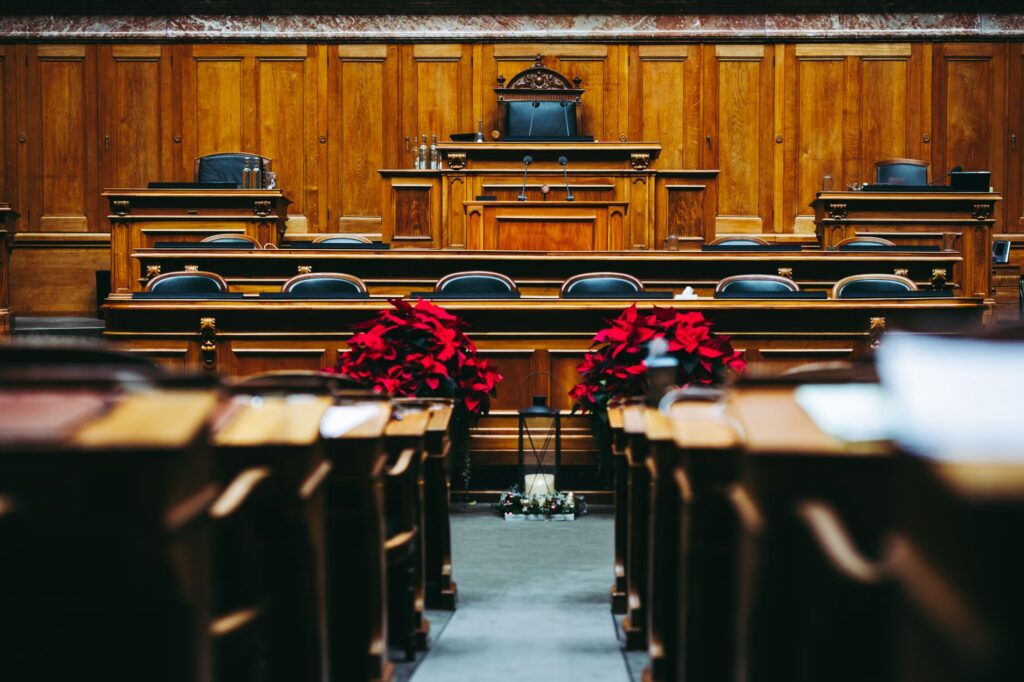

On Wednesday, newly appointed Federal Reserve Chairman Kevin Warsh pledged to lawmakers during a high-stakes congressional hearing in Washington, D.C., that the central bank will deploy all necessary tools to bring inflation back to its target, asserting that policymakers maintain “no tolerance” for persistently high prices.
A Critical Transition for Monetary Policy
The testimony comes at a critical juncture for the U.S. economy, as stubborn price pressures continue to squeeze household budgets and complicate the central bank’s monetary policy. Warsh, who recently assumed the leadership of the Fed, faced intense questioning from both sides of the aisle regarding the trajectory of borrowing costs and the health of the labor market. His appearance marked his first major congressional testimony since taking the helm of the world’s most influential financial institution.
Historically, the Federal Reserve has targeted a 2% inflation rate, utilizing interest rate hikes to cool economic activity when demand outpaces supply. With the next Federal Open Market Committee (FOMC) meeting scheduled in just two weeks, investors and economists closely watched Warsh’s debut testimony for clues about the central bank’s next move. The transition in leadership has introduced a layer of uncertainty for global markets, which are highly sensitive to changes in monetary policy.
No Clues on the Path of Interest Rates
During his prepared remarks and subsequent questioning, Chairman Warsh steadfastly refused to hint at the future path of interest rates. This strategic silence leaves market participants guessing whether the central bank will implement another rate hike, pause its tightening cycle, or consider rate cuts in the near term. Analysts suggest this deliberate ambiguity is designed to prevent premature market rallies that could loosen financial conditions.
“The Federal Open Market Committee has no tolerance for persistently elevated inflation,” Warsh told the House Financial Services Committee. He emphasized that the central bank remains data-dependent, analyzing incoming economic indicators on a meeting-by-meeting basis rather than committing to a pre-determined course of action. This stance underscores the committee’s resolve to prioritize price stability over short-term market expectations.
Financial analysts noted that Warsh’s cautious approach aligns with traditional central banking communication strategies ahead of the blackout period, which restricts policymakers from speaking publicly about monetary policy in the days leading up to an FOMC meeting. By keeping his options open, Warsh preserves maximum flexibility for the committee to react to the latest economic reports.
Expert Perspectives and Political Pressure
Market reactions to the testimony were mixed, with major stock indices fluctuating as investors digested the Chairman’s hawkish rhetoric on inflation alongside his silence on interest rates. According to CME Group’s FedWatch Tool, futures markets currently price in a highly uncertain outlook for the upcoming policy decision, reflecting the ambiguity of Warsh’s remarks. This volatility highlights the delicate balancing act the Fed must perform.
“Chairman Warsh is playing his cards close to his chest,” said Sarah Jenkins, chief market strategist at Apex Capital Markets. “By reinforcing the Fed’s commitment to fighting inflation without committing to a specific rate path, he is managing market expectations while keeping the pressure on inflationary forces. It is a classic central banking maneuver designed to maintain policy optionality.”
Some progressive lawmakers expressed concern that keeping interest rates elevated for too long could trigger a recession and lead to widespread job losses, particularly among low-income workers. Conversely, conservative committee members urged the Fed to remain steadfast, arguing that price stability is a prerequisite for long-term economic growth and that premature rate cuts could reignite inflation.
“The risk of doing too little still outweighs the risk of doing too much,” argued Dr. Marcus Vance, a senior fellow at the Institute for Economic Policy. Vance noted that historical precedents from the 1970s and 1980s show that declaring victory over inflation too early can lead to a secondary wave of price increases that are even harder to tame.
Implications for Businesses and Consumers
For consumers and businesses, the Fed’s unyielding stance on inflation suggests that borrowing costs for mortgages, credit cards, and business loans will likely remain elevated for the foreseeable future. Commercial banks are expected to maintain tight lending standards as they navigate the high-rate environment and potential economic slowdown. This environment makes capital allocation decisions much more critical for corporations.
In the corporate sector, companies must continue to grapple with high financing costs, which could curb capital expenditure and slow down hiring plans. However, if the Fed succeeds in anchoring inflation expectations, it could prevent a wage-price spiral and lay the groundwork for a more stable economic expansion. Small businesses, which are more sensitive to interest rate fluctuations, may face the greatest challenges in securing affordable credit.
What to Watch Next
All eyes now turn to the upcoming Consumer Price Index (CPI) and Producer Price Index (PPI) data releases, which will provide the final pieces of crucial economic data before the FOMC convenes. These reports, alongside the latest employment figures, will likely dictate the direction of the Fed’s policy decision, making them highly anticipated events for global financial markets.
Market participants will also closely monitor the Fed’s post-meeting statement and Chairman Warsh’s press conference in two weeks. Those events will offer the first concrete indications of how the new Chairman intends to steer the world’s most influential central bank through its next chapter and whether the committee will choose to maintain, raise, or lower the benchmark interest rate.