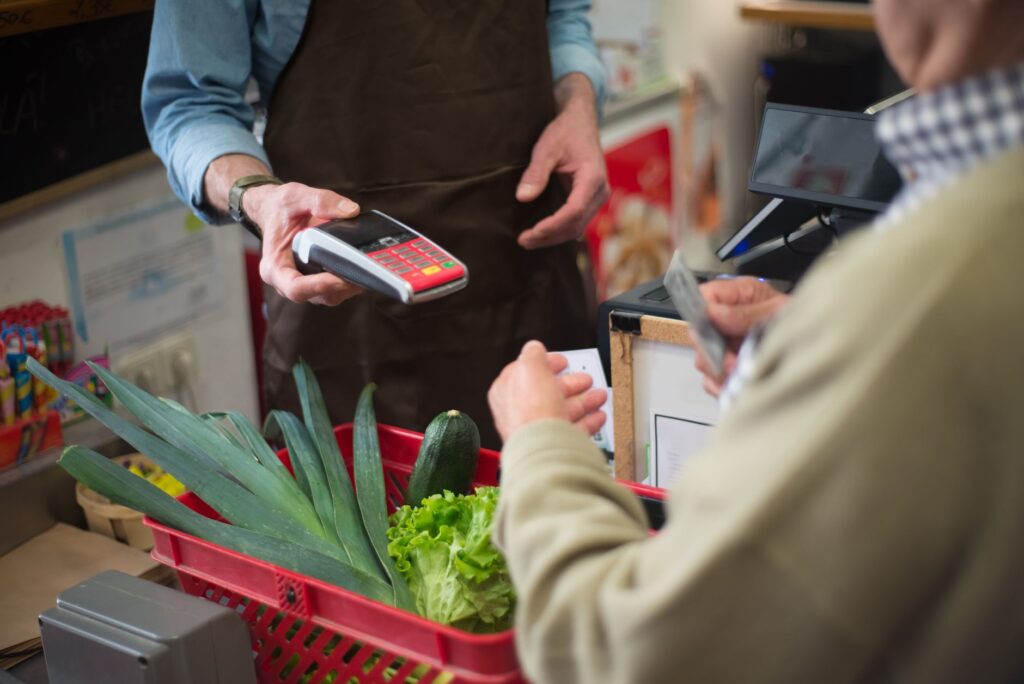

More than one in four working-age Americans are now accumulating credit card debt just to keep food on the table, as a cumulative 32% surge in food costs over the last five years pushes middle-class household budgets past their limit, according to a report released Monday by the Urban Institute.
The study highlights a worsening affordability crisis across the United States, where persistent grocery inflation is outstripping wage growth and forcing millions of families to rely on high-interest credit and installment loans to cover essential daily purchases.
Five Years of Compounding Food Price Pressures
Essential food prices have escalated relentlessly since 2019, transforming routine supermarket trips into major financial burdens. While recent dips in gasoline prices offered temporary relief to household budgets, grocery costs remain stubbornly high due to broader economic pressures.
According to recent federal figures, April’s personal consumption expenditures (PCE) price index rose 0.4% on a monthly basis and sits 3.8% higher than a year ago. These elevated baseline costs mean that even as the inflation rate moderates, retail prices remain anchored at historically high levels.
Because food represents a mandatory and non-negotiable expense, households cannot easily reduce spending in this category. Consequently, consumers are drawing down personal savings and expanding revolving credit balances to bridge the gap between flat earnings and essential living costs.
Spiking Credit Use and Deteriorating Repayment Rates
The Urban Institute findings reveal that 63.2% of working-age adults aged 18 to 64 charged grocery purchases to credit cards over the past year. More critically, an increasing percentage of these consumers are failing to keep up with the resulting debt obligations.
The share of working-age adults who failed to make even the minimum payment on credit cards used for food purchases increased from 7.1% in 2023 to 8.7% in 2025. This upward trend signals that credit cards are no longer being used merely for convenience or rewards points, but as a distress mechanism for financially strained families.
Alternative financing methods are experiencing similar distress. Roughly 8.9% of adults utilized Buy Now, Pay Later (BNPL) installment services to buy groceries, but 34.8% of those users failed to make an installment payment on time, demonstrating severe cash flow shortages among everyday shoppers.
Middle-Class Vulnerability and Macroeconomic Headwinds
Financial strain is moving well beyond lower-income demographics and taking a heavy toll on middle-class families. For households earning between 200% and 400% of the federal poverty level, the rate of missed minimum credit card payments on grocery purchases jumped from 9.3% in 2023 to 12.3% in 2025.
Macroeconomic forecasts offer little promise of immediate relief for consumers at the checkout line. The Conference Board Chief Economist Dana M. Peterson noted that lingering corporate supply chain strains, ongoing global trade friction, and geopolitical shocks will keep food prices elevated for the foreseeable future.
Peterson predicted that American consumers will continue to feel squeezed at the grocery store, noting that the Federal Reserve’s long-term 2% inflation target is unlikely to be reached until at least 2028.
Long-Term Financial Instability and What to Watch
The reliance on revolving debt to fund non-durable essential goods creates a compounding financial hazard for households. Urban Institute researchers warned that while credit access provides a temporary lifeline, reliance on debt to meet basic needs leads to severe long-term financial instability if family incomes fail to recover quickly.
With credit card interest rates remaining near historic highs, unpaid balances for everyday items will continue to incur high interest fees, further eating into future earnings. Market analysts and economic observers will be watching upcoming Consumer Price Index (CPI) releases and personal credit default rates to determine whether consumer balance sheets can withstand prolonged elevated price levels.