









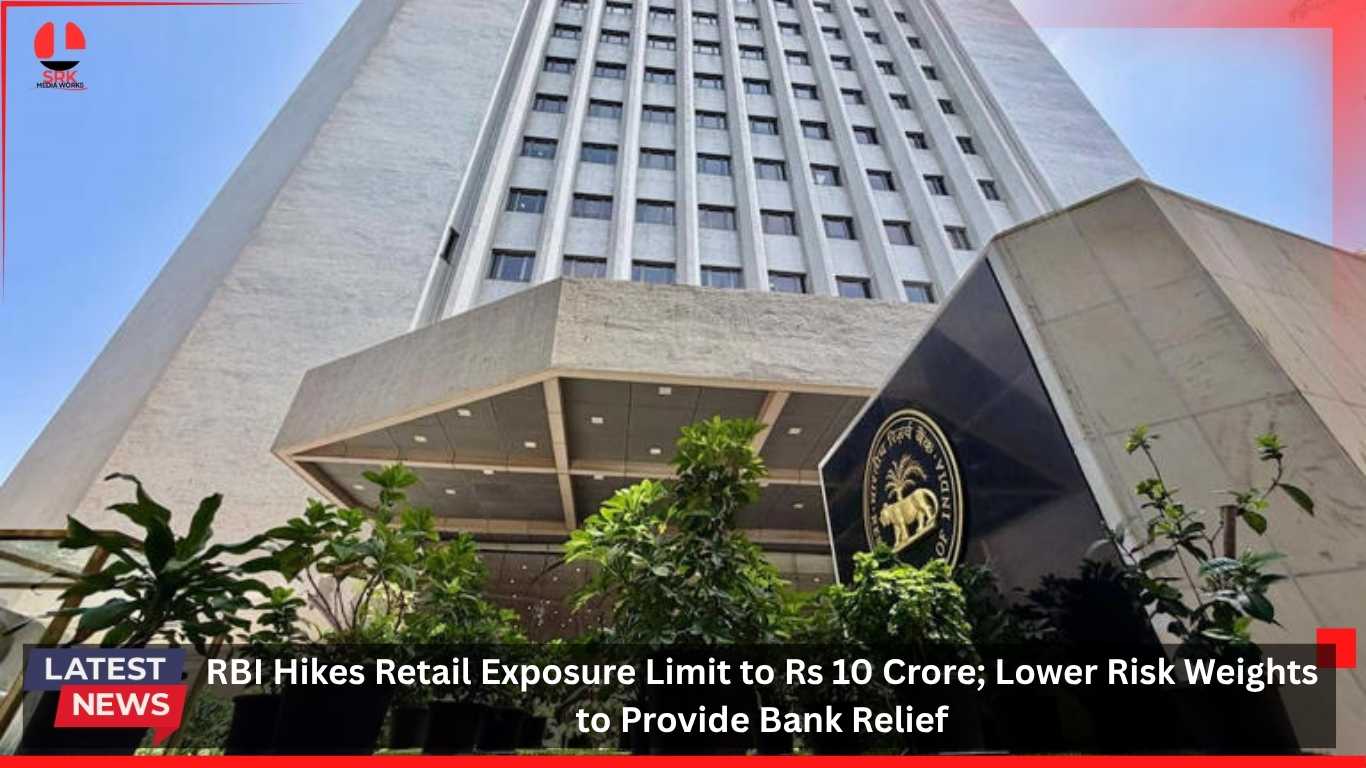
The Reserve Bank of India (RBI) has announced a significant policy change by increasing the retail exposure limit for banks from Rs 5 crore to Rs 10 crore, while simultaneously lowering risk weights. This move is expected to provide substantial relief to banks, improve credit flow, and enhance lending flexibility across sectors.
Key Highlights of RBI’s Announcement
- Retail Exposure Limit Raised: From Rs 5 crore to Rs 10 crore.
- Lower Risk Weights: Reduced capital requirements for banks on retail loans.
- Objective: Strengthen credit growth, reduce systemic risk, and support economic expansion.
- Impact: Banks gain more flexibility in lending to businesses and individuals.
Policy Snapshot
| Category | Previous Limit | Revised Limit | Impact |
|---|---|---|---|
| Retail Exposure Limit | Rs 5 crore | Rs 10 crore | Higher lending capacity |
| Risk Weights | Higher | Lower | Reduced capital burden |
| Beneficiaries | SMEs, Retail Borrowers | Wider base | Increased credit access |
This table highlights the direct changes introduced by RBI.
Why the Change Matters
The RBI’s decision comes at a time when banks are facing pressure from rising credit demand and evolving risk management requirements. By doubling the retail exposure limit, banks can now extend larger loans under the retail category, which typically carries lower risk compared to corporate lending.
Lowering risk weights reduces the capital banks must set aside, freeing resources for further lending. This is expected to boost liquidity and support sectors such as small and medium enterprises (SMEs), housing, and consumer finance.
Impact on Banks
Banks will benefit from:
- Reduced Capital Requirements: Lower risk weights mean banks can allocate less capital against retail loans.
- Enhanced Lending Flexibility: Larger loans can now be classified under retail exposure.
- Improved Profitability: More efficient capital utilization.
- Stronger Balance Sheets: Reduced stress from regulatory compliance.
Bank Relief Analysis
| Factor | Effect on Banks |
|---|---|
| Capital Adequacy | Improved ratios |
| Lending Capacity | Expanded scope |
| Profit Margins | Higher due to lower capital costs |
| Risk Management | Easier compliance |
This analysis shows how banks stand to gain from the RBI’s move.
Impact on Borrowers
Borrowers, especially SMEs and retail customers, will benefit from easier access to credit. With banks facing lower capital requirements, lending rates may become more competitive.
- SMEs: Easier access to working capital and expansion loans.
- Housing Sector: Larger home loans under retail classification.
- Consumer Finance: Boost for personal loans, auto loans, and education loans.
Comparative Global Context
India’s move aligns with global practices where regulators adjust exposure limits and risk weights to balance growth and stability.
| Country | Retail Exposure Limit | Risk Weight Policy |
|---|---|---|
| India | Rs 10 crore | Lowered for relief |
| USA | Higher thresholds | Risk-based capital |
| UK | Flexible limits | Prudential oversight |
| Singapore | Moderate limits | Sector-specific adjustments |
This comparison shows India’s proactive stance in supporting credit growth while maintaining regulatory discipline.
Future Outlook
Analysts expect the policy change to:
- Increase retail loan disbursements in FY2026.
- Strengthen SME sector growth.
- Support housing and infrastructure development.
- Improve overall banking sector profitability.
Conclusion
The RBI’s decision to hike the retail exposure limit to Rs 10 crore and lower risk weights marks a pivotal step in strengthening India’s banking sector. By easing capital requirements and expanding lending capacity, the move provides relief to banks while supporting borrowers across industries.
Disclaimer
This article is a financial news analysis created for informational purposes only. It reflects reported updates and regulatory measures announced by the Reserve Bank of India. Official policy details and future implementations are subject to confirmation by RBI and relevant authorities.