



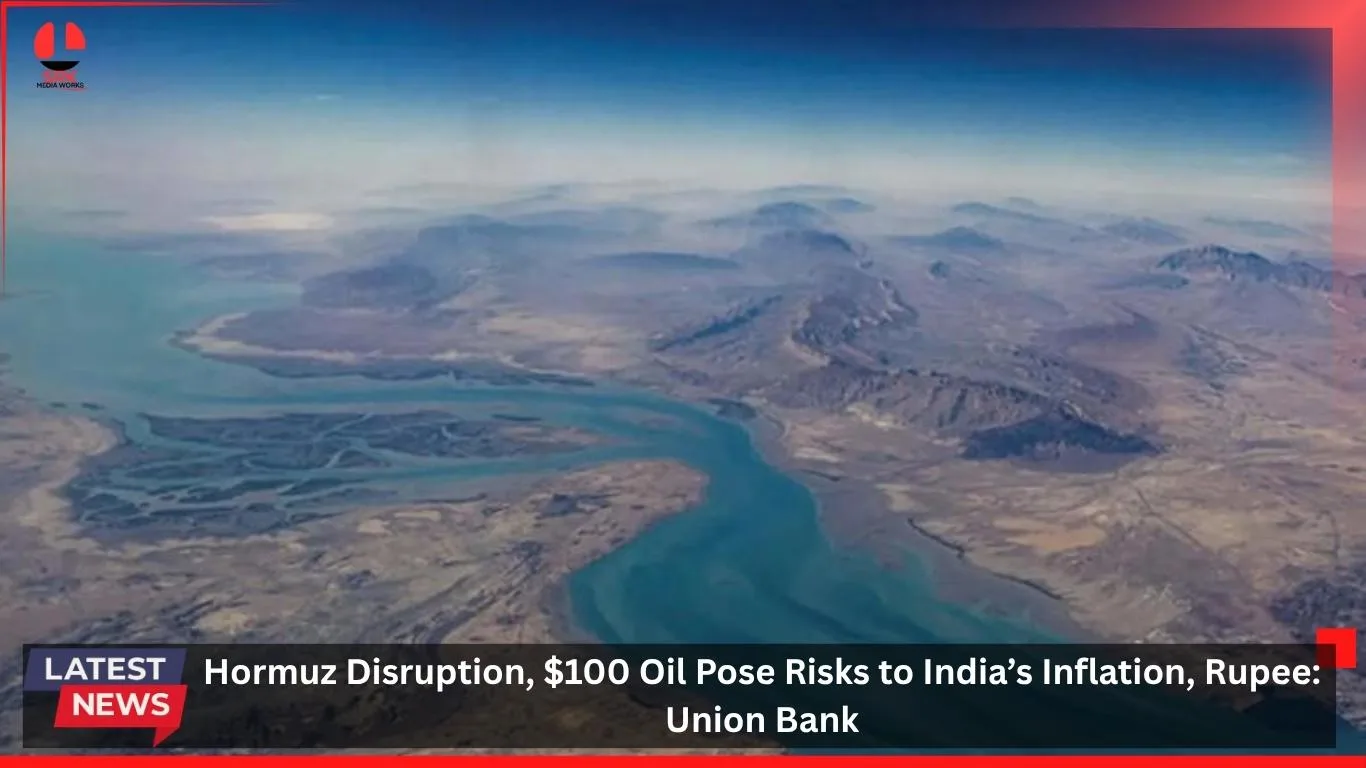
Union Bank has cautioned that escalating tensions in the Strait of Hormuz and the possibility of crude oil prices sustaining at $100 per barrel could pose significant risks to India’s inflation trajectory and the stability of the rupee. The assessment highlights the vulnerability of India’s economy to global energy shocks, given its heavy dependence on imported crude oil.
Key Concerns Raised
- Inflationary Pressures: Rising oil prices directly impact transportation, manufacturing, and food costs, potentially pushing consumer inflation higher.
- Currency Risks: A sustained $100 oil scenario could widen India’s current account deficit, exerting pressure on the rupee.
- Fiscal Challenges: Higher subsidies and import bills may strain government finances.
- Geopolitical Uncertainty: Disruption in Hormuz, a critical oil transit route, adds volatility to global energy markets.
Impact on India’s Economy
| Factor | Current Situation | Risk Under $100 Oil Scenario |
|---|---|---|
| Inflation (CPI) | 4.8% | Could rise above 6% |
| Rupee vs USD | 83.2 | Potential depreciation to 85+ |
| Current Account Deficit | 1.5% of GDP | May widen to 2.5% of GDP |
| Fiscal Deficit | 5.8% of GDP | Higher subsidies may push 6%+ |
This table illustrates how sustained high oil prices could destabilize key macroeconomic indicators.
Comparative Analysis with Past Oil Shocks
| Year | Oil Price Spike | Impact on India’s Inflation | Rupee Movement |
|---|---|---|---|
| 2008 | $147/barrel | Inflation surged above 9% | Rupee weakened sharply |
| 2013 | $110/barrel | Inflation pressures persisted | Rupee fell to record lows |
| 2022 | $120/barrel | CPI rose above 7% | Rupee touched 82/USD |
| 2026 | $100/barrel (proj.) | Risks of CPI >6% | Rupee may weaken further |
Historical data shows India’s recurring vulnerability to oil shocks, reinforcing Union Bank’s concerns.
Expert Opinions
Economists argue that India’s inflation outlook is highly sensitive to crude oil prices. While domestic supply-side measures can cushion some impact, external shocks like Hormuz disruptions are harder to manage. Currency strategists warn that the rupee could face downward pressure if oil prices remain elevated, especially if foreign capital inflows slow.
Policy Options
- Diversification of Energy Sources: Accelerating renewable energy adoption to reduce dependence on imported oil.
- Strategic Oil Reserves: Expanding reserves to buffer against supply disruptions.
- Fiscal Prudence: Managing subsidies and ensuring targeted support to vulnerable sectors.
- Currency Management: RBI interventions to stabilize the rupee if volatility spikes.
Future Outlook
Union Bank’s report suggests that India’s policymakers must prepare for a scenario where oil prices remain elevated due to geopolitical tensions. While India’s economy has shown resilience, prolonged disruptions could test inflation management and currency stability. The balance between growth and stability will be critical in FY27.
Conclusion
The warning from Union Bank underscores the risks India faces from global energy volatility. With crude oil hovering near $100 and the Strait of Hormuz facing disruptions, inflationary pressures and rupee weakness remain key concerns. Policymakers will need to adopt proactive measures to safeguard economic stability while navigating uncertain global conditions.
Disclaimer
This article is a financial and economic news analysis created for informational and educational purposes. It is based on market projections, expert opinions, and historical trends. The content does not represent official statements from banks, regulators, or government agencies. Readers are advised to consult certified financial and economic experts before making investment or policy decisions.