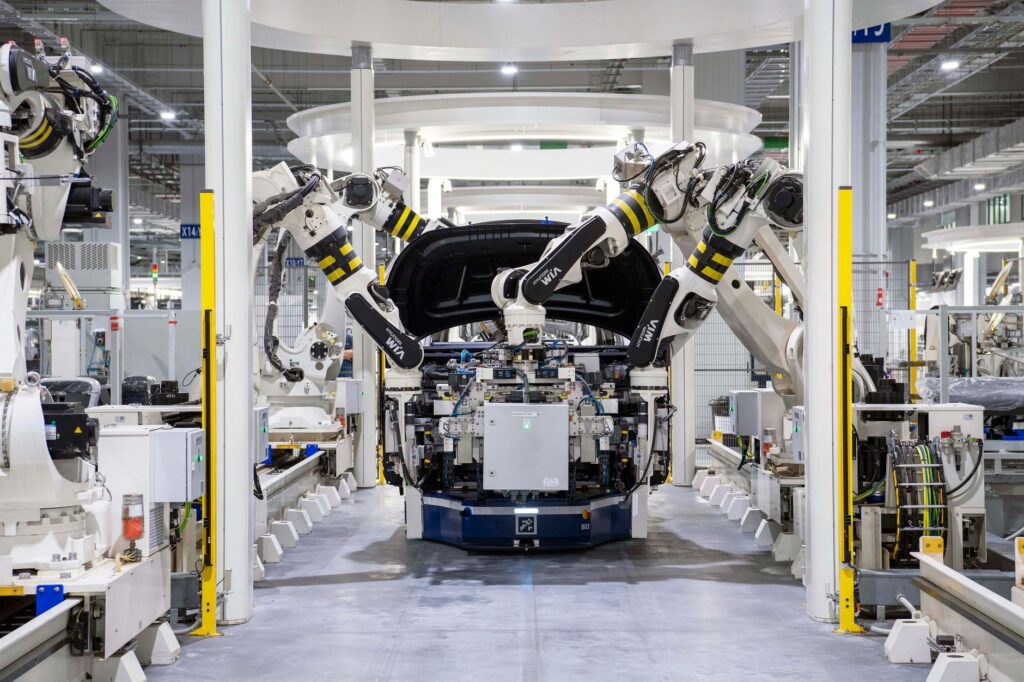

Ford Motor Company has announced a massive $2 billion overhaul of its historic Louisville Assembly Plant in Kentucky to prepare for the next generation of electric vehicles. The automotive giant plans to transition the three-million-square-foot facility from manufacturing traditional gas-powered vehicles to producing its newly revealed Fathom midsize electric truck. According to official company announcements, this extensive transformation is scheduled to culminate in active production by 2027.
The investment represents a pivotal step in Ford’s broader electrification strategy as legacy automakers face increasing pressure to modernize domestic manufacturing capabilities. By retooling one of its largest factories, the company aims to establish a highly efficient, automated production hub. This transition is designed to meet the evolving demands of the global automotive market while securing a foothold in the competitive electric truck segment.
A Strategic Blueprint for Modern Manufacturing
The Louisville overhaul is part of a larger $5 billion investment initiative planned by Ford to bolster its domestic electric vehicle infrastructure. This massive capital injection is expected to create approximately 4,000 jobs distributed between the Louisville Assembly Plant and the BlueOval Battery Park in Michigan. According to official statements, these positions will support both battery manufacturing and vehicle assembly processes.
To prepare the workforce for this technological shift, Ford has already initiated specialized training programs. Kentucky-based employees are traveling to Michigan to master the new assembly techniques and adapt to highly automated environments. This proactive training program aims to minimize downtime and ensure a smooth operational transition when the plant officially restarts production.
The Universal EV Production System
At the core of the Louisville transformation is the implementation of Ford’s new Universal EV Production System. This manufacturing framework is designed to reduce the total number of vehicle components, simplify the assembly line, and accelerate overall manufacturing speeds. Company officials report that the new system will allow the Ford Fathom to be assembled approximately 40 percent faster than any vehicle currently built at the Louisville facility.
A key element of this streamlined process is the transition to large-scale aluminum castings. Instead of welding and stamping dozens of smaller individual parts together, the plant will utilize massive single-piece castings to form the vehicle’s structural foundation. This advancement significantly reduces structural complexity and improves the overall structural integrity of the truck frame.
Furthermore, the assembly process will be divided into three distinct modular sections: the front module, the rear module, and the central battery deck. Factory operators will work on these three sections simultaneously in separate areas of the plant before bringing them together for final integration. This parallel workflow represents a fundamental departure from traditional sequential assembly lines.
Technological Upgrades and Ergonomics
The physical layout of the Louisville Assembly Plant is undergoing a comprehensive digital and mechanical upgrade. To support advanced robotics and real-time data tracking, Ford is nearly tripling the plant’s wireless infrastructure, increasing Wi-Fi access points from 385 to 1,080. According to reports, the upgraded facility will feature the highest level of final-assembly automation of any Ford factory worldwide.
In addition to automation, the new production system places a heavy emphasis on worker ergonomics and safety. Kevin Young, Ford’s advanced program manufacturing chief, stated that the new layout is foundationally different from past configurations. The system is engineered to keep assembly tasks directly in front of operators, eliminating the need to bend, stretch, or reach awkwardly to install components.
Official data highlights significant physical improvements in the assembly process, including an 84 percent reduction in the need for workers to reach over the vehicle’s fenders. Additionally, the Fathom’s redesigned wiring harness is more than 4,000 feet shorter and 22 pounds lighter than those used in Ford’s first-generation electric SUVs. This dramatic reduction in weight and length makes the harness substantially easier for factory personnel to install.
Broader Industry and Economic Impact
The $2 billion transformation of the Louisville facility reflects a broader trend among global automakers seeking to optimize their supply chains and manufacturing footprints. By utilizing modular construction and massive castings, Ford is adopting techniques pioneered by electric vehicle specialists to lower production costs. This shift is crucial for making electric vehicles more affordable and competitive for everyday consumers.
The economic impact of this investment will be felt strongly across the region, securing long-term manufacturing jobs in Kentucky. As the automotive industry shifts away from internal combustion engines, legacy manufacturing hubs risk obsolescence without significant reinvestment. Ford’s multi-billion-dollar commitment ensures that the Louisville plant remains a cornerstone of the state’s industrial economy.
What to Watch Next
Industry analysts and consumers will be watching closely as Ford begins the physical transformation of the Louisville facility over the coming months. The company remains on track to begin prototype builds using production-ready parts in the first quarter of 2027. These initial test builds will allow engineers to fine-tune the highly automated assembly line before mass production begins.
Full commercial production of the Ford Fathom midsize electric truck is expected to launch later in 2027. The success of this rollout will serve as a critical test for Ford’s Universal EV Production System and its ability to scale electric vehicle manufacturing efficiently. If successful, this production model could serve as a blueprint for the future retooling of other Ford manufacturing plants worldwide.
Disclaimer: This article is published for general news and informational purposes only. While every effort has been made to ensure accuracy, readers are advised to verify important information from official sources. The publisher shall not be responsible for any loss or inconvenience arising from reliance on the information published.