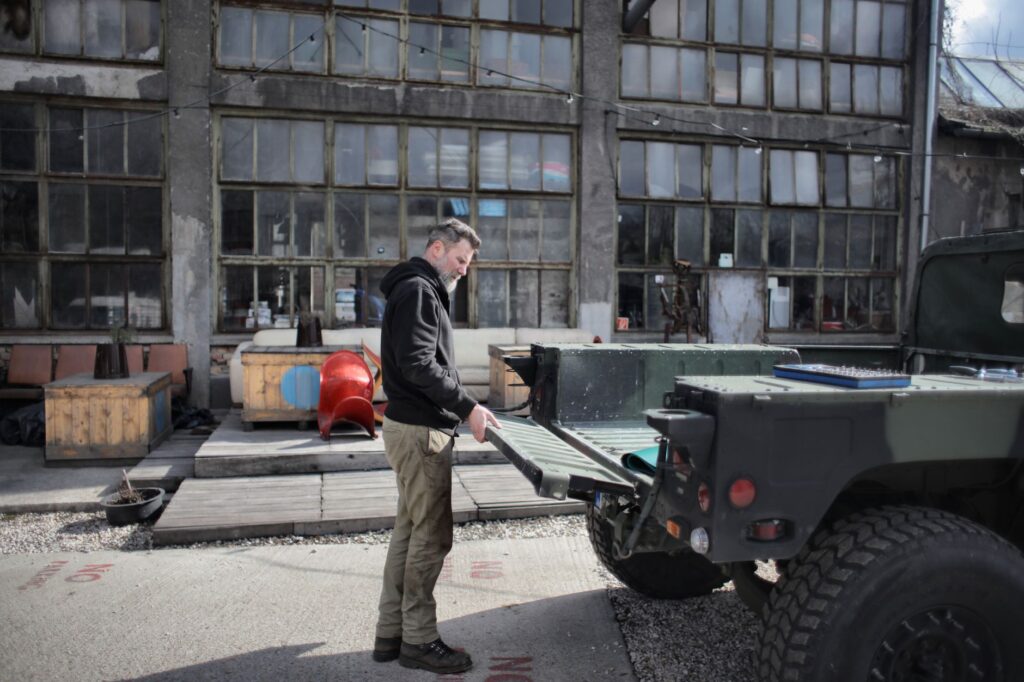

Ford Motor Co. has officially entered the race to supply the U.S. Army with its next generation of light tactical trucks, securing a government contract to build three prototype vehicles based on its heavy-duty pickup architecture.
The agreement marks the Dearborn-based automaker’s most significant military vehicle program in decades as defense officials look to leverage commercial automotive manufacturing scale.
According to reports, the project aims to help the military modernize its tactical fleet and replace aging equipment strained by recent global operational demands.
Background and Context
For decades, military procurement relied almost exclusively on specialized defense contractors to design ground vehicles from the ground up.
However, modern defense requirements and supply chain dynamics have driven the Pentagon toward commercial off-the-shelf solutions that can be rapidly deployed and serviced globally.
By utilizing proven commercial vehicle platforms, military planners aim to cut development costs and leverage existing manufacturing infrastructure.
Ford’s participation draws upon its long history of vehicle manufacturing and its widely used commercial Super Duty platform, which is already engineered for extreme payload and towing demands.
Latest Developments and Key Facts
Under the terms of the prototype contract, Ford will construct three distinct vehicle variants based on its Ford F-Series Super Duty pickup frame.
According to reports, the automaker faces direct competition from General Motors, which unveiled its own tactical vehicle prototype in 2024 and has already commenced military field testing.
In addition to the two Detroit automakers, Utah-based off-road vehicle manufacturer BC Customs LLC has also received a contract to supply prototype vehicles for military evaluation.
Ford Pro, the automaker’s dedicated commercial and fleet division, will oversee the fleet’s service infrastructure, offering telematics software and global logistics support to maximize operational uptime.
Official sources indicate that Ford has also been in ongoing discussions with several international governments in North America and Europe regarding security and military transport applications for its commercial vehicle lineup.
Industry and Economic Impact
The contract competition highlights a growing convergence between commercial automotive technology and modern defense logistics.
For the automotive industry, winning defense production contracts provides stable, long-term revenue streams that are less vulnerable to cyclical commercial market downturns.
For defense agencies, adopting commercial platforms provides access to pre-established worldwide supply chains, dramatically simplifying maintenance and spare parts procurement during international deployments.
Furthermore, integrating commercial fleet management software allows defense operators to monitor vehicle health and perform predictive maintenance in real time.
What to Watch Next
Over the coming months, the U.S. Army will conduct extensive field testing on prototypes delivered by Ford, General Motors, and BC Customs.
Evaluators will test the vehicles across extreme terrains, assessing durability, payload capabilities, and ease of field repairs under demanding tactical conditions.
Automotive analysts will monitor how effectively commercial vehicle architectures withstand rigorous military testing environments compared to custom-built alternatives.
Decisions regarding full-scale production contracts are expected following the completion of comprehensive mobility and durability evaluations.
Disclaimer: This article is published for general news and informational purposes only. While every effort has been made to ensure accuracy, readers are advised to verify important information from official sources. The publisher shall not be responsible for any loss or inconvenience arising from reliance on the information published.