









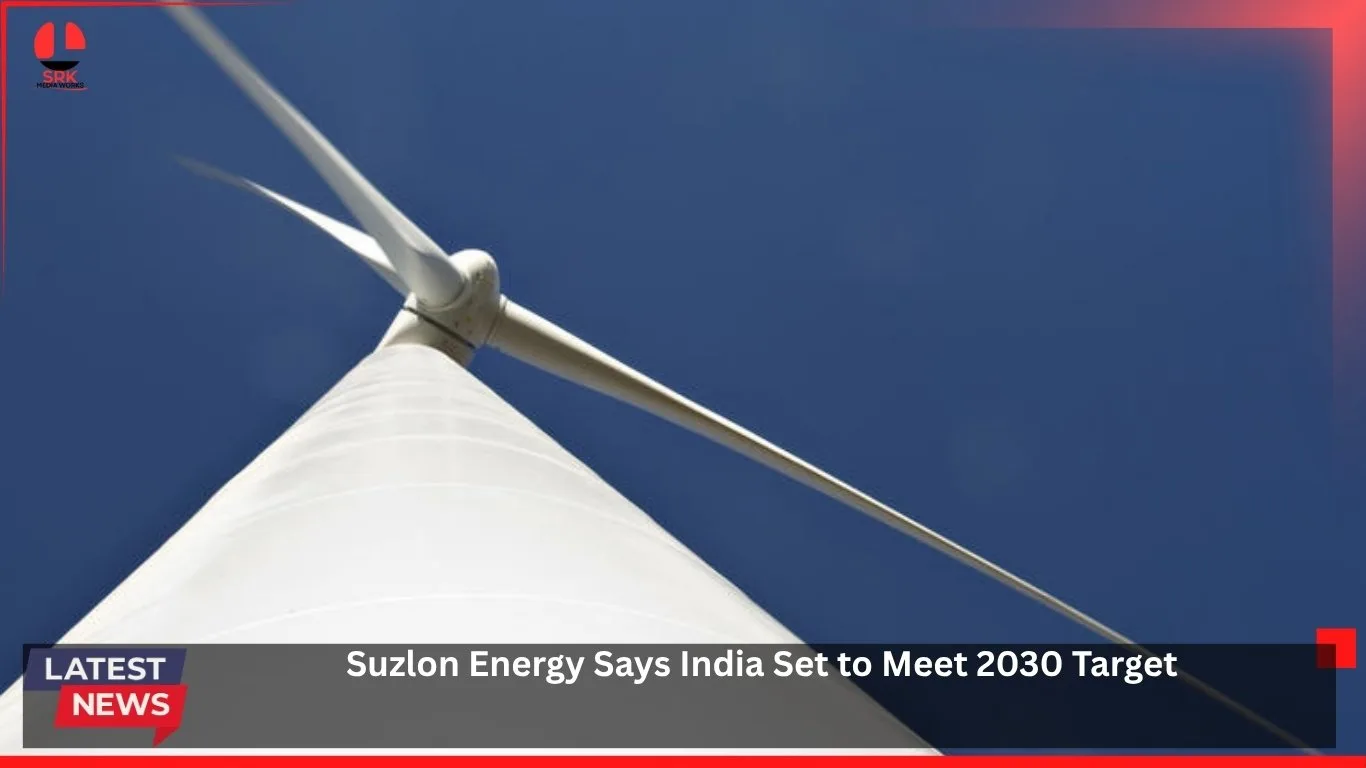
Suzlon Energy, India’s largest wind turbine manufacturer, has announced that the country is on track to achieve its 2030 renewable energy target of 100 gigawatts (GW) of wind capacity. The company highlighted accelerating installations, strong demand from state utilities, and rising corporate interest in decarbonisation as key drivers of this momentum.
Key Highlights
- Target Achievement: India is expected to reach 100 GW of wind capacity by 2030.
- Current Capacity: Over 54 GW installed, with rapid expansion underway.
- Demand Outlook: State utilities forecast demand of 107 GW in the next five years.
- Corporate Push: Industrial clients, including ArcelorMittal and GAIL, are investing in captive wind projects.
- Hybrid Strategy: Suzlon’s “Suzlon 2.0” strategy focuses on wind-solar-battery hybrid projects for firm renewable energy supply.
India’s Renewable Energy Path
India’s renewable energy roadmap is anchored in its commitment to achieve 500 GW of non-fossil fuel capacity by 2030. Wind energy is expected to contribute significantly, complementing solar power to provide round-the-clock supply.
| Year | Installed Wind Capacity (GW) | Target (GW) | Progress % |
|---|---|---|---|
| 2020 | 38 | 60 | 63% |
| 2025 | 54 | 80 | 68% |
| 2030 | 100 (projected) | 100 | 100% |
Suzlon’s Role
Suzlon Energy has been pivotal in India’s renewable journey:
- Manufacturing Base: 20 GW of turbine manufacturing capacity.
- Recent Orders:
- 248.5 MW from ArcelorMittal Nippon Steel in Gujarat.
- 100 MW from GAIL in Maharashtra.
- 306 MW partnership with Yanara in Rajasthan.
- Global Expansion: Strengthening presence in Europe and the US.
Hybrid Renewable Energy Strategy
Suzlon’s Suzlon 2.0 strategy marks a shift from pure wind to hybrid renewable solutions:
- Wind + Solar + Battery integration for firm and dispatchable renewable energy (FDRE).
- End-to-End Solutions: From project design to commissioning and lifetime services.
- Corporate Partnerships: Targeting industries seeking decarbonisation and energy security.
Economic and Environmental Impact
- Energy Security: Reduced dependence on fossil fuel imports.
- Job Creation: Expansion of manufacturing and installation projects.
- Carbon Reduction: Significant contribution to India’s net-zero 2070 target.
| Impact Area | Short-Term Effect | Long-Term Outcome |
|---|---|---|
| Energy Imports | Lower dependency | Improved security |
| Employment | Manufacturing jobs | Sustainable workforce |
| Carbon Emissions | Reduced footprint | Net-zero pathway |
Expert Opinions
Energy analysts note that India’s peak demand patterns align well with wind generation cycles, making hybrid projects viable. Economists highlight that renewable expansion will reduce fiscal strain from energy imports, while environmental experts stress the importance of scaling up storage solutions to ensure reliability.
Conclusion
Suzlon Energy’s announcement reinforces confidence that India is well-positioned to meet its 2030 wind energy target of 100 GW. With strong demand from utilities, corporate investments, and hybrid renewable strategies, India’s clean energy transition is accelerating. The achievement will not only strengthen energy security but also contribute significantly to global climate goals.
Disclaimer
This article is a journalistic analysis based on corporate statements and industry reports. It does not constitute investment or policy advice. Readers are encouraged to consult official government releases and expert opinions for comprehensive insights.


