









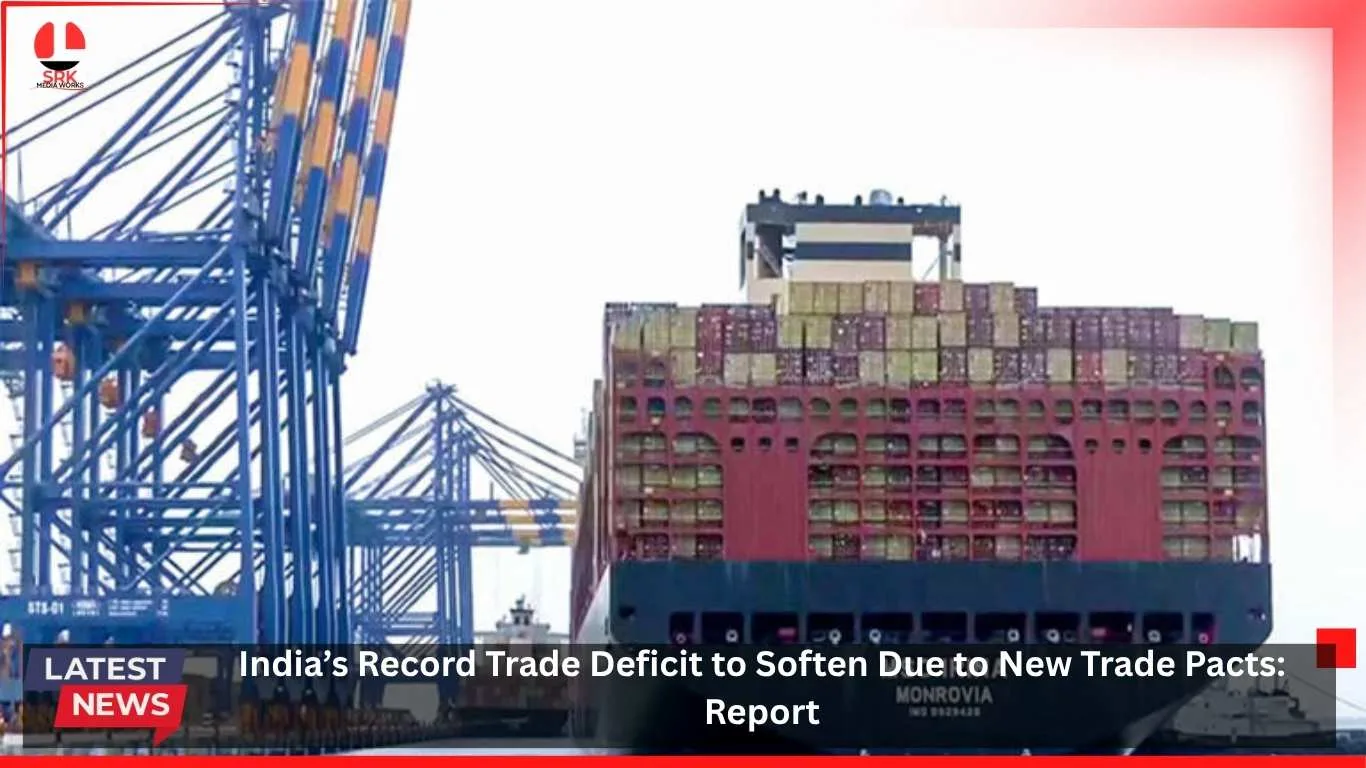
India’s record-high trade deficit, which has been a major concern for policymakers and economists, is expected to soften in the coming quarters thanks to a series of new trade agreements. According to a recent report, these pacts will help diversify India’s export markets, reduce dependency on energy imports, and strengthen the country’s fiscal outlook.
Key Highlights
- Record Trade Deficit: India’s trade deficit touched historic highs in FY25 due to elevated energy imports.
- New Trade Pacts: Agreements with ASEAN, EU, and Middle Eastern nations expected to ease deficit pressures.
- Export Diversification: Boost in sectors like IT services, pharmaceuticals, textiles, and renewable energy.
- Import Rationalisation: Focus on reducing dependency on crude oil and coal imports.
- Fiscal Impact: Softer deficit to improve fiscal balance and reduce external vulnerability.
Current Trade Deficit Scenario
India’s trade deficit widened significantly in FY25, driven by rising crude oil prices and increased demand for imported goods.
| Year | Trade Deficit (USD Billion) | Key Drivers |
|---|---|---|
| FY24 | 265 | Energy imports, electronics |
| FY25 | 310 | Crude oil surge, gold imports |
| FY26 (Est.) | 280 | New trade pacts easing deficit |
Role of New Trade Agreements
India has signed multiple trade agreements aimed at boosting exports and reducing import dependency:
- EU-India Trade Pact: Focus on pharmaceuticals, IT services, and green technology.
- ASEAN Agreement: Strengthening textile and agricultural exports.
- Middle East Partnership: Expanding renewable energy and infrastructure collaboration.
- Africa Outreach: Enhancing exports of automobiles and machinery.
| Region | Key Export Gains | Strategic Impact |
|---|---|---|
| EU | Pharma, IT, green tech | Diversification of markets |
| ASEAN | Textiles, agriculture | Boost to SMEs |
| Middle East | Renewable energy, infra | Energy security |
| Africa | Automobiles, machinery | Emerging market access |
Sectoral Impact
The trade pacts are expected to benefit multiple sectors:
- Pharmaceuticals: Expanded access to EU and African markets.
- IT Services: Increased outsourcing demand from Europe.
- Textiles: Boost from ASEAN and African partnerships.
- Renewable Energy: Collaboration with Middle East nations to reduce fossil fuel dependency.
Fiscal and Economic Outlook
Moody’s and other rating agencies have highlighted that a softer trade deficit will ease fiscal pressures. Lower import bills and higher export revenues will strengthen India’s external position.
| Indicator | FY25 Status | FY26 Projection |
|---|---|---|
| Fiscal Deficit | 5.8% of GDP | 5.4% of GDP |
| Current Account | -2.1% of GDP | -1.6% of GDP |
| Forex Reserves | $635 Billion | $650 Billion |
Expert Opinions
Economists believe that India’s proactive trade diplomacy is beginning to yield results. By diversifying export markets and reducing reliance on volatile energy imports, India is positioning itself for sustainable growth. Analysts caution, however, that global uncertainties such as geopolitical tensions and commodity price volatility could still pose risks.
Conclusion
India’s record trade deficit is expected to soften in FY26 due to new trade agreements that expand export opportunities and reduce import dependency. The pacts with the EU, ASEAN, Middle East, and Africa will not only strengthen India’s external position but also support fiscal stability. This marks a significant step toward achieving long-term economic resilience and global competitiveness.
Disclaimer
This article is a journalistic analysis based on economic reports and trade developments. It does not constitute investment or policy advice. Readers are encouraged to consult official government releases and expert opinions for comprehensive insights.