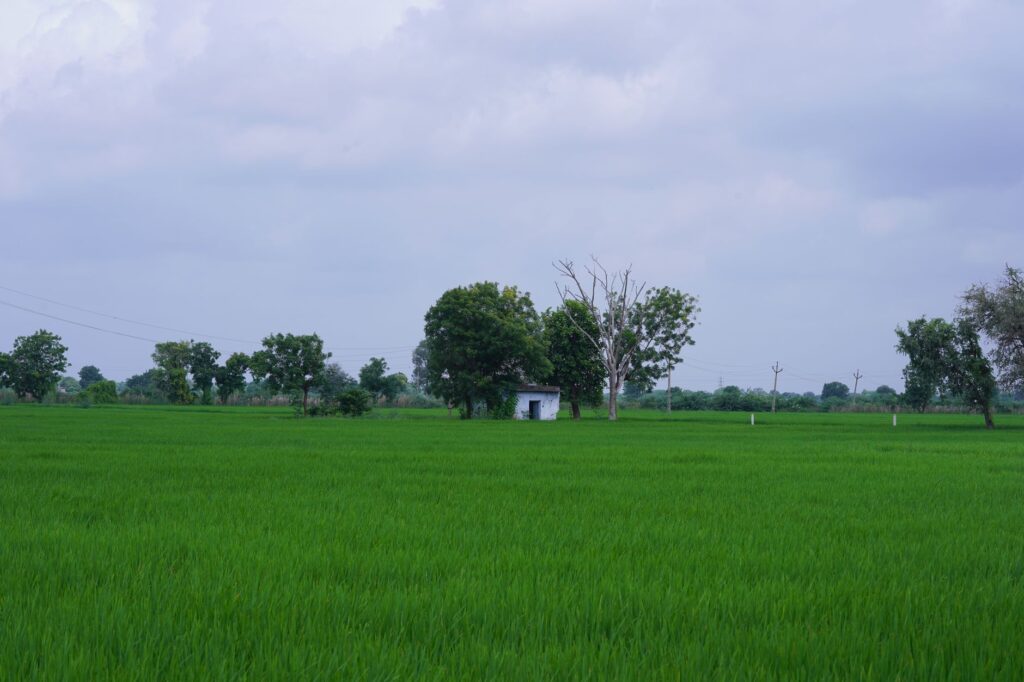

As India navigates a complex fiscal year, a significant threat looms over its economic stability: the erratic performance of the annual monsoon. Public policy consultant Mohitkumar Daga warns that a disappointing rainfall season acts as a “grey swan” event, capable of destabilizing the nation’s growth trajectory, driving food inflation, and weakening rural demand across the country in 2024.
The Critical Role of Rainfall in the Indian Economy
The Indian economy remains structurally tethered to its agricultural sector, which employs nearly half of the country’s workforce. While the contribution of agriculture to the total GDP has moderated over the decades, the monsoon continues to dictate the purchasing power of millions of rural consumers.
A shortfall in precipitation directly impacts crop yields for staples like rice, pulses, and oilseeds. When these harvests falter, the resulting supply-side constraints often lead to a rapid spike in food prices, complicating the Reserve Bank of India’s efforts to manage inflation.
Amplified Risks in a Vulnerable Economic Climate
Current economic indicators suggest that the nation is operating in a high-stakes environment where the margin for error is slim. Economists point out that the combination of global supply chain volatility and domestic inflationary pressure makes the economy particularly sensitive to climate-related shocks.
When the monsoon fails to deliver sufficient water, the rural economy faces a double-edged sword: lower agricultural output leads to diminished household income, which in turn stifles the demand for consumer goods. Companies in the fast-moving consumer goods (FMCG) sector often report significant slumps in rural volume growth during years marked by deficient rainfall.
Expert Perspectives on Fiscal Policy
Data from the India Meteorological Department (IMD) serves as a critical barometer for policymakers. Analysts suggest that if the monsoon deviates significantly from long-period averages, the government may be forced to recalibrate its fiscal priorities to provide support for rural distress programs, such as the Mahatma Gandhi National Rural Employment Guarantee Act (MGNREGA).
Financial experts note that the “grey swan” nature of these events lies in their unpredictability. Even with advanced satellite modeling, the regional distribution of rainfall can be uneven, leaving specific agrarian belts devastated while others remain unaffected.
Long-term Implications for Industry
For investors and business leaders, the monsoon serves as a leading indicator for systemic risk. A poor season often necessitates a shift in portfolio allocation toward defensive sectors, as discretionary spending in rural markets declines sharply.
The industrial sector also faces indirect consequences, as hydroelectric power generation relies on water levels in key reservoirs. If the monsoon fails to replenish these reserves, industries may experience higher utility costs or power rationing, further dampening production efficiency.
Future Trends and Monitoring
Looking ahead, stakeholders should monitor the regional distribution of rainfall rather than just the national aggregate. Increased climate variability suggests that India must accelerate investment in climate-resilient irrigation infrastructure to decouple the economy from its traditional reliance on seasonal rain.
The coming months will be critical as the government assesses tax receipts and inflation data. Market watchers will pay close attention to the RBI’s monetary policy committee meetings, where the monsoon’s impact on food inflation will likely dominate discussions regarding interest rate trajectories.