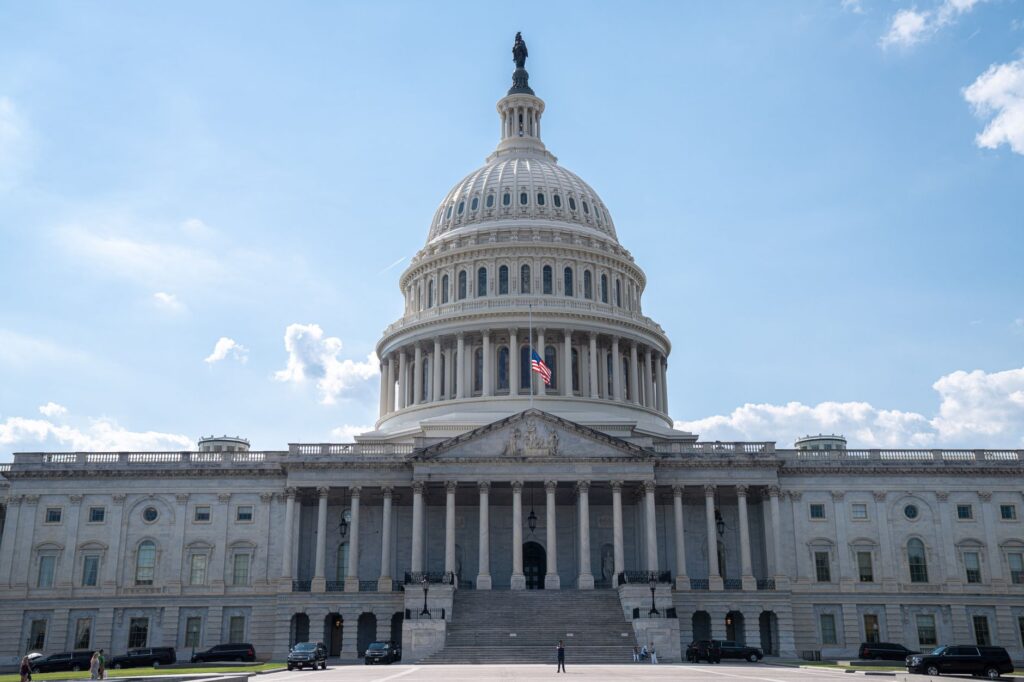

As the United States Senate prepares for a pivotal floor vote this week in Washington, D.C., bipartisan negotiations over the crypto-backed Clarity Act have stalled following an intense dispute regarding whether to prohibit sitting U.S. presidents, vice presidents, and senior executive branch officials from issuing, promoting, or selling digital assets while in office.
Navigating the Legislative Landscape of Digital Assets
The Clarity Act was originally conceived as a breakthrough piece of legislation aimed at establishing a comprehensive federal regulatory framework for the rapidly expanding digital asset market. Supported heavily by cryptocurrency firms and financial technology coalitions, the bill seeks to clearly delineate regulatory jurisdiction between the Securities and Exchange Commission (SEC) and the Commodity Futures Trading Commission (CFTC).
For years, market participants have complained that regulatory ambiguity in the United States has hampered financial innovation and forced domestic blockchain businesses to relocate operations overseas. By providing explicit definitions for digital commodities versus investment contracts, the bill promised to unlock billions in institutional capital and bring long-sought stability to a volatile sector.
However, the rapid influx of high-profile political involvement within the digital asset ecosystem has dramatically shifted the bill’s legislative momentum. The emergence of proprietary cryptocurrency ventures involving public figures and political families has injected unprecedented partisan friction into what was initially framed as a technical market structure proposal.
Ethics Safeguards Become Central Stumbling Block
Democratic lawmakers are insisting that any comprehensive crypto legislation must include stringent conflict-of-interest guardrails specifically targeting executive branch leadership. Proponents of these ethics amendments argue that digital assets present unique, opaque avenues for personal enrichment, foreign influence, and market manipulation while holding public office.
Under proposed amendments, the president, cabinet officials, and immediate family members would be required to divest from proprietary token projects and abstain from commercial cryptocurrency activities during their tenure. Lawmakers point out that without clear statutory boundaries, executive actions—such as regulatory appointments or policy announcements—could directly manipulate the spot prices of privately held digital tokens.
Conversely, Republican leadership argues that introducing specialized ethics restrictions into a market structure bill creates unnecessary friction and sets a broad, discriminatory precedent against a specific industry. Opponents contend that existing federal conflict of interest statutes, governed by the Office of Government Ethics, already adequately address financial disclosures and executive conduct.
Several Senate Republicans have voiced concern that targeting digital assets specifically, while excluding traditional financial instruments like individual stock trading or real estate holdings, unfairly vilifies emerging technology. They argue that imposing hyper-specific asset bans risks converting a pro-innovation regulatory framework into a politically motivated restriction.
Industry Stakeholders and Legal Experts Weigh In
Ethics watchdogs have strongly endorsed the proposed restrictions, emphasizing the unprecedented speed and anonymity associated with decentralized financial transactions. Data from government transparency groups indicates that traditional financial disclosures currently lag months behind real-time digital asset transactions, creating significant oversight loopholes.
Legal analysts at ethics research organizations note that modern token economics allow public figures to monetize political influence instantaneously through liquidity pools and non-fungible token (NFT) drops. These automated mechanisms were entirely absent during the drafting of traditional ethics and disclosure statutes decades ago.
Meanwhile, cryptocurrency industry associations express mounting concern that the legislative deadlock could doom the bill’s chances in the current congressional session. Industry polling indicates that over 70 percent of institutional investors view statutory legal definitions as an essential prerequisite for expanding digital asset allocations in the United States.
Data compiled by federal lobbying disclosure databases reveals that cryptocurrency political action committees have allocated over $150 million in recent election cycles to secure regulatory certainty. Industry representatives caution that if the Clarity Act fails to pass due to political disputes, capital flight to international financial hubs like London, Singapore, and Dubai will accelerate rapidly.
Market Stability and Legislative Roadmaps at Stake
The immediate fallout of this legislative impasse extends far beyond Capitol Hill, directly affecting broader digital market sentiment and corporate planning. A protracted delay in Senate passage threatens to leave digital asset exchanges and token issuers operating under continued enforcement-led oversight from federal regulatory bodies.
If Senate leaders fail to broker a bipartisan compromise on executive ethics amendments ahead of the upcoming recess, committee leaders may be forced to split the bill. This strategy would involve stripping controversial non-market provisions to preserve the core regulatory jurisdiction rules for a standalone vote.
Market observers, compliance officers, and legal scholars will be closely monitoring upcoming Senate Banking Committee procedural cloture votes scheduled over the next fortnight. The willingness of key negotiators to compromise on executive financial disclosures will ultimately determine whether the U.S. establishes a unified digital asset framework or faces another prolonged cycle of regulatory uncertainty.