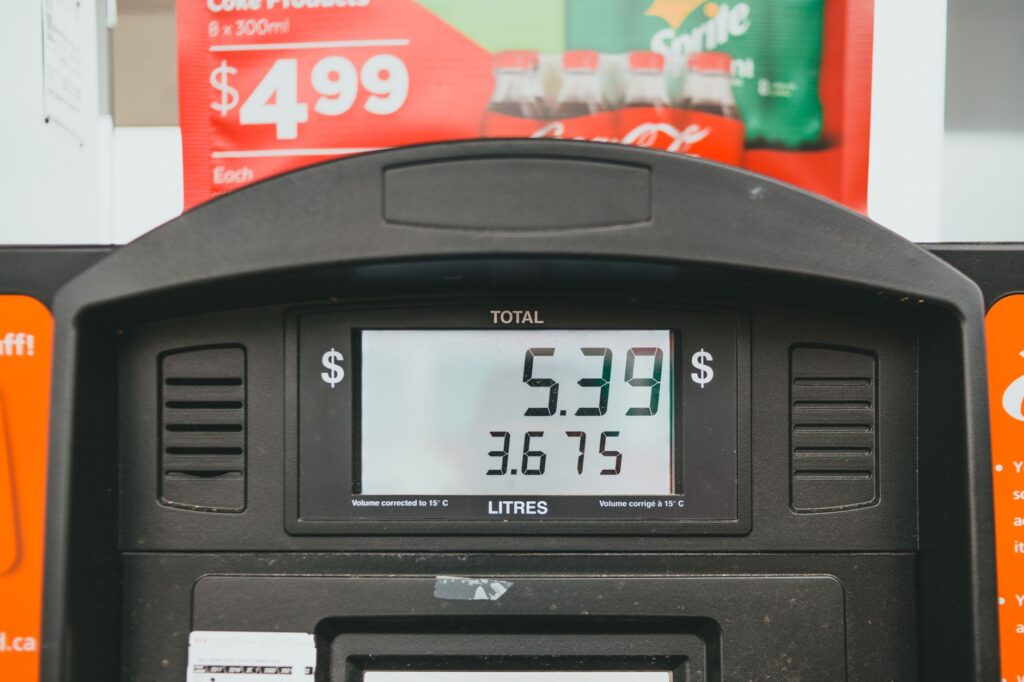

The AAA national average price for regular gasoline crossed the $4 threshold on July 21, reaching $4.019 per gallon across the United States as escalating U.S. military strikes against Iranian targets fuel deep uncertainty across global energy markets. The sudden price surge follows renewed U.S. Central Command operations aimed at neutralizing Iranian threats to commercial shipping routes in the vital Strait of Hormuz, directly linking domestic pump pressures to worsening geopolitical conflict in the Middle East.
Surging Fuel Costs and Economic Context
Data released by the American Automobile Association indicates a rapid upward trajectory in fuel expenses for American consumers. The current $4.019 average represents an increase from $4.003 recorded just twenty-four hours prior, marking a significant jump from $3.859 one week ago and $3.938 last month. Compared to the same period last year, when gas averaged $3.141 per gallon, consumers are paying nearly 28 percent more to fill their tanks.
The persistent volatility at the pump has already prompted structural financial adjustments across federal agencies. The Internal Revenue Service recently increased the optional standard mileage rate for business travel, providing partial tax relief to enterprises and workers bearing the brunt of elevated transportation overhead. Energy analysts attribute the rapid acceleration in prices directly to risk premiums priced into global crude oil futures as physical supply bottlenecks loom over international waters.
At the center of the economic friction is the Strait of Hormuz, a maritime choke point responsible for facilitating the transit of a massive share of the world’s daily petroleum supply. Military efforts to safeguard this corridor have intensified significantly over the summer, directly tying domestic economic stability to naval operations thousands of miles away.
CENTCOM Intensifies Air and Sea Campaign
In response to ongoing Iranian hostile actions, U.S. Central Command executed another extensive wave of targeted military strikes across strategic Iranian positions at 9 p.m. ET on July 20. According to official defense reports, the operations targeted military command centers, maritime strike assets, missile and drone launch installations, and coastal air defense systems designed to harass commercial maritime traffic.
Military officials emphasized that the defensive measures are crucial to preserving open international trade routes. Defense data reveals that since early May, CENTCOM forces have safely facilitated the escort and transit of approximately 900 commercial vessels carrying over 450 million barrels of crude oil through the disputed corridor. Despite active operational counter-measures, shipping companies continue to face heightened insurance costs and operational hazards.
President Donald Trump reinforced the administration’s aggressive military stance via social media statement, warning that any American casualties would trigger severe military retaliation. Highlighting directives issued to Secretary of War Pete Hegseth and Chairman of the Joint Chiefs of Staff Gen. Daniel Caine, executive leadership maintained that degrading Iran’s offensive capabilities remains the top strategic priority for U.S. forces deployed in the region.
Political Fallout and Growing Capitol Hill Rift
The convergence of rising domestic inflation and military engagement in the Middle East has triggered fierce political debate in Washington. Administration officials argue that military action will ultimately restore economic equilibrium. White House spokeswoman Taylor Rogers stated that as military operations degrade the Iranian regime’s capacity to threaten commercial vessels, oil and gas prices are expected to decline back toward pre-conflict levels while furthering domestic energy dominance goals.
However, congressional critics contend that military escalation is directly exacerbating domestic financial strain. House Minority Leader Hakeem Jeffries, D-N.Y., publicly criticized the administration’s strategy, linking elevated fuel costs directly to foreign intervention and questioning the continued leadership of defense officials overseeing the conflict.
Bipartisan pushback has also emerged from former allies. Former Representative Marjorie Taylor Greene publicly challenged the military campaign, arguing that foreign intervention created unnecessary market instability and pointing to lower historical inflation and fuel benchmarks achieved during previous non-interventionist periods. The sharp debate underscores deep divisions over the broader economic cost of maintaining military presence in key trade corridors.
Industry Implications and What to Watch Next
For logistics operations, consumer supply chains, and everyday drivers, sustained fuel prices above $4 per gallon threaten to reignite broader inflationary pressures across retail goods and commercial freight services. Businesses operating heavy transport fleets face shrinking profit margins, while household discretionary spending is increasingly diverted toward basic transportation needs.
Looking ahead, market participants and foreign policy observers are closely monitoring whether CENTCOM’s strikes successfully neutralize threats to maritime traffic or lead to prolonged regional retaliation. Energy analysts warn that any direct operational halt in the Strait of Hormuz could push crude prices significantly higher, forcing domestic gas prices well past current benchmarks.
Key indicators to track in the coming weeks include crude inventory reports, maritime insurance rates for Gulf transit, and potential congressional action regarding defense spending and energy policy. Whether fuel prices stabilize will depend heavily on the duration of military engagements and the security of international maritime trade lanes.