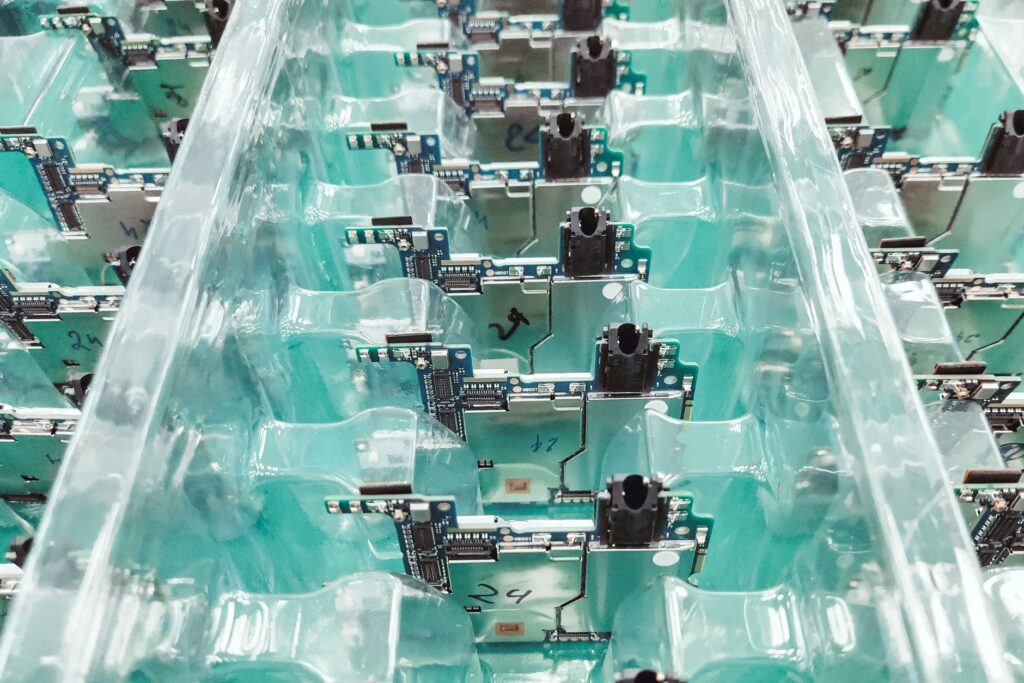

South Korea’s economy expanded by a seasonally adjusted 0.6% in the second quarter of this year, surpassing market expectations as a global boom in artificial intelligence (AI) technology fueled a massive surge in semiconductor exports. The Bank of Korea reported the preliminary gross domestic product (GDP) data on Thursday in Seoul, revealing that robust chip demand from global tech giants successfully offset sluggish domestic consumption. This unexpected resilience has reshaped the country’s economic outlook for the remainder of the year.
The Backdrop of the Chip Recovery
South Korea, home to tech behemoths Samsung Electronics and SK Hynix, serves as a critical bellwether for the global technology supply chain. The semiconductor industry had previously endured a prolonged post-pandemic downturn, characterized by oversupply, high inventory levels, and plummeting memory chip prices worldwide.
However, the rapid proliferation of generative AI applications, such as OpenAI’s ChatGPT and advanced machine learning models, has triggered an unprecedented demand for High Bandwidth Memory (HBM) chips and advanced processors. This technological shift has rapidly transformed the market from a state of supply glut to a highly competitive race for advanced silicon, positioning South Korean manufacturers at the center of the global tech supply chain.
AI Demand Propels Export Growth
According to the central bank’s detailed data, exports rose by 0.9% in the April-June period, driven primarily by semiconductors, machinery, and motor vehicles. The surge in high-value AI chips has significantly boosted trade margins, offsetting declines in other traditional manufacturing sectors.
Conversely, private consumption contracted by 0.1%, reflecting the heavy pressure of sustained high inflation and elevated borrowing costs on local households. Government spending also dipped by 0.5%, while construction investment fell by 0.3%, highlighting a stark divergence between a booming export sector and a struggling domestic economy.
The Domestic and Global Divergence
While the semiconductor boom paints a positive picture on macroeconomic charts, the average South Korean consumer is experiencing a different reality. High interest rates have pushed mortgage service costs to multi-year highs, severely curtailing discretionary spending in Seoul and other major urban centers.
Small business owners across the country report declining revenues, contrasting sharply with the record profits projected by technology conglomerates. This economic disparity could pressure the government to introduce targeted fiscal support measures, even as the central bank maintains a tight monetary grip.
Monetary Policy and Expert Consensus
The stronger-than-expected GDP print has bolstered arguments for the Bank of Korea (BOK) to maintain its restrictive monetary policy stance. Currently, the BOK’s benchmark interest rate stands at 3.50%, a multi-year high aimed at taming persistent inflationary pressures.
“The robust export performance, particularly in the AI-related semiconductor segment, provides the central bank with the breathing room to keep interest rates higher for longer to combat inflation,” said Kim Ji-won, an economist at KB Securities. Many market analysts had anticipated rate cuts later this year, but the latest growth figures suggest that monetary easing may be delayed.
“With growth exceeding potential, the BOK will likely prioritize price stability over growth support, keeping rates steady well into the winter,” noted Park Sang-hyun, an analyst at Hi Investment & Securities. This sentiment suggests that borrowing costs will remain high for consumers in the near term.
Global Tech Outlook and What to Watch Next
Moving forward, the sustainability of South Korea’s economic momentum hinges heavily on the endurance of the global AI investment wave. Industry observers are watching closely to see if the demand for AI infrastructure translates into broader enterprise adoption, which would sustain chip orders over the next fiscal year.
Any slowdown in capital expenditure by US and Chinese hyperscalers could quickly reverse the current export gains. Investors and policymakers will also closely monitor upcoming corporate earnings reports from major chipmakers to gauge if hardware demand is peaking or poised for further expansion.
Additionally, the Bank of Korea’s next monetary policy committee meeting will be highly scrutinized for signals on whether policymakers will prioritize fighting domestic inflation or supporting the fragile consumer sector. The ongoing geopolitical tensions and trade dynamics between the United States and China also remain critical variables that could disrupt the semiconductor supply chain in the coming quarters.