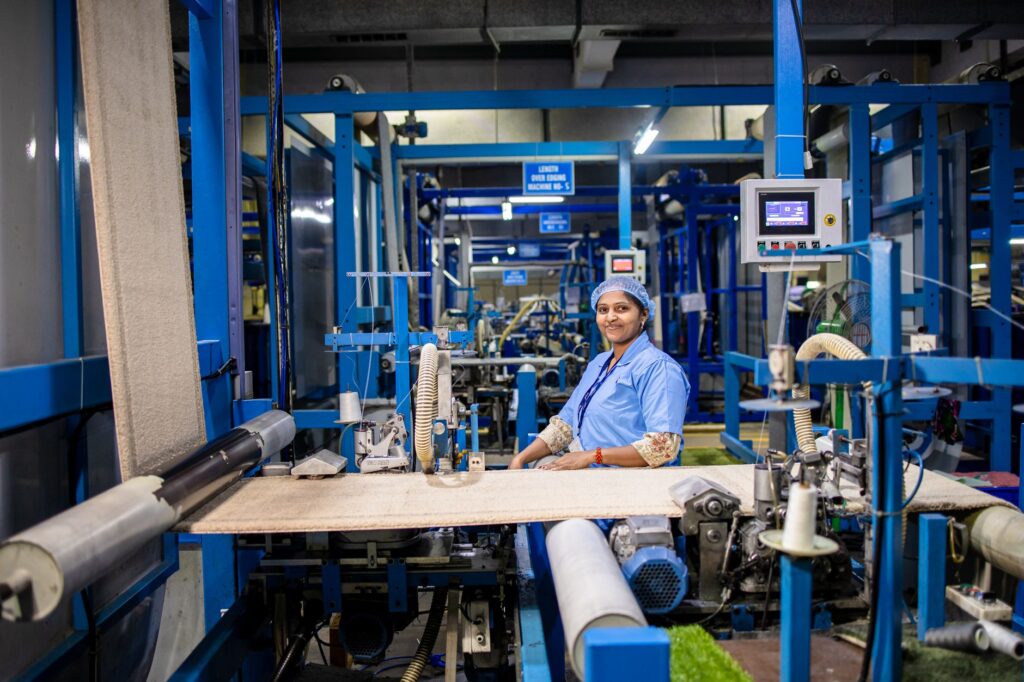

Indian industrial platform BIDSO is rolling out a proprietary franchise-owned, company-operated (FOCO) manufacturing model across major industrial hubs in India this month, aiming to consolidate and upgrade the country’s highly fragmented micro, small, and medium enterprise (MSME) sector. By combining marketplace algorithms with hands-on operational control, the company seeks to transform underutilized local workshops into highly standardized, export-ready production facilities.
The Challenge of India’s Fragmented Factories
India’s manufacturing sector remains a landscape of extremes. While global giants establish massive automated plants, a significant portion of the country’s manufacturing output originates from millions of highly fragmented MSMEs. According to data from the Ministry of Micro, Small and Medium Enterprises, these units contribute approximately 30% to India’s GDP but struggle constantly with low capacity utilization, outdated machinery, and inconsistent quality control.
Historically, global buyers have bypassed small Indian factories because of these consistency issues. Managing dozens of independent suppliers introduces massive administrative overhead and quality risks for international brands. This fragmentation has prevented India from fully capitalizing on global supply chain shifts, despite competitive labor costs and favorable government policies.
Applying Marketplace Logic to the Factory Floor
To bridge this structural gap, BIDSO—founded by a team of veteran e-commerce operators—is pioneering the FOCO model in light and heavy manufacturing. Under this framework, local factory owners retain ownership of their physical real estate and machinery, while BIDSO assumes complete operational control, introducing proprietary software, standardized raw materials, and trained supervisors to the shop floor.
This asset-light approach allows the platform to scale rapidly without the capital expenditure of building new factories from scratch. By applying the same marketplace logic that revolutionized retail, BIDSO aggregates the capacity of hundreds of small workshops, presenting them to large buyers as a single, unified, and highly reliable manufacturing entity.
Data-Driven Product Development and Standardization
The core engine of this transition is data-led product development. BIDSO utilizes predictive analytics to aggregate demand from domestic and international buyers, translating these orders into optimized production schedules for its network of franchise factories. By treating factories as modular nodes in a larger digital network, the platform can dynamically allocate resources and reduce material waste.
Furthermore, BIDSO implements strict digital guardrails. Real-time IoT sensors and mobile tracking applications monitor production speed and quality metrics at every stage of assembly. This ensures that a component produced in a small workshop in Gujarat matches the exact specifications of one produced in Tamil Nadu, achieving a level of standardization previously impossible for decentralized networks.
Expert Perspectives on the Hybrid Model
Manufacturing analysts view this hybrid model as a potential game-changer for the “Make in India” initiative, which aims to increase manufacturing’s share of national GDP to 25%. The integration of technology into traditional setups addresses the primary bottleneck of trust and scale that has historically limited small-scale industrial growth.
“The biggest hurdle for Indian MSMEs has never been a lack of entrepreneurial spirit, but rather the inability to guarantee quality at scale to global buyers,” says Rajesh Sen, an industrial supply chain analyst at Mumbai-based consultancy Inforise. “Applying e-commerce-style service level agreements (SLAs) and digital tracking to physical manufacturing solves the trust deficit that has historically held these small factories back.”
Future Outlook and Global Supply Chain Integration
The broader implications of BIDSO’s strategy stretch far beyond domestic supply chains. As multinational corporations seek to diversify their supply chains away from single-country reliance under the “China+1” strategy, a standardized, digitally integrated Indian manufacturing network becomes highly attractive to global procurement officers.
If BIDSO successfully scales its FOCO network, it could provide a scalable blueprint for other emerging economies looking to modernize their industrial bases without displacing millions of small-scale owners. The success of this model could democratize industrial growth, spreading economic benefits across tier-2 and tier-3 cities rather than concentrating wealth in a few massive industrial zones.
In the coming quarters, industry observers will closely monitor how smoothly BIDSO can manage the cultural shift required of traditional factory owners transitioning to strict, data-driven operational guidelines. Additionally, the platform’s ability to maintain quality across geographically dispersed units during peak demand cycles will determine whether this decentralized model can truly challenge centralized manufacturing giants on the global stage.