
In a high-stakes bid to secure its position in the global artificial intelligence race, India is fast-tracking the construction of massive AI data centers across its coastal technology hubs this year. Driven by federal digital sovereignty goals and backed by billions in private investment, local authorities are clearing regulatory paths for these energy-intensive megaprojects. However, environmental scientists and local community leaders warn that these developments risk depleting vital water and energy resources in coastal regions already vulnerable to climate change.
The Race for Sovereign AI Infrastructure
For years, India has lagged behind the United States and China in raw computational power, relying heavily on overseas servers to process its domestic data. To close this gap, the Indian government recently launched the IndiaAI Mission, a federal initiative allocating $1.25 billion to subsidize supercomputing infrastructure, foster domestic tech talent, and build localized cloud systems.
Tech giants and domestic conglomerates, including the Adani Group, Reliance Industries, and global operators like Equinix, are spearheading this infrastructure boom. They are converting vast tracts of coastal land into hyperscale data centers designed specifically to host and process the complex machine learning models driving modern generative AI.
Coastal cities like Chennai and Mumbai have become primary targets for these developments. These cities host critical undersea fiber-optic cable landings, which connect India’s digital network directly to global markets in Southeast Asia, Europe, and the Middle East, offering the low-latency connections that AI workloads require.
The Environmental and Resource Toll
While these facilities promise to anchor India’s digital future, they demand an unprecedented volume of local resources. AI data centers require continuous, high-voltage electricity and millions of gallons of water daily to cool high-performance graphics processing units (GPUs) that run hot under constant computational loads.
Environmental organizations point out that many of these coastal hubs already suffer from acute, climate-induced water scarcity. Chennai, for instance, nearly ran completely out of water during a historic drought in 2019, forcing municipal authorities to rely on emergency rail tankers to supply its population of over nine million people.
According to data from researchers at the University of California, Riverside, training a large language model like GPT-4 can directly consume up to 700,000 liters of clean freshwater for cooling. Diverting municipal water supplies or tapping coastal aquifers to support dozens of these facilities could jeopardize the drinking water security of local residents and farmers.
The Employment Paradox in Tech Hubs
Local governments have historically welcomed data center developers with open arms, offering tax incentives and fast-tracked land zoning in the hope of driving economic revitalization. Yet, economic analysts argue that the long-term employment benefits of these megaprojects are often vastly overstated to the public.
While the initial construction phase employs thousands of local laborers, a fully operational data center requires surprisingly few personnel. Once completed, a facility worth hundreds of millions of dollars may only employ a few dozen highly specialized network engineers, security personnel, and maintenance staff.
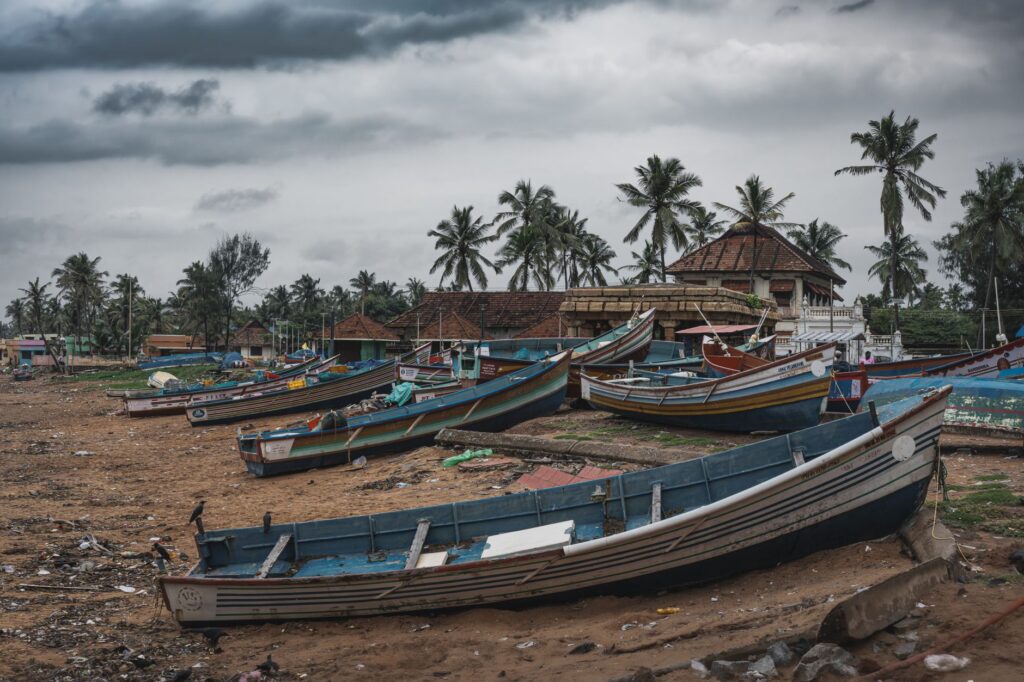
This stark disparity has fueled rising resentment among local communities, particularly coastal fishing villages. Residents argue they are bearing the environmental brunt of the digital economy—including noise pollution, localized heat island effects, and groundwater depletion—without reaping any of the long-term economic rewards.
Expert Perspectives and Grid Instability
Industry proponents argue that localizing data processing is not just a technological milestone, but a national security imperative. “Without domestic AI infrastructure, India will remain digitally colonized, exporting its raw data assets to foreign cloud providers,” says technology policy analyst Dr. Aruna Sharma.
However, energy grid experts warn that India’s power grid, which still relies on coal for over 70 percent of its electricity generation, may struggle to support the added load. The International Energy Agency (IEA) estimates that global data center electricity consumption could double by 2026, a trajectory that directly conflicts with India’s international commitments to reduce carbon emissions.
To mitigate these concerns, some developers are pledging to transition to advanced liquid cooling systems and secure power purchase agreements with solar and wind farms. However, energy analysts remain skeptical about how quickly these renewable sources can be brought online to match the rapid pace of data center construction.
What to Watch Next
As changing monsoon patterns make regional water supplies increasingly unpredictable, the tension between technological ambition and ecological preservation is expected to intensify. Observers should watch whether state governments implement stricter, legally binding water-recycling mandates for data center operators in the coming months.
Additionally, the upcoming federal regulatory framework on green energy procurement will determine if tech conglomerates can successfully decouple their massive power demands from India’s fossil-fuel-dependent grid. The success of these policies will decide whether India’s rise as an AI superpower will come at the cost of its most vulnerable coastal communities.