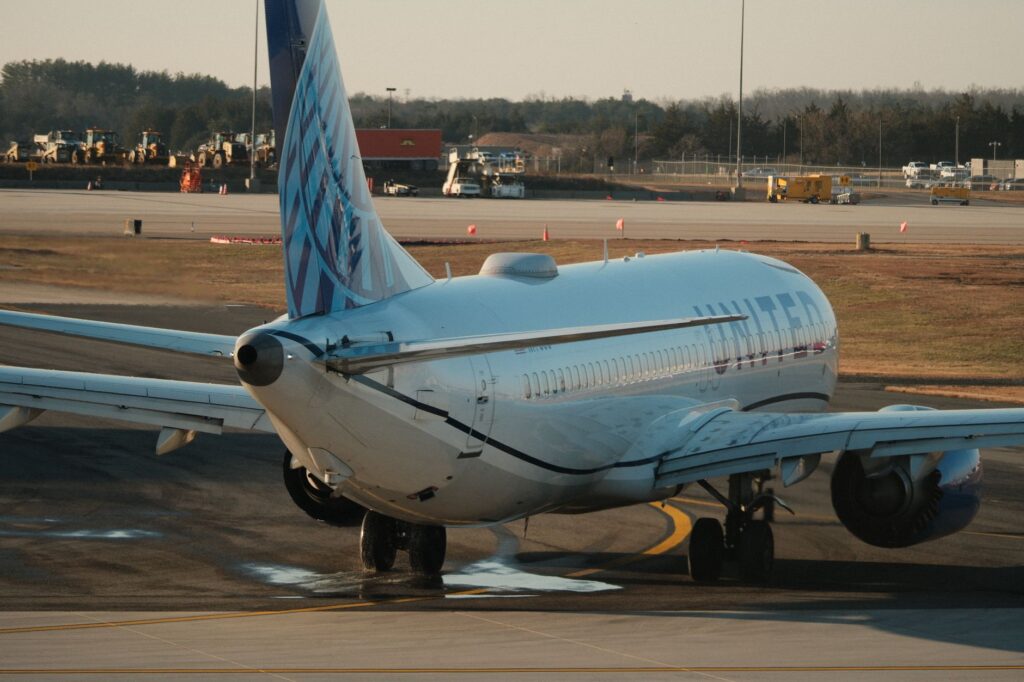

United Airlines Holdings Inc. reported third-quarter financial results on Tuesday that exceeded Wall Street expectations, driven by robust demand across all passenger categories from budget travelers to corporate executives. However, the Chicago-based carrier tempered the positive news by warning that surging jet fuel prices could add an estimated $6 billion to its annualized operating expenses, highlighting the persistent cost pressures facing the aviation industry.
Strong Demand Across All Ticket Categories
Despite macroeconomic headwinds and persistent inflation, consumer appetite for air travel remains highly resilient. United reported year-over-year revenue growth across its entire product spectrum, signaling that travelers are still willing to prioritize discretionary spending on flights.
Notably, the airline saw significant gains in premium cabin sales and corporate travel, which had previously lagged during the initial post-pandemic recovery era. Business travel bookings have steadily climbed as corporations return to in-person meetings and global conferences.
At the same time, United’s no-frills ‘Basic Economy’ tier also experienced a surge in demand, capturing cost-conscious travelers who might otherwise have chosen ultra-low-cost carriers. This multi-tiered revenue growth occurred across both domestic and international networks, demonstrating a balanced recovery that spans global markets.
The $6 Billion Fuel Headwind
The primary shadow over United’s strong operational performance is the volatile cost of jet fuel. The airline projects that rising energy prices could inflate its fuel bill by up to $6 billion on an annualized basis if current market trends persist.
Jet fuel typically represents an airline’s second-largest operating expense after labor, making rapid price spikes difficult to absorb without affecting profit margins. Global oil prices have climbed steadily in recent months, driven by production cuts from major oil-producing nations and heightened geopolitical tensions in key energy corridors.
For airlines, which operate on thin margins, these fluctuations require rapid tactical adjustments in capacity and pricing. While United has managed to remain highly profitable this quarter, sustained high fuel costs present a significant challenge for the upcoming fiscal quarters.
Industry Analysis and Financial Metrics
Financial analysts point out that United’s ability to beat earnings estimates despite rising fuel costs indicates strong underlying pricing power. According to industry data, airlines have successfully passed some of these increased costs onto consumers through higher fares, though there are limits to how much more passengers are willing to pay.
‘United is demonstrating excellent commercial execution by capturing high-yielding corporate and premium traffic,’ said senior aviation analyst Marcus Vance. ‘However, a $6 billion increase in fuel expenses is a massive hurdle that will require strict capacity discipline and potentially higher ticket prices heading into the winter travel season.’
The carrier’s international expansion has also paid off handsomely, particularly across Atlantic and Pacific routes. United has positioned itself as the largest U.S. carrier across both oceans, leveraging this international footprint to offset domestic yield pressures.
Strategic Adjustments and Fleet Modernization
To mitigate the impact of rising fuel costs, United is accelerating its fleet modernization strategy. The carrier is systematically retiring older, less efficient aircraft in favor of next-generation models like the Boeing 737 MAX and Airbus A321neo.
These newer aircraft offer up to 20% better fuel efficiency per seat, directly addressing the airline’s exposure to volatile energy markets. Additionally, United is optimizing its flight schedules and routing to maximize load factors—the percentage of available seats filled by passengers.
By ensuring planes fly closer to capacity, the airline can distribute the fixed costs of fuel across a larger pool of revenue-generating customers. This operational efficiency is crucial as the airline navigates the dual pressures of rising fuel and labor expenses.
What to Watch Next
Looking forward, the aviation industry will closely monitor whether consumer demand can withstand further fare increases if fuel prices remain elevated. The upcoming winter holiday travel season will serve as a critical test of consumer resilience and United’s ability to maintain its profitable trajectory.
Investors will also watch how United manages its capital expenditure commitments for new aircraft deliveries amid high interest rates. If fuel costs continue to escalate, the airline may face pressure to adjust its growth plans or implement further cost-cutting measures across its global network.