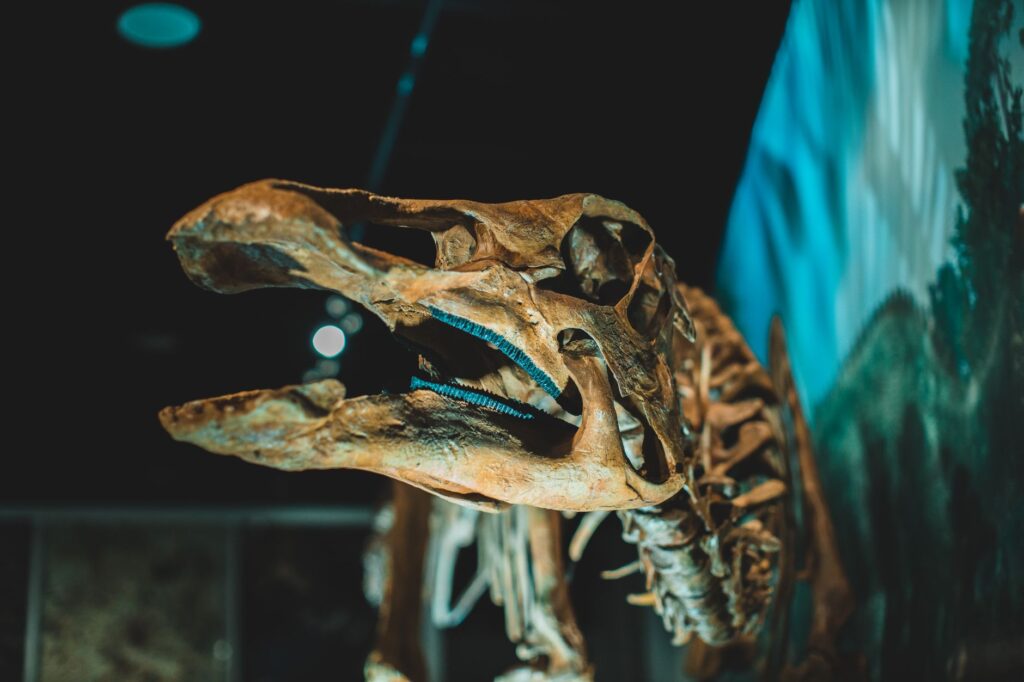

An exceptionally rare and highly complete Tyrannosaurus rex skeleton shattered global auction records this week, selling for an unprecedented $50 million at a major auction house in New York. The historic sale, finalized on Thursday, establishes the apex predator as the most expensive dinosaur fossil ever sold, reflecting an intense and growing appetite among private collectors for premium paleontological specimens.
The jaw-dropping transaction surpasses the previous record set in July 2024, when billionaire hedge fund manager Ken Griffin purchased a nearly complete Stegosaurus skeleton, nicknamed “Apex,” for $44.6 million at Sotheby’s. This latest $50 million acquisition underscores a dramatic escalation in the commercial fossil market, where prices have risen exponentially over the last decade.
A Prehistoric Icon Under the Gavel
The newly auctioned T. rex, measuring approximately 40 feet in length and standing 12 feet tall, represents one of the most complete specimens of its kind ever unearthed. Discovered in the fossil-rich Hell Creek Formation of the western United States, the skeleton boasts remarkably preserved skull elements and an nearly intact set of razor-sharp teeth. Paleontologists estimate the dinosaur lived approximately 67 million years ago during the Late Cretaceous period.
Auction officials confirmed that an intense bidding war drove the final price far beyond its initial pre-sale estimate of $35 million. The winning bid was placed via telephone by an anonymous buyer, sparking immediate speculation within the scientific and art communities regarding the fossil’s ultimate destination.
Before this sale and the 2024 Stegosaurus auction, the record for a fossil sale belonged to “Stan,” another Tyrannosaurus rex skeleton that fetched $31.8 million in 2020. Stan’s sale eventually led to its relocation to the upcoming Natural History Museum Abu Dhabi, offering some hope that privately purchased fossils may still find their way to public display.
The Evolution of the Dinosaur Market
The trend of multi-million-dollar dinosaur auctions began in earnest in 1997, when the Field Museum of Natural History in Chicago purchased “Sue,” a remarkably complete T. rex, for $8.36 million. At the time, that sale was considered an anomaly, funded largely by corporate sponsors like McDonald’s and Walt Disney Parks and Resorts.
Today, the market has shifted from public-private partnerships to purely private acquisitions. Ultra-wealthy individuals increasingly view prehistoric fossils as elite “trophy assets,” placing them in the same investment category as masterpieces by Picasso, Basquiat, or Warhol.
According to market reports, the value of high-end fossils has increased by more than 300% over the past fifteen years. This rapid appreciation has drawn venture capitalists and private equity partners into fossil-hunting ventures, transforming a field once dominated by academic expeditions into a highly lucrative industry.
The Scientific Backlash and the Commercial Divide
While auction houses celebrate these sales as milestones for the art and antiquities market, the scientific community views the trend with deep concern. Academic paleontologists argue that the commercialization of fossils removes invaluable specimens from public trust and restricts scientific research.
“When a specimen of this caliber goes to private auction, it is often lost to science forever,” says Dr. Elena Vasquez, a vertebrate paleontologist who has advocated for stricter fossil preservation laws. “If a fossil remains in a private living room, researchers cannot study its bone structure, pathologies, or evolutionary history, which damages our collective understanding of prehistoric life.”
Conversely, proponents of the commercial market argue that private auctions incentivize commercial fossil hunters to discover and excavate specimens that might otherwise erode and disappear. Auction houses also emphasize that many private buyers eventually donate their acquisitions to public institutions, though critics note there are no legal guarantees requiring them to do so.
Legal Landscapes and Global Disparities
The legal framework surrounding fossil discovery further fuels this market. In the United States, fossils found on private land belong to the landowner, who is legally permitted to sell them to the highest bidder. This policy contrasts sharply with countries like Canada, Mongolia, and Brazil, where all fossil discoveries are considered state property and cannot be legally exported or sold.
This disparity has turned the American West, particularly the Hell Creek Formation spanning Montana, Wyoming, and the Dakotas, into a global hotspot for commercial paleontology. Landowners frequently partner with professional digging teams on a profit-sharing basis, searching for the next multi-million-dollar discovery.
What to Watch Next
The record-breaking $50 million sale is expected to trigger a surge in prospecting activities across the American West, as landowners and commercial diggers rush to locate the next lucrative specimen. Observers will closely monitor whether this T. rex will be loaned to a public museum or if it will remain behind closed doors in a private estate.
Industry insiders are also watching for potential regulatory shifts, as scientific organizations pressure lawmakers to introduce tax incentives for private collectors who donate their specimens to accredited research institutions. With several other high-profile dinosaur skeletons slated for auction in the coming months, the debate over who owns Earth’s prehistoric heritage is set to intensify.