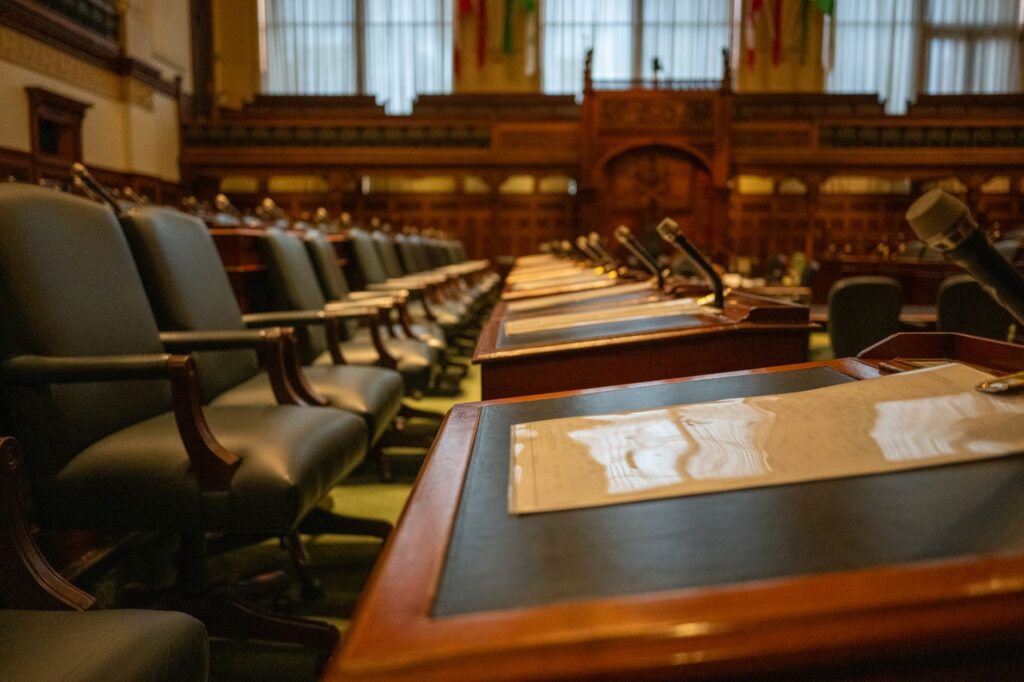

On Tuesday, Federal Reserve Chair Kevin Warsh declared to House lawmakers that the central bank has “no tolerance” for persistently elevated inflation, defending the Fed’s decision to hold interest rates steady during his first congressional testimony as head of the institution. Speaking before the House Financial Services Committee in Washington, D.C., Warsh emphasized that restoring price stability remains the central bank’s primary objective. The newly appointed chair signaled a resolute stance on monetary policy, stating that past inflation surges must become a thing of the past.
The Economic Backdrop of the Warsh Era
The high-stakes testimony follows the Federal Open Market Committee’s (FOMC) June decision to maintain the benchmark federal funds rate at a restrictive range of 3.5% to 3.75%. This policy hold came despite recent data showing consumer inflation cooled more than expected in June, aided by a drop in gasoline prices. However, policymakers remain cautious, pointing to a five-year period of cumulative inflation that has severely pressured American household budgets and business operations.
Warsh stepped into the leadership role at a critical juncture for the U.S. economy, where the central bank must navigate the tail end of an aggressive tightening cycle. The Fed’s long-run inflation target remains fixed at 2%, a metric that underlying inflation measures have consistently exceeded post-pandemic.
Staking Out Independence Amid Political Winds
A central theme of Tuesday’s hearing was the political independence of the Federal Reserve, particularly in light of potential friction with the executive branch. Lawmakers questioned Warsh on how he would respond if President Donald Trump attempted to influence interest rate decisions or sought his removal. Warsh pointed directly to legal precedent to rebuff any threats of political interference.
“The Supreme Court said that the Federal Reserve and the conduct of monetary policy is independent,” Warsh testified, referencing recent judicial affirmations of the agency’s status. He explicitly stated that he would continue to perform his duties if the president attempted to fire him. Warsh declared his ultimate goal for the institution is to eliminate politics entirely from its deliberations, ensuring decisions are guided solely by economic data.
Navigating the Fed’s Dual Mandate
Under congressional charter, the Federal Reserve must balance two primary goals: maximum employment and price stability. Warsh rejected the notion that these objectives are in conflict under current economic conditions. Instead, he argued that achieving price stability is a prerequisite for long-term labor market strength.
“The more we can do to deliver low and stable prices… the more employers are going to want to hire more workers,” Warsh explained. He assessed the current labor market as being in “pretty good balance,” suggesting that the employment side of the mandate is stable. Consequently, the Fed can focus its immediate policy tools on curbing the remaining inflationary pressures.
Artificial Intelligence: Opportunities and Infrastructure Risks
Beyond immediate monetary policy, lawmakers pressed Warsh on the macroeconomic implications of rapid artificial intelligence (AI) adoption. The Fed chief characterized AI as potentially the most significant structural change to the U.S. economy in his adult lifetime. He noted that the United States is uniquely positioned to benefit from this technological wave due to its concentration of human capital and venture investment.
However, Warsh urged caution, warning that the technology presents sophisticated operational risks. He specifically highlighted threats to the cybersecurity of the Federal Reserve itself and the broader financial sector, particularly if adversary nations exploit AI tools.
Implications for Markets and the Policy Path Ahead
For global financial markets, Warsh’s debut testimony confirms that the central bank is prepared to keep borrowing costs elevated for longer than some market participants had hoped. The firm stance on independence suggests the FOMC will resist external pressures to cut rates prematurely ahead of upcoming election cycles.
In the coming months, Wall Street will closely monitor incoming inflation prints and labor market indicators to gauge when the Fed might transition to easing. Observers will also watch how the Fed adapts its regulatory framework to address the operational and systemic risks of AI highlighted by Warsh. The ultimate test for the Warsh-led Fed will be whether it can return inflation to the 2% target without triggering a sharp economic downturn.