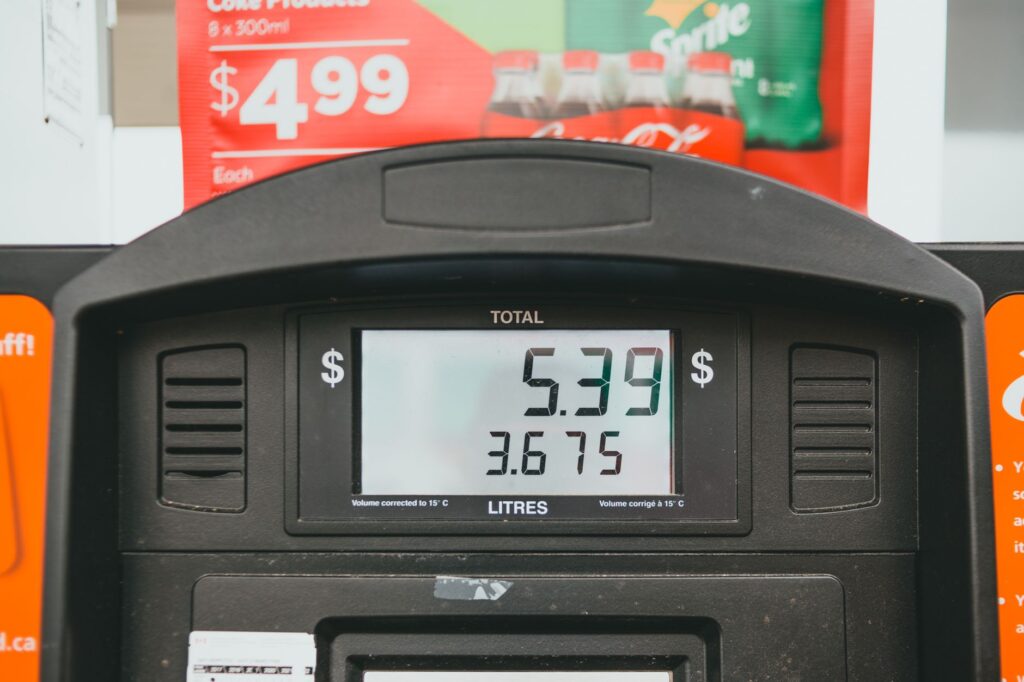

The Reserve Bank of New Zealand (RBNZ) warned financial markets on Wednesday in Wellington that domestic businesses are now passing rising operational costs directly to consumers with unprecedented speed. Triggered by recurring global fuel price shocks, this shift in corporate pricing behavior has intensified fears that the central bank will have to raise interest rates higher than previously projected to curb persistent inflation.
The Shift in Corporate Pricing Behavior
Historically, New Zealand firms absorbed short-term fluctuations in input costs to maintain market share and customer loyalty. However, consecutive years of supply chain disruptions, labor shortages, and geopolitical tensions have severely eroded corporate profit margins. The prolonged nature of these economic challenges has forced a fundamental recalculation of business strategies across the country.
RBNZ officials noted that businesses have reached a tipping point where absorbing additional expenses is no longer viable. Consequently, companies are adjusting their retail prices almost immediately in response to wholesale cost increases, particularly energy and fuel. This rapid-response pricing model represents a significant departure from pre-pandemic norms, where price adjustments were typically scheduled annually or bi-annually.
This rapid transmission of costs from wholesale to retail levels complicates the central banku2019s efforts to stabilize prices. When businesses pass on costs immediately, it short-circuits the lag time that monetary policymakers typically rely on to assess economic trends, creating a more volatile inflationary environment.
Fuel Shocks and the Inflationary Spiral
Global oil markets remain highly volatile, driven by production cuts from major oil-exporting nations and escalating tensions in key international shipping corridors. For an import-dependent nation like New Zealand, these international fluctuations translate directly to higher pump prices and elevated logistics costs almost overnight.
Transportation costs act as a multiplier across the domestic economy, affecting everything from grocery distribution to construction materials. Because fuel is a foundational input, its rising cost quickly ripples through every sector of the New Zealand market, leaving few industries untouched.
The RBNZu2019s latest economic assessments suggest that these recurring fuel shocks are no longer viewed by businesses as temporary anomalies. Instead, firms are treating high energy costs as a structural reality, adjusting their long-term pricing models to ensure survival at the expense of consumer price stability.
Expert Perspectives and Economic Data
Monetary policy experts warn that this proactive pricing strategy could trigger a classic wage-price spiral. As the cost of living rises, workers demand higher wages to preserve their real purchasing power. Businesses then offset these higher wage bills by raising retail prices further, creating a self-reinforcing inflationary loop that is notoriously difficult for central banks to break.
“We are seeing a fundamental change in inflation psychology,” said Sarah Miller, senior economist at Auckland Financial Group. “Firms are no longer waiting to see if cost increases are temporary; they are protecting their margins immediately, which makes inflation much stickier. This defensive behavior, while rational for individual businesses, aggregates into a major macroeconomic headache for the central bank.”
Recent data from Statistics New Zealand supports this view, showing that non-tradable inflationu2014which reflects domestic price pressuresu2014remains stubbornly high. The RBNZu2019s Official Cash Rate (OCR) currently stands at a highly restrictive level, but economists now predict another 25 to 50 basis point hike may be necessary if domestic spending does not cool rapidly. The risk of a policy-induced recession is growing as the bank tries to force a slowdown.
Implications for Businesses and Consumers
For consumers, the immediate consequence is a sustained squeeze on household purchasing power. With discretionary income shrinking under the weight of expensive fuel and costlier everyday goods, retail spending is expected to contract, potentially pushing the retail sector into a deeper slowdown over the winter months.
For businesses, the strategy of passing on costs offers short-term margin protection but carries long-term risks. As consumer demand weakens in response to higher prices, firms may eventually face declining sales volumes, forcing them to choose between discounting or cutting production and staffing levels.
Commercial banks are already reacting to the RBNZu2019s hawkish tone by adjusting their own lending criteria. Mortgage rates are expected to stay higher for longer, which will further dampen the national housing market and reduce consumer spending capacity over the coming quarters.
What to Watch Next
Investors and analysts will closely monitor the upcoming quarterly Consumer Price Index (CPI) release to gauge whether the RBNZ’s warnings are materializing in hard economic data. Any upward surprise in core inflation will almost certainly cement another rate hike at the next monetary policy committee meeting.
Global oil inventory reports and shipping freight indices will also serve as critical leading indicators for New Zealandu2019s domestic inflation trajectory. If global energy pressures ease, businesses may find room to halt their price increases, giving the central bank breathing room.
Finally, the labor market’s response will be pivotal; a sudden rise in unemployment could cool wage demands and break the pricing momentum, whereas continued labor tightness will likely force the RBNZ to maintain an aggressive monetary stance well into next year.