





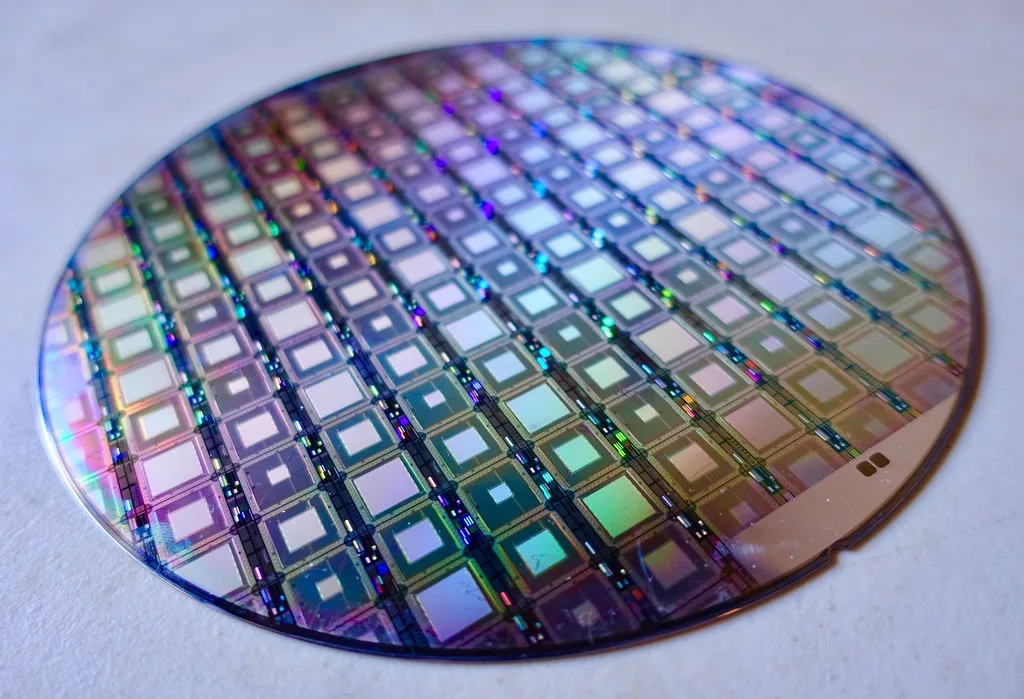
The United States government announced this week a landmark $2 billion initiative designed to accelerate the development of quantum computing, with federal agencies planning to secure equity stakes in the participating firms. This strategic move, centered on bolstering national technological sovereignty, will see major industry players like IBM receive significant capital injections, including a $1 billion allocation for the tech giant.
The Strategic Shift Toward Quantum Sovereignty
Quantum computing represents a paradigm shift from classical computing, utilizing quantum bits, or qubits, to solve complex calculations that are currently impossible for even the most advanced supercomputers. The U.S. government views this technology as a critical frontier for national security, drug discovery, and financial modeling.
Historically, quantum research was primarily funded through academic grants and venture capital. This new model of direct federal equity investment signifies a departure from traditional research-only funding, reflecting a heightened sense of urgency regarding global competition in emerging technologies.
Market Reaction and Industry Impact
The announcement triggered immediate market volatility, with shares of IBM and other involved technology firms experiencing substantial gains following the news. Investors interpreted the government’s willingness to take equity stakes as a strong signal of long-term federal commitment to the quantum sector.
Industry analysts suggest that this infusion of capital will likely resolve the ‘valley of death’—a phase in technology development where promising research often fails to reach commercial viability due to a lack of sustained funding. By de-risking the development phase, the government aims to catalyze private sector innovation.
Technical Challenges and Expert Perspective
Despite the optimism, quantum computing faces significant engineering hurdles, particularly regarding error correction and system stability. Experts note that current systems are highly susceptible to environmental noise, which can cause ‘decoherence’ and lead to calculation errors.
‘The transition from theoretical quantum advantage to practical utility requires massive scale and hardware reliability,’ says Dr. Elena Vance, a senior researcher in quantum information science. ‘Federal investment serves as the necessary bridge to move these systems out of the lab and into industrial applications.’
Global Competition and Future Implications
The United States is not alone in its pursuit of quantum dominance; international competitors, particularly China and the European Union, have also pledged billions in state-backed funding for quantum infrastructure. The U.S. strategy of taking equity stakes is designed to ensure that taxpayers see a return on investment while maintaining a permanent seat at the table of technological governance.
For the broader technology industry, this move sets a precedent for how the government may interact with other high-stakes sectors like artificial intelligence and fusion energy. As these firms integrate federal capital into their balance sheets, the focus will shift toward meeting specific milestones in qubit count and error-correction rates.
Observers should watch for the specific terms of the equity agreements, which will likely dictate how much control the government exerts over intellectual property and export restrictions. The success of this program will be measured by the speed at which these companies move from experimental prototypes to commercially scalable quantum processors over the next five years.