





Rising Tensions in the Global Energy Market
The United States government has intensified its diplomatic pressure on Beijing this week, warning Chinese independent refineries to cease the purchase of Iranian crude oil in violation of existing U.S. sanctions. This move marks a significant escalation in the ongoing standoff between Washington and Tehran, as officials seek to cut off the primary revenue stream funding Iran’s regional activities.
Reports indicate that Chinese authorities have instructed these smaller, independent refineries—often referred to as ‘teapots’—to disregard the U.S. warnings. This defiance highlights a growing geopolitical divide where energy security and domestic economic interests are increasingly clashing with international sanctions regimes.
The Context of Sanction Enforcement
The U.S. reimposed sweeping sanctions on Iran’s oil sector in 2018 after withdrawing from the Joint Comprehensive Plan of Action (JCPOA). These measures are designed to reduce Iran’s oil exports to zero, thereby pressuring the regime to return to the negotiating table regarding its nuclear program.
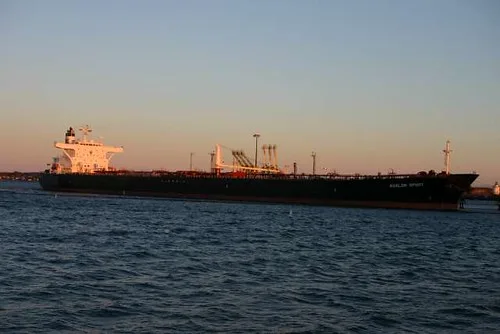
Despite these efforts, Iran has successfully circumvented many restrictions by utilizing a ‘shadow fleet’ of tankers and obscuring the origin of its oil through ship-to-ship transfers. China remains the largest importer of Iranian crude, providing a critical economic lifeline that keeps the Iranian economy afloat despite Western isolation.
Strategic Motivations and Economic Drivers
For independent Chinese refineries, Iranian crude offers a highly competitive price point compared to Brent or WTI benchmarks. These refineries operate with thin margins and rely on discounted feedstocks to remain profitable in a volatile global market.
From Beijing’s perspective, these energy imports are a matter of national energy security. By diversifying suppliers and securing lower-cost energy, China reduces its vulnerability to geopolitical shocks in the Middle East and the influence of U.S.-led maritime security initiatives.
Expert Perspectives on Compliance
Energy analysts note that the U.S. faces a difficult balancing act. ‘Sanctioning major Chinese state-owned entities would risk a massive economic rupture between the world’s two largest economies,’ says Sarah Miller, a senior analyst at Energy Intelligence. ‘The U.S. approach has therefore been to target smaller intermediaries, but the sheer volume of Iranian oil moving into China makes this a game of whack-a-mole.’
According to data from Kpler, a commodity intelligence firm, Iran’s oil exports have consistently remained above one million barrels per day throughout 2023 and early 2024, with the vast majority flowing into Chinese ports. These figures demonstrate the limitations of current enforcement mechanisms when faced with a major importer willing to ignore Washington’s mandates.
Industry and Global Implications
For global oil markets, this ongoing friction creates a layer of persistent uncertainty. If the U.S. decides to escalate by imposing secondary sanctions on Chinese financial institutions involved in these transactions, the resulting volatility could disrupt global supply chains and increase energy prices for consumers worldwide.
Furthermore, the trend indicates a hardening of the ‘no-limits’ partnership between Beijing and Tehran. As both nations face varying levels of U.S. pressure, their economic cooperation is likely to deepen, potentially leading to the development of alternative financial payment systems that bypass the U.S. dollar-denominated SWIFT network.
Moving forward, market participants should watch for potential U.S. executive orders targeting specific shipping companies or insurance providers that facilitate these illicit transfers. Additionally, any shift in U.S. foreign policy following the next election cycle could alter the intensity of these enforcement efforts, leaving the energy sector in a state of cautious observation.