





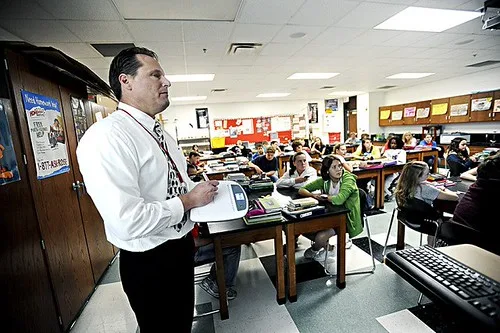
In a landmark collaboration announced this year, OpenAI and Khan Academy have successfully integrated advanced artificial intelligence into the modern classroom to create Khanmigo, an AI-powered tutor designed to assist students and teachers globally. By leveraging OpenAI’s GPT-4 technology, the partnership aims to transform personalized learning, allowing students to navigate complex academic subjects through Socratic dialogue rather than receiving direct answers.
The Evolution of Digital Education
For over a decade, Khan Academy has served as a cornerstone of digital education, providing free, high-quality video lessons to millions of students. However, the limitation of static video content has always been the lack of real-time, personalized feedback for the individual learner.
With the advent of Large Language Models (LLMs), the educational landscape shifted significantly. Recognizing the potential for AI to act as a scalable personal tutor, Sal Khan, founder of Khan Academy, initiated a partnership with OpenAI to fine-tune generative models specifically for pedagogical safety and instructional effectiveness.
Bridging the Gap Between AI and Pedagogy
The core philosophy behind Khanmigo is the Socratic method, where the AI prompts students with guiding questions to help them uncover solutions independently. This approach differentiates the tool from traditional calculators or search engines that merely provide final answers.
Engineers from both organizations spent months refining the model to ensure it adheres to safety guidelines. This includes guardrails that prevent the AI from generating inappropriate content or providing shortcuts that undermine the learning process, addressing primary concerns voiced by educators regarding AI in schools.
Expert Perspectives and Industry Data
Industry analysts note that this partnership represents a shift toward “human-in-the-loop” AI integration. According to a report by the Brookings Institution, the efficacy of AI in education depends heavily on how well tools are integrated into existing curricula rather than replacing the teacher.
Early testing suggests that students using AI-assisted tutoring show higher engagement rates in mathematics and computer science. By providing immediate feedback, the tool addresses the “two-sigma problem,” a long-standing educational theory suggesting that students perform significantly better with one-on-one tutoring compared to traditional classroom instruction.
Implications for the Future of Learning
For educators, this technology offers a powerful assistant capable of drafting lesson plans, creating rubrics, and identifying gaps in student understanding. For students, it provides a 24/7 resource that levels the playing field for those who lack access to human private tutors.
As these tools continue to evolve, the focus will likely shift toward data privacy and the equitable distribution of AI tools across diverse socioeconomic backgrounds. Educational institutions will need to develop comprehensive policies to address academic integrity while embracing the potential for AI to reduce teacher burnout.
Looking ahead, the industry will be watching how these models handle complex subjects like history and philosophy, where nuance and critical thinking are paramount. The success of this collaboration may set the standard for how future educational technology is developed, prioritizing pedagogical alignment over raw computational power.