





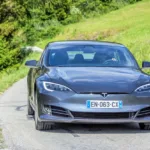

Tesla officially announced on Monday that it is entering the Middle East market, beginning with a strategic launch in the United Arab Emirates. The electric vehicle manufacturer intends to establish a direct sales and service presence in the region, marking a significant milestone for the company’s global expansion efforts within an area traditionally dominated by fossil fuel production.
A Strategic Shift in Oil-Rich Markets
The decision to enter the UAE represents a shift for Tesla as it targets a region that holds some of the world’s largest oil reserves. While the Middle East has long relied on internal combustion engines, the UAE government has aggressively pursued a green energy agenda through initiatives like the UAE Energy Strategy 2050.
This strategy aims to increase the contribution of clean energy in the total energy mix to 50 percent by the middle of the century. By positioning itself in Dubai and Abu Dhabi, Tesla aligns its commercial interests with the local government’s push for sustainable infrastructure and economic diversification.
Charging Infrastructure and Local Adaptation
Tesla’s entry involves more than just vehicle sales; the company plans to roll out its proprietary Supercharger network across the UAE. Developing this charging infrastructure is critical for addressing range anxiety, a common hurdle for electric vehicle adoption in arid, high-temperature climates.
Industry analysts point out that the UAE’s high per-capita income and urban density make it an ideal testing ground for luxury electric vehicles. The company is expected to leverage its existing global supply chain to bring the Model S and Model X to local showrooms, with the Model 3 and Model Y likely to follow as demand scales.
Expert Perspectives on Regional Adoption
Market analysts suggest that while fuel prices in the UAE remain relatively low compared to Europe, the appeal of Tesla lies in its technological ecosystem and status-symbol branding. Data from the International Energy Agency indicates that electric vehicle sales globally rose by 35% in 2023, and the Middle East represents one of the final untapped frontiers for mass-market adoption.
“The presence of a major player like Tesla serves as a catalyst for the entire regional automotive sector,” says automotive consultant Sarah Jenkins. “It forces traditional manufacturers to accelerate their own electrification plans to remain competitive in a market that is rapidly digitizing its transport grid.”
Economic and Environmental Implications
For the UAE, the arrival of Tesla supports the broader goal of reducing domestic fuel consumption, allowing the country to export more of its crude oil. The move also signals to global investors that the UAE is committed to being a hub for clean technology and sustainable urban development.
For consumers, the shift means increased access to advanced driver-assistance systems and over-the-air software updates that were previously unavailable through local dealerships. This influx of high-tech automotive hardware is expected to drive further investment in local service centers and technical training programs for regional mechanics.
Looking Ahead: The Road to Mass Adoption
Industry observers are now watching to see how quickly Tesla will expand from the UAE into neighboring markets like Saudi Arabia and Qatar. The primary challenge remains the development of a resilient power grid capable of handling a surge in peak-load demand from high-speed charging stations during the intense summer months.
Furthermore, the competition is heating up as Chinese EV manufacturers also eye the Middle East for expansion. The success of this initial phase in the UAE will likely determine the pace at which the wider Gulf Cooperation Council (GCC) region transitions away from traditional internal combustion engine vehicles over the next decade.


