


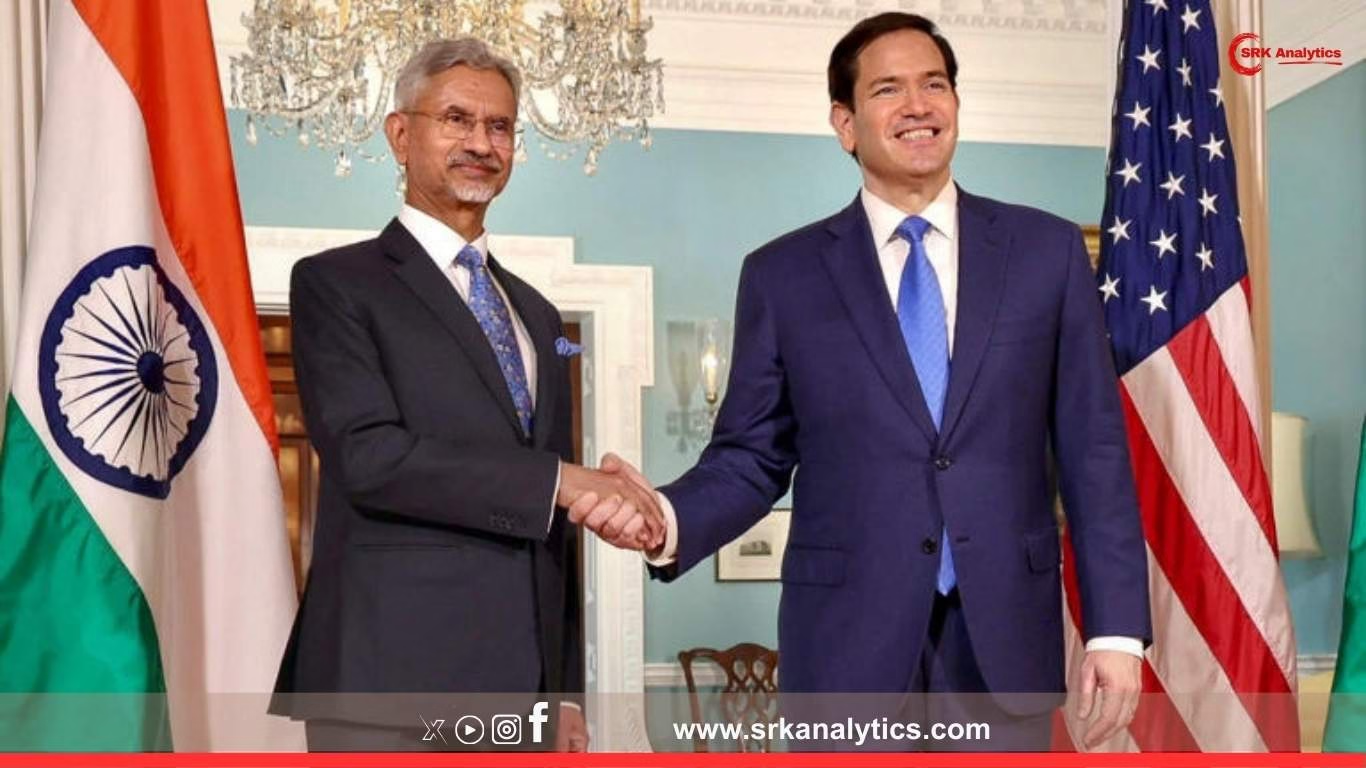
In a high-stakes diplomatic engagement, India’s External Affairs Minister S Jaishankar is set to meet US Secretary of State Marco Rubio in New York today, marking their first face-to-face interaction since the United States imposed a steep 50% tariff on Indian goods over New Delhi’s continued purchase of Russian oil. The meeting, scheduled on the sidelines of the 80th UN General Assembly session, is expected to address trade tensions, strategic cooperation, and Indo-Pacific security concerns.
The Jaishankar-Rubio dialogue comes amid a shifting geopolitical landscape, with Washington recalibrating its trade and foreign policy under President Donald Trump’s second term. The tariff hike, which includes an additional 25% levy announced earlier this month, has triggered unease in New Delhi, especially as it coincides with ongoing India-US trade negotiations led by Commerce Minister Piyush Goyal.
According to the US State Department’s public schedule, the bilateral meeting will take place at 11:00 AM local time (8:30 PM IST) in New York City. This will be the third meeting between Jaishankar and Rubio in 2025, following their interactions during Quad Foreign Ministers’ summits in January and July.
India-US Diplomatic Timeline – 2025
| Month | Event Description | Outcome/Remarks |
|---|---|---|
| January | Jaishankar meets Rubio post Quad summit | First meeting after Rubio took office |
| July | Second Quad meeting in Washington | Strategic alignment reaffirmed |
| September | Bilateral meeting amid tariff tensions | Focus on trade, security, Indo-Pacific |
The timing of the meeting is critical. The tariff hike has raised concerns across Indian industry, particularly in sectors like textiles, pharmaceuticals, and auto components, which rely heavily on US exports. The Indian government has termed the move “unilateral and excessive,” while US officials argue it is a response to India’s energy trade with Russia, which Washington views as undermining sanctions.
Jaishankar is expected to raise the issue firmly, seeking a rollback or phased reduction of the tariffs. Sources indicate that India will push for a “mutually beneficial resolution” that protects strategic autonomy while preserving trade momentum. The meeting also coincides with broader trade talks between Goyal and US Trade Representative Jamieson Greer, aimed at finalizing a long-pending bilateral trade agreement.
Key Issues Likely to Dominate Jaishankar-Rubio Talks
| Issue | India’s Position | US Position |
|---|---|---|
| 50% Tariff Hike | Seeks rollback, calls it punitive | Justified as response to Russian oil |
| Bilateral Trade Agreement | Wants early conclusion | Open to phased deal |
| Indo-Pacific Strategy | Supports Quad, maritime security | Wants deeper military cooperation |
| H-1B Visa Fee Hike | Opposes $100K application fee | Seeks to curb visa misuse |
| Energy Security | Defends diversified sourcing | Pushes for reduced Russian imports |
The meeting is also expected to touch upon the recent hike in H-1B visa application fees, which disproportionately affects Indian tech professionals. President Trump’s proclamation imposing a $100,000 annual fee has drawn criticism from Indian IT firms and diaspora groups. Jaishankar may seek exemptions or relief measures for Indian nationals, citing the sector’s contribution to US innovation and competitiveness.
Beyond trade and visas, the Jaishankar-Rubio meeting will likely reaffirm India-US cooperation in the Indo-Pacific region. With tensions rising in the South China Sea and Taiwan Strait, both nations are keen to strengthen maritime security, intelligence sharing, and joint exercises under the Quad framework.
Jaishankar arrived in New York on Sunday and began his UNGA engagements with a bilateral meeting with Philippines Foreign Secretary Theresa P Lazaro. He tweeted, “We followed up on the recent State Visit of President @bongbongmarcos to India. Also discussed our cooperation in the UN and the Indo-Pacific region.”
India-US Trade Snapshot – 2024 vs 2025
| Trade Metric | 2024 Value (USD Billion) | 2025 Estimate (Post-Tariff) | Change (%) |
|---|---|---|---|
| Total Bilateral Trade | 191.2 | 178.5 | -6.6% |
| Indian Exports to US | 78.3 | 69.1 | -11.7% |
| US Exports to India | 112.9 | 109.4 | -3.1% |
| Tariff-Affected Goods | 42.5 | 21.2 | -50.1% |
The broader context of the meeting includes the upcoming US presidential election cycle and India’s own strategic recalibrations. With global supply chains shifting and multilateral institutions under strain, both countries are seeking to balance national interests with global responsibilities.
Political analysts believe the Jaishankar-Rubio meeting could set the tone for future India-US engagements. “This is not just about tariffs. It’s about trust, alignment, and the future of the strategic partnership,” said Dr. Ramesh Menon, a senior fellow at the Indian Council of World Affairs.
The Indian delegation is expected to present a detailed dossier outlining the economic impact of the tariff hike, along with proposals for sectoral exemptions and dispute resolution mechanisms. The US side, meanwhile, may seek assurances on energy sourcing and defense procurement.
As the world watches, the outcome of today’s meeting could shape the trajectory of India-US relations for years to come. Whether it leads to a breakthrough or a stalemate, the dialogue underscores the importance of diplomacy in navigating complex global challenges.
Disclaimer: This article is based on publicly available government schedules, media reports, and diplomatic commentary. It does not reflect any political stance or endorsement. All quotes are attributed to public figures as per coverage. The content is intended for editorial and informational purposes only.