




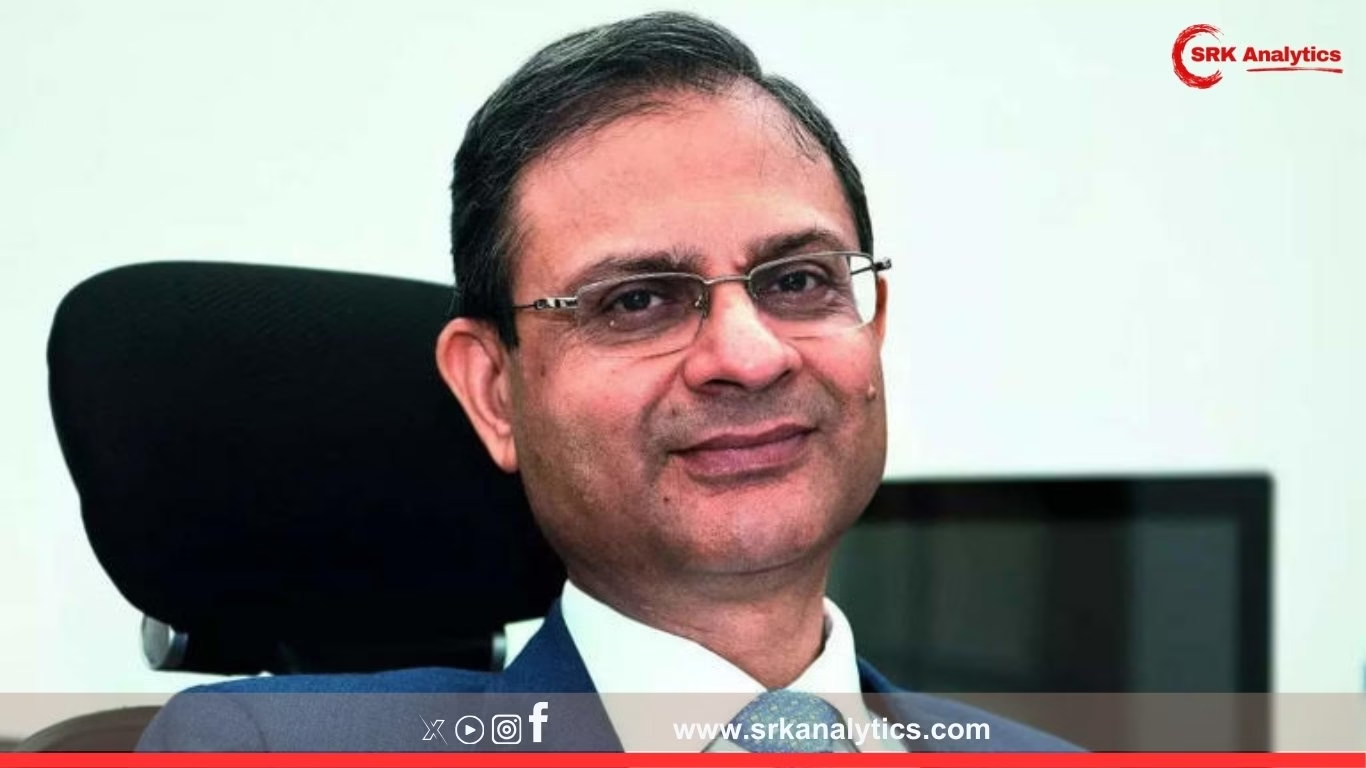
India’s economic growth remains resilient despite a persistently uncertain global environment, according to Reserve Bank of India (RBI) Governor Sanjay Malhotra. In the latest Monetary Policy Committee (MPC) minutes released after the August 4–6 meeting, Malhotra emphasized that the domestic economy is broadly tracking the central bank’s projections, with a growth rate of 6.5% for FY26. He acknowledged that while this figure is below India’s full potential, it reflects strength and stability in the face of external headwinds.
The MPC opted to maintain the repo rate at 5.50%, citing benign inflation trends and a supportive policy environment. The minutes also highlighted buoyant rural consumption, a healthy monsoon, and robust services sector activity as key contributors to the growth outlook.
🧭 Growth Outlook: Resilient but Below Potential
Governor Malhotra noted that India’s growth trajectory has evolved in line with the June policy assessment. He described the 6.5% projection as “resilient,” especially considering the global economic uncertainty driven by trade negotiations, tariff escalations, and geopolitical tensions.
“High-frequency indicators point toward buoyant rural economic activity and consumption, whereas urban spending continues to remain sluggish,” Malhotra stated.
| Indicator | Status (Q2 FY26) | Contribution to Growth |
|---|---|---|
| Rural Consumption | Strong | Positive |
| Urban Demand | Sluggish | Neutral |
| Services Sector Activity | Robust | Positive |
| Private Investment | Weak | Negative |
The RBI expects growth in the remaining part of the financial year to be supported by favorable supply-side conditions and a conducive policy environment.
📉 Inflation Trends: Benign and Below Target
One of the most notable takeaways from the MPC minutes is the sharp moderation in inflation. Headline Consumer Price Index (CPI) inflation fell to 2.1% in June 2025, its lowest in 77 months, and eased further to 1.55% in July—an eight-year low. This marks the sixth consecutive month of CPI inflation remaining under 4%, well below the RBI’s target range of 2–6%.
| Month | CPI Inflation (%) | Trend Direction | Key Drivers |
|---|---|---|---|
| March 2025 | 3.8 | Declining | Food, fuel moderation |
| April 2025 | 3.2 | Declining | Vegetable price drop |
| May 2025 | 2.6 | Declining | Stable core inflation |
| June 2025 | 2.1 | Declining | Supply-side improvement |
| July 2025 | 1.55 | Declining | Softer food prices |
Malhotra attributed the moderation to favorable monsoon conditions, satisfactory sowing, and healthy reservoir levels, which have improved the agricultural outlook and reduced food price pressures.
🏦 Monetary Policy: Steady Rates, Cautious Optimism
The RBI’s decision to hold the repo rate at 5.50% reflects a cautious approach amid global volatility. The central bank had previously implemented consecutive rate cuts to support growth, and the current pause suggests confidence in the domestic recovery.
| Policy Rate | Previous Level (%) | Current Level (%) | Change |
|---|---|---|---|
| Repo Rate | 5.50 | 5.50 | No change |
| Reverse Repo | 3.75 | 3.75 | No change |
| MSF Rate | 6.25 | 6.25 | No change |
The MPC minutes indicate that future rate decisions will be data-dependent, with a focus on inflation sustainability and investment revival.
🌾 Rural Economy: Monsoon Boost and Festive Demand
The southwest monsoon has progressed well, with sowing activity and reservoir levels exceeding expectations. This has created a positive outlook for agriculture and rural demand, which is expected to remain strong through the festive season.
| Rural Indicator | Status (August 2025) | Outlook |
|---|---|---|
| Monsoon Coverage | Above Normal | Positive |
| Sowing Activity | Satisfactory | Stable |
| Reservoir Levels | Healthy | Supportive |
| Rural Consumption | Buoyant | Growth Driver |
Urban demand, however, remains subdued, with spending yet to pick up meaningfully. The RBI expects a boost in urban consumption during the festive season, aided by benign inflation and improved liquidity.
📊 Sectoral Outlook: Services Lead, Investment Lags
Forward-looking surveys suggest that services sector activity will remain robust, while manufacturing shows mixed signals. Private investment continues to be constrained by external demand uncertainty and geopolitical risks.
| Sector | Current Trend | Growth Contribution |
|---|---|---|
| Services | Strong | High |
| Manufacturing | Mixed | Moderate |
| Agriculture | Improving | Moderate |
| Private Investment | Weak | Low |
Malhotra acknowledged that private investment intentions have yet to show visible improvement, and external demand remains a drag due to tariff concerns and global trade disruptions.
🧠 Risks and Uncertainties
Despite the positive domestic indicators, the RBI remains vigilant about external risks. These include:
- Tariff escalations impacting exports
- Geopolitical tensions affecting supply chains
- Slower disinflation in advanced economies
- Volatility in global financial markets
| Risk Factor | Impact on India | RBI’s Assessment |
|---|---|---|
| Tariff Uncertainty | Moderate | Watchful |
| Geopolitical Tensions | High | Risk to investment |
| Global Inflation | Moderate | Slower disinflation |
| Financial Market Volatility | Moderate | Manageable |
The RBI emphasized that India’s strong fundamentals, growth-inducing policies, and forward-looking strategy place it in a favorable position to navigate these challenges.
📌 Conclusion
The latest MPC minutes paint a picture of cautious optimism. RBI Governor Sanjay Malhotra’s assertion that India’s growth is “resilient” despite global uncertainty underscores the strength of domestic fundamentals. With inflation moderating, rural demand rising, and services activity holding firm, India’s economy appears well-positioned for steady expansion.
However, the central bank remains alert to external risks and is likely to maintain a balanced policy stance. For investors, businesses, and policymakers, the message is clear: India’s growth story continues, but vigilance and adaptability will be key in the months ahead.
—
Disclaimer: This article is based on publicly available monetary policy commentary and economic data as of August 21, 2025. It is intended for informational purposes only and does not constitute financial advice.