






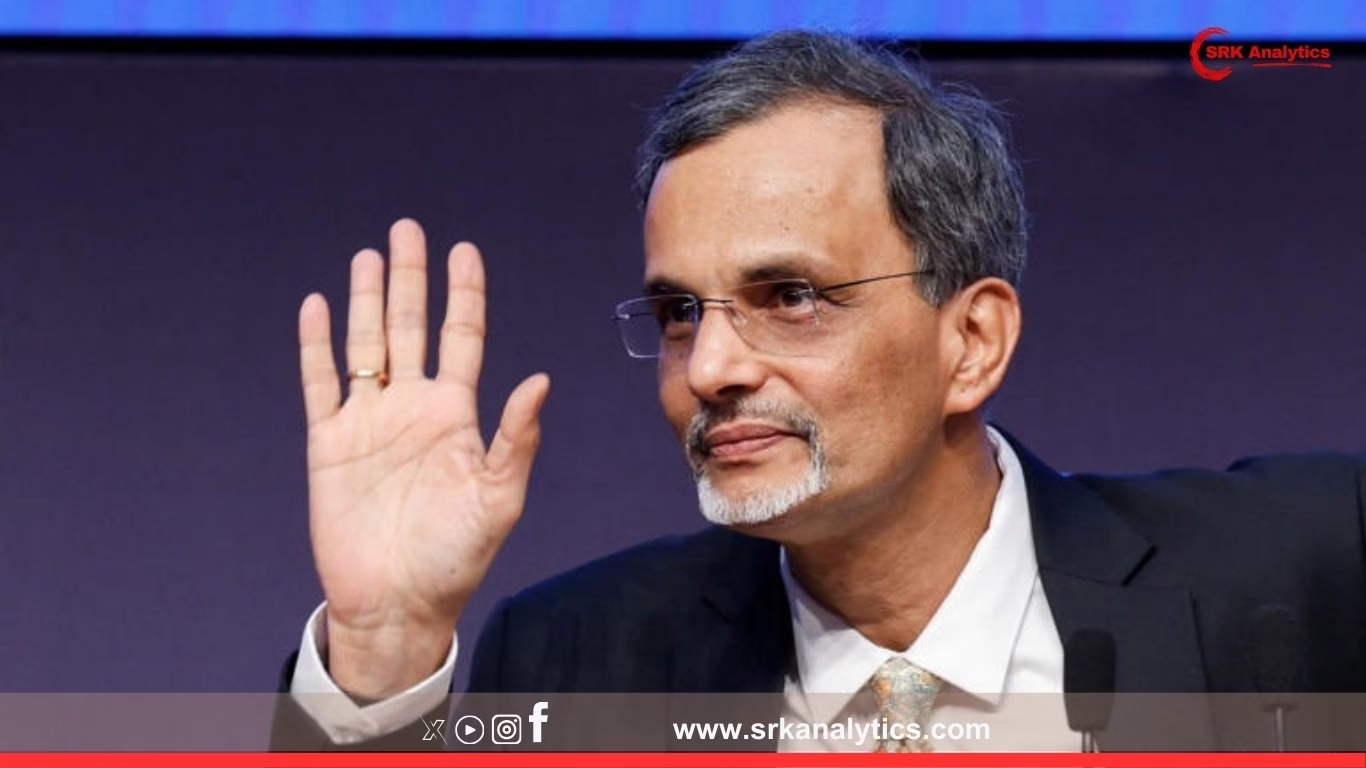
India is poised for a transformative shift in its indirect tax regime as the government rolls out next-generation Goods and Services Tax (GST) reforms. Chief Economic Advisor (CEA) Dr. V Anantha Nageswaran has hailed the proposed overhaul as a “Diwali gift” for the nation, emphasizing that the reforms will reduce the tax burden on households and businesses, stimulate consumption, and unlock new avenues for economic growth.
The reforms, announced by Prime Minister Narendra Modi during his Independence Day address, are part of a broader fiscal strategy to simplify taxation, enhance compliance, and boost disposable incomes. With the GST system now eight years old, the government believes it is time for a structural evolution that aligns with India’s growth ambitions.
🧭 Key Highlights of the Next-Generation GST Reforms
| Reform Pillar | Objective | Expected Impact |
|---|---|---|
| Structural Reforms | Fix inverted duty structures, resolve classification issues | Reduce disputes, improve input tax credit flow |
| Rate Rationalisation | Simplify tax slabs, lower rates on essentials | Reduce consumer prices, boost consumption |
| Ease of Living & Business | Tech-driven compliance, faster refunds | Lower compliance burden, improve cash flow |
📉 Lower Tax Burden for Households and Businesses
According to the CEA, the reforms will build on earlier direct tax relief measures announced in the Union Budget. “Taxes that households will pay this year will be much lower than last year,” Nageswaran said, citing significant cuts in direct taxes for middle-class families.
The GST overhaul complements these measures by reducing indirect taxes on common consumption items and business inputs. The weighted average GST rate has already declined from 15% to around 11% over the years, and the new reforms aim to push it further down.
| Tax Category | Previous Rate (%) | Proposed Rate (%) | Benefit |
|---|---|---|---|
| Essentials (e.g., toothpaste, soap) | 12% | 5% | Lower household expenses |
| White Goods (e.g., ACs, washing machines) | 28% | 18% | Boost to aspirational consumption |
| Sin Goods (e.g., tobacco, alcohol) | 28% + cess | 40% flat rate | Revenue neutrality, health deterrent |
🛍️ What Will Become Cheaper?
The reforms are expected to make a wide range of goods and services more affordable. Items currently taxed at 12%—including frozen vegetables, namkeens, feeding bottles, furniture, and footwear under ₹1,000—will likely move to the 5% slab. Similarly, most goods in the 28% slab, such as air conditioners and refrigerators, will shift to 18%.
| Item Category | Current GST Rate | Proposed GST Rate | Impact |
|---|---|---|---|
| Groceries & Food Items | 12% | 5% | Cheaper essentials |
| Consumer Durables | 28% | 18% | Affordable white goods |
| Education & Insurance | 18% | 5% | Lower service costs |
🏢 Relief for MSMEs and Exporters
Small businesses and exporters have long struggled with the complexities of GST compliance and refund delays. The new reforms aim to correct inverted duty structures and streamline classification, making it easier for MSMEs to operate and plan long-term.
Technology-driven registration and refund processes will minimize mismatches and reduce compliance costs. Exporters affected by inverted duty structures will benefit from expedited refunds, improving liquidity and competitiveness.
| Sector | Challenge Addressed | Reform Benefit |
|---|---|---|
| MSMEs | Complex compliance, rate disputes | Simplified slabs, tech-driven onboarding |
| Exporters | Refund delays, input mismatch | Faster refunds, better working capital |
| Traders | Multi-slab billing complexity | Two-slab system for clarity |
📊 Proposed GST Slab Structure
India’s current GST framework includes five primary slabs—0%, 5%, 12%, 18%, and 28%—plus special rates for precious metals. The proposed structure will simplify this to three slabs:
- 5%: Merit rate for essentials
- 18%: Standard rate for most goods and services
- 40%: Sin rate for select items like tobacco and alcohol
| Slab Type | Rate (%) | Applicable Items |
|---|---|---|
| Merit Rate | 5% | Essentials, education, insurance |
| Standard Rate | 18% | Most goods and services |
| Sin Rate | 40% | Tobacco, alcohol, luxury sin goods |
This rationalisation is expected to reduce classification disputes and improve transparency in tax administration.
💬 CEA’s Perspective: Reform in Continuity
Dr. Nageswaran emphasized that the GST reforms are not a sudden shift but a continuation of India’s eight-year journey in indirect tax reform. “We must see this as a significant move, but also a continuation of what has been happening,” he said.
He added that the reforms will lower inflation, increase disposable income, and reduce input costs for businesses—creating a virtuous cycle of growth and investment.
🧠 Expert Opinions and Economic Impact
Economists and industry leaders have welcomed the reforms, calling them timely and growth-oriented. Morgan Stanley estimates that the reforms could add 50–70 basis points to India’s GDP growth by boosting consumption and reducing inflationary pressures.
| Expert Name | Affiliation | Insight Summary |
|---|---|---|
| Dr. V Anantha Nageswaran | Chief Economic Advisor | “A Diwali gift that reduces tax burden” |
| Morgan Stanley | Investment Firm | “Upside to GDP growth of 50–70 bps” |
| ETGovernment Analysts | Policy Experts | “Simplification will empower small traders” |
📅 Timeline and Implementation
The reforms are expected to be rolled out by Diwali 2025, following consultations with states and recommendations from the Group of Ministers (GoM). The GST Council, chaired by Finance Minister Nirmala Sitharaman, will finalize the changes.
| Milestone | Date/Status |
|---|---|
| Reform Announcement | August 15, 2025 |
| GoM Recommendations | Submitted |
| GST Council Review | Pending |
| Implementation Deadline | By Diwali 2025 |
🧾 Conclusion: A Tax Reform for the People
The next-generation GST reforms represent a pivotal moment in India’s economic policy. By reducing tax burdens, simplifying compliance, and boosting consumption, the government aims to make the tax system more citizen-friendly and business-efficient.
As the CEA aptly put it, this is not just a fiscal adjustment—it’s a strategic move to empower households, energize businesses, and accelerate India’s journey toward a $10 trillion economy by 2047.
—
Disclaimer: This article is based on publicly available government statements and expert commentary as of August 2025. It is intended for informational purposes only and does not constitute financial or legal advice.




Обеспечьте безопасность учеников, студентов и сотрудников с помощью нашего программного обеспечения для видеонаблюдения, разработанного специально для образовательных учреждений. Наша программа для видеонаблюдения помогает предотвратить насилие, контролировать посещаемость и обеспечивать безопасность имущества. Наша VMS позволяет централизованно управлять камерами видеонаблюдения, расположенными в различных корпусах и на территории учебного заведения. Функции распознавания лиц можно использовать для контроля доступа в общежития и для идентификации посторонних лиц на территории. облачный сервис для видеонаблюдения