





Market Reversal Amid Global Uncertainty
Wall Street’s primary indices experienced a sharp downturn on Friday morning, as escalating conflicts in the Middle East sparked renewed fears of inflationary pressure that threaten to derail the year-long, AI-driven stock market rally. By 10 a.m. ET, the S&P 500 faced significant downward pressure, with eight of its 11 major sectors recording losses, marking a decisive shift in investor sentiment.
The Context of the AI Rally
For much of the current year, the U.S. equity market has been propelled by explosive growth in the artificial intelligence sector. Investors have poured capital into semiconductor manufacturers and cloud infrastructure providers, betting on a sustained technological revolution. This optimism has pushed the Nasdaq Composite to record highs, often disregarding traditional macroeconomic headwinds in favor of long-term productivity gains.
Semiconductor Sector Under Pressure
Technology stocks, which have served as the engine for recent market gains, bore the brunt of the sell-off. Semiconductor giant Nvidia and rival AMD both saw their stock prices tumble by more than 4 percent, while Intel shares plummeted 6.8 percent. The broader Philadelphia SE Semiconductor Index recorded a 4 percent slide, reflecting a widespread retreat from high-growth assets.
Even companies demonstrating strong fundamentals were not immune to the bearish sentiment. Applied Materials, a critical player in semiconductor manufacturing, saw its stock drop 2.3 percent despite providing a third-quarter revenue and profit outlook that outperformed Wall Street’s consensus estimates. This reaction highlights a market environment where geopolitical risk is currently outweighing positive corporate performance data.
Economic Implications of Geopolitical Conflict
Market analysts are pointing to the potential for the Middle East conflict to disrupt global supply chains and increase energy costs. Higher oil prices historically act as an inflationary catalyst, forcing central banks to maintain restrictive monetary policies for longer than previously anticipated. If inflation remains sticky, the Federal Reserve may be forced to delay interest rate cuts, which would disproportionately impact the valuation of growth-heavy tech stocks.
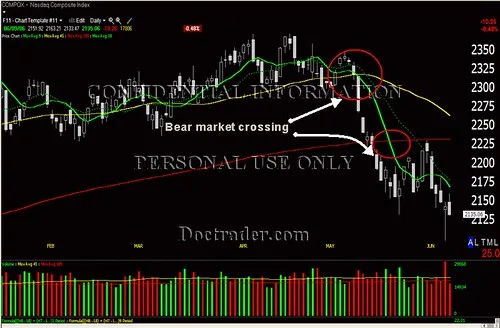
Data from the trading floor shows the extent of the impact, with the Dow Jones Industrial Average losing 436.84 points, or 0.87 percent, to close at 49,626.62. The S&P 500 declined 1.13 percent to 7,416.36, while the tech-heavy Nasdaq Composite dropped 1.63 percent to 26,201.86. These figures underscore a broader rotation out of risk-on assets as traders seek safer havens during periods of international instability.
Future Outlook and Key Indicators
Looking ahead, market participants will be closely monitoring energy markets and diplomatic developments in the Middle East to gauge the duration of this volatility. Investors should watch for upcoming inflationary reports to determine if rising geopolitical costs are beginning to manifest in consumer and producer price indices. The resilience of the AI sector will be tested in the coming weeks, as the market determines whether the current decline is a temporary correction or the beginning of a more sustained shift in investment strategy.