
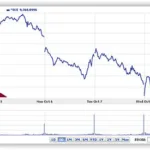





The Market Correction
A sharp decline in semiconductor stocks this week has triggered widespread volatility across major U.S. indexes, exposing the inherent risks of a market heavily concentrated in a handful of technology giants. Investors witnessed a rapid rotation out of high-growth chip manufacturers as concerns over valuation sustainability and geopolitical supply chain tensions converged in New York and global trading hubs.
Understanding Market Concentration
For the past eighteen months, the S&P 500 and Nasdaq Composite have relied disproportionately on the performance of a small cohort of companies, often referred to as the ‘Magnificent Seven.’ Semiconductor firms, driven by the explosive demand for artificial intelligence infrastructure, have served as the primary engine for these gains.
This reliance created a feedback loop where capital flowed aggressively into hardware providers, pushing price-to-earnings ratios to historic highs. When these valuations began to face scrutiny from institutional analysts, the lack of diversification in portfolio holdings exacerbated the downward pressure.
The Anatomy of the Sell-Off
The recent downturn was catalyzed by a combination of macroeconomic signals and sector-specific warnings. Analysts pointed to signs of cooling consumer demand for electronics and potential regulatory hurdles regarding international trade restrictions on advanced chips.
Data from FactSet indicates that the semiconductor industry had outperformed the broader market by significant margins prior to this correction. This outperformance made the sector a crowded trade, leaving it vulnerable to even minor shifts in sentiment or slight earnings misses.
Market analysts note that when the ‘momentum trade’ reverses, the exit is often as rapid as the entry. Because these stocks comprise a large percentage of market-cap-weighted indices, their collective decline exerts a disproportionate impact on the overall health of the market.
Expert Perspectives
Market strategists suggest that the current volatility is a natural, albeit painful, recalibration of risk. According to recent commentary from Goldman Sachs, the market had reached a point of ‘valuation exhaustion’ that necessitated a cooling-off period.
Other experts point to the shift in interest rate expectations as a primary driver of the rotation. As yields on long-term government bonds fluctuate, the discounted cash flow models used to value high-growth tech stocks require adjustment, leading to lower price targets.
Future Implications
For individual investors, this period of turbulence serves as a stark reminder of the dangers associated with concentrated portfolio exposure. The reliance on a single sector to drive index performance leaves passive investors exposed to industry-specific shocks that they may not have accounted for in their risk tolerance assessments.
Looking ahead, market participants should monitor upcoming quarterly earnings reports for signs of sustained capital expenditure in the AI sector. If corporate spending on infrastructure remains robust, the current dip may be viewed as a temporary correction rather than the start of a prolonged bear market. Conversely, if guidance from major hardware providers turns cautious, the broader market may face continued pressure as institutional capital shifts toward more defensive, value-oriented sectors.