









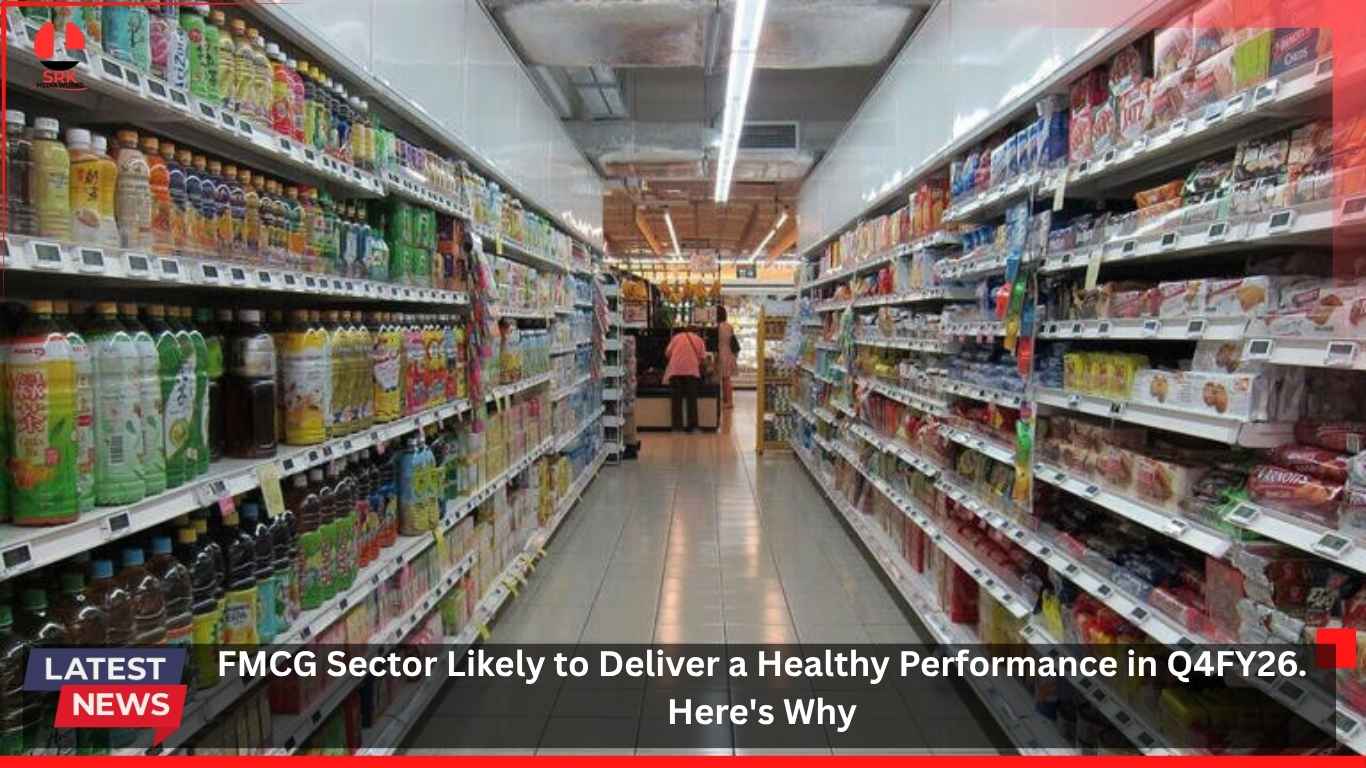
India’s fast-moving consumer goods (FMCG) sector is expected to post a strong performance in Q4FY26, supported by resilient demand, easing inflationary pressures, and improved rural consumption. Analysts believe that the sector’s fundamentals remain robust, with companies benefiting from lower input costs, strong GST collections, and favorable macroeconomic conditions.
Key Drivers of FMCG Growth in Q4FY26
- Strong GST Collections: March 2026 GST revenues crossed ₹2 trillion, signaling healthy consumption trends.
- Easing Input Costs: Prices of edible oils, packaging materials, and other raw inputs have moderated, boosting margins.
- Urban Demand Resilience: Continued growth in premium product categories and discretionary spending.
- Rural Recovery: Government schemes, better crop yields, and rising rural incomes are aiding demand stabilization.
- Digital Push: E-commerce and direct-to-consumer channels are expanding reach and driving sales.
Segment-Wise Outlook
| Segment | Q4FY26 Outlook | Key Growth Drivers |
|---|---|---|
| Food & Beverages | Strong growth | Rising packaged food demand, premiumization |
| Personal Care | Moderate growth | Skincare and hygiene products, urban demand |
| Household Care | Stable growth | Cleaning products, rural penetration |
| Health & Nutrition | High growth | Preventive healthcare, supplements demand |
Analytical Pivot
| Factor | FMCG Companies’ Perspective | Investor Perspective |
|---|---|---|
| Revenue Growth | Driven by volume recovery | Positive earnings outlook |
| Margins | Supported by lower input costs | Improved profitability |
| Rural Demand | Gradual recovery underway | Long-term growth potential |
| Digital Expansion | Strengthening distribution | Enhances scalability |
Strategic Implications
- For FMCG Companies: Opportunity to expand product portfolios, strengthen rural distribution, and invest in innovation.
- For Investors: FMCG remains a defensive sector with stable returns and strong cash flows.
- For Consumers: Wider access to affordable and premium products, supported by competitive pricing.
- For Economy: FMCG growth reflects broader consumption recovery, contributing to GDP expansion.
Reactions
- Industry Analysts: Highlighted FMCG as one of the most resilient sectors amid global uncertainties.
- Investors: Expect strong quarterly results, with FMCG stocks likely to outperform benchmarks.
- Consumers: Benefiting from stable prices and wider product availability.
- Policy Makers: View FMCG growth as a sign of healthy domestic demand.
Broader Context
The FMCG sector has historically been a bellwether for India’s consumption story. Despite global headwinds, the sector continues to thrive due to its diversified product base and strong distribution networks. With rural demand showing signs of recovery and urban consumption remaining robust, Q4FY26 is expected to be a healthy quarter for FMCG companies.
Challenges Ahead
- Global Volatility: Currency fluctuations and geopolitical risks may impact input costs.
- Competition: Intense rivalry among domestic and multinational players.
- Consumer Preferences: Rapidly changing trends require constant innovation.
- Regulatory Environment: Compliance with evolving food safety and labeling norms.
Future Outlook
The FMCG sector is poised for sustained growth beyond Q4FY26. Companies are expected to focus on premiumization, digital expansion, and rural penetration. With strong fundamentals and favorable macroeconomic conditions, FMCG is likely to remain a key driver of India’s consumption-led growth story.
Conclusion
India’s FMCG sector is set to deliver a healthy performance in Q4FY26, supported by strong demand, easing input costs, and rural recovery. The sector’s resilience underscores its importance in the broader economy and highlights its potential to continue driving growth in the coming quarters.
Disclaimer
This article is based on publicly available industry analysis and market trends. It does not represent official financial advice or company positions. The content is intended for informational purposes only, highlighting sectoral developments and their implications. Readers are encouraged to consult multiple sources for a comprehensive understanding of the subject matter.