





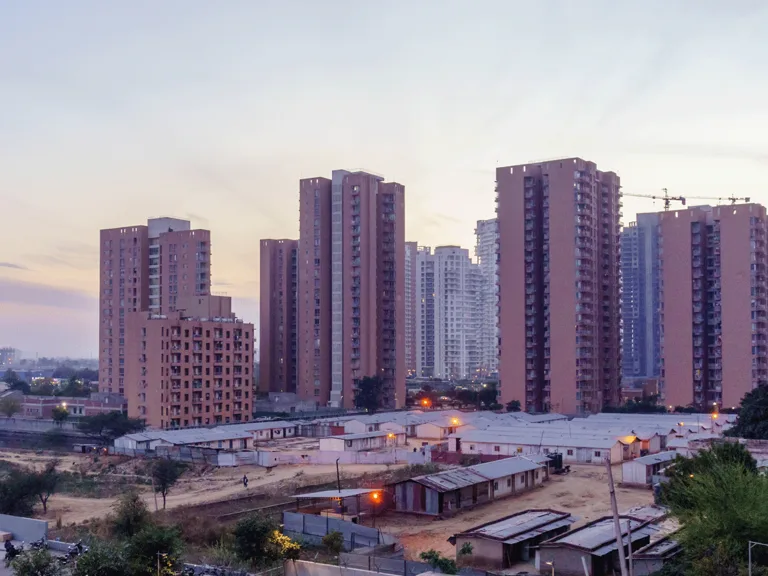
China’s property market has plunged to its lowest levels in two decades, with residential prices across major cities falling back to levels last seen in 2005. The crash has rattled global investors and raised questions about whether India, with its rapidly expanding housing sector, could face a similar downturn.
China’s Housing Collapse
China’s property sector, once the backbone of its economy, has been in freefall. Developers such as Evergrande and Country Garden have defaulted on massive debts, leaving millions of unfinished homes and shaking consumer confidence.
- Prices dropped by over 20% in real terms since 2021.
- Unsold inventory surged, with ghost towns emerging across provinces.
- Household wealth eroded, as property accounted for the majority of Chinese family assets.
- Investment in real estate fell sharply, dragging down construction, steel, and cement industries.
The crisis stems from years of overbuilding, speculative buying, and heavy reliance on debt financing. Beijing’s tightening of credit rules exposed the fragility of the sector, triggering defaults and a collapse in demand.
Why China’s Market Collapsed
China’s housing boom was fueled by speculative investment rather than genuine demand. Developers borrowed heavily to build vast projects, often in areas with little population growth.
- Oversupply: Nearly 80 million homes remain vacant, creating ghost towns.
- Policy tightening: Beijing’s “three red lines” policy restricted developer borrowing, triggering defaults.
- Weak demand: Slowing population growth, fewer new households, and rising unemployment reduced buyer interest.
- Household wealth hit: Property accounted for nearly 25% of China’s GDP and most household wealth, amplifying the crisis.
Could India Face a Similar Slump?
India’s housing sector has grown rapidly, driven by urbanisation, rising incomes, and government incentives. Yet, the Chinese crash raises concerns about whether India could face a similar fate.
Key Differences
- Demand Driven Growth: India’s housing demand is largely end‑user based, unlike China’s speculative oversupply.
- Demographics: India’s population is still expanding, with millions migrating to cities each year.
- Regulation: The Real Estate (Regulation and Development) Act (RERA) has improved transparency and accountability.
- Supply Constraints: Affordable housing remains undersupplied, keeping demand resilient.
Potential Risks
- Luxury Housing Bubble: Metro cities have seen speculative buying in premium projects, which could face corrections.
- Economic Shocks: Job losses in IT or manufacturing could reduce purchasing power.
- Currency Volatility: A weakening rupee could raise construction costs and dampen investor sentiment.
- Global Spillovers: A prolonged Chinese slump could affect global capital flows, indirectly impacting India.
Expert Opinions
Economists argue that India is unlikely to face a China‑style collapse because its housing market is structurally different. Demand is driven by genuine buyers rather than speculative investors. However, experts caution that unchecked luxury development and rising household debt could create vulnerabilities.
One analyst noted: “India’s housing demand is real, but affordability remains a challenge. If developers chase high‑end profits without addressing mass housing needs, risks could emerge.”
Government Measures
India has introduced several initiatives to strengthen housing:
- Pradhan Mantri Awas Yojana (PMAY) to boost affordable housing.
- RERA regulations to protect buyers and enforce transparency.
- Credit incentives for first‑time homebuyers.
These measures aim to prevent speculative excesses and ensure sustainable growth. Yet, experts stress the need for vigilance, particularly in monitoring debt levels among developers.
Global Implications
China’s property crash has global consequences, affecting commodity markets, investment flows, and financial stability. For India, the lesson is clear: avoid overbuilding, maintain transparency, and focus on real demand.
If India manages these factors, it could avoid a housing slump and continue its trajectory of urban growth. But complacency could prove costly, especially as global economic uncertainties persist.
Historical Comparisons
India has faced housing slowdowns before, notably during the 2008 global financial crisis and the 2016 demonetisation period. In both cases, demand dipped temporarily but recovered due to strong demographics and urbanisation. Unlike China, India has not experienced widespread ghost towns or massive oversupply, which suggests resilience but also highlights the importance of cautious growth.
Statistical Trends
- India’s housing prices have grown steadily at 5–7% annually over the past decade.
- Urban housing demand is projected to rise by 40% by 2030, driven by migration.
- Affordable housing gap: India faces a shortage of nearly 20 million affordable homes.
- Household debt levels remain lower than China’s, reducing systemic risk.
These figures highlight the structural differences between the two markets, suggesting that India’s housing sector is less vulnerable to a sudden collapse.
Long‑Term Outlook
The long‑term outlook for India’s housing market remains positive, provided developers focus on affordability and sustainable growth. Urbanisation, rising incomes, and government support will continue to drive demand. However, vigilance is essential to avoid speculative bubbles, particularly in luxury housing segments.
India must also invest in infrastructure, improve access to credit, and strengthen regulatory oversight to ensure balanced growth. By learning from China’s mistakes, India can build a housing sector that is resilient, inclusive, and sustainable.
Conclusion
China’s housing collapse is a cautionary tale of speculative excess, debt‑driven growth, and policy missteps. India’s housing market, while facing challenges, remains fundamentally different due to strong demographics and demand. Still, vigilance is essential. Policymakers, developers, and buyers must ensure that growth remains balanced, sustainable, and focused on genuine housing needs.
Disclaimer: This article is intended for informational purposes only. It does not constitute financial, investment, or legal advice. Readers should consult qualified professionals before making housing or investment decisions. Market conditions vary across regions, and while the analysis here draws on current reports and expert commentary, it should not be taken as predictive guidance. The publication assumes no responsibility for actions taken by individuals or organizations in response to this content. The views expressed are based on available data and industry insights, and are meant to provide context rather than definitive forecasts. Readers are encouraged to consider multiple perspectives, examine statistical trends, and conduct independent research before making financial commitments. This article is not a substitute for professional consultation and should be read as background information only.