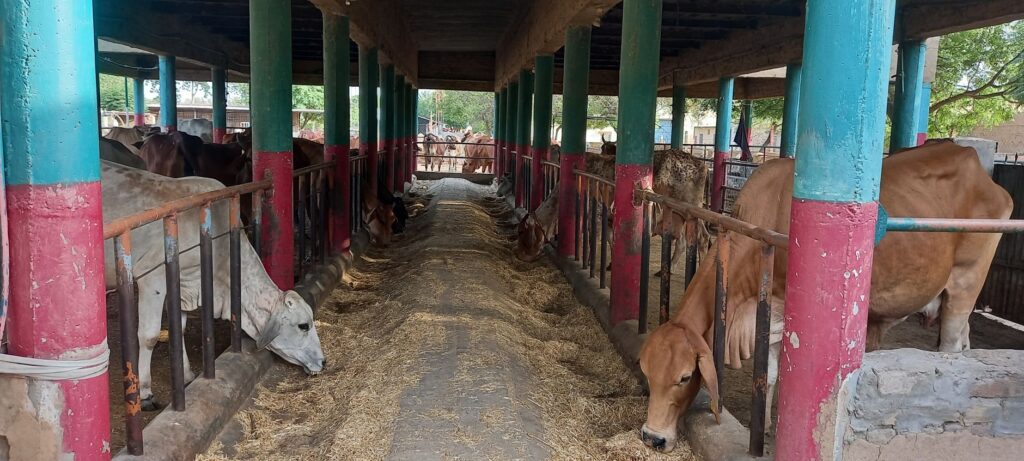

The Uttar Pradesh government has officially launched the Mini Nandini Yojana, a strategic financial initiative designed to bolster rural income by providing subsidies of up to ₹11.8 lakh for the establishment of small-scale dairy units. Announced this week in Lucknow, the program aims to incentivize farmers to invest in high-yield indigenous cattle breeds, specifically targeting the creation of 10-cow dairy units across the state.
Context of the Dairy Expansion
Uttar Pradesh currently stands as India’s leading milk-producing state, yet the sector faces challenges regarding breed quality and infrastructure efficiency. The Mini Nandini Yojana seeks to modernize traditional dairy farming by providing a structured financial roadmap for smallholders.
By focusing on indigenous breeds, the government intends to improve disease resistance and milk quality while reducing the carbon footprint associated with non-native cattle. This initiative aligns with broader national goals to double farmers’ income and promote sustainable agricultural practices.
Program Mechanics and Eligibility
Under the new policy, the state government provides a significant subsidy covering a large portion of the capital expenditure required to set up a 10-cow unit. Beneficiaries are responsible for the remaining investment, which can be facilitated through institutional bank loans supported by the government’s credit guarantee schemes.
To qualify, applicants must possess adequate space for cattle housing, access to green fodder, and a commitment to maintaining veterinary health standards. The state’s Animal Husbandry Department will oversee the selection process to ensure transparency and equitable distribution of funds across different districts.
Expert Perspectives and Economic Impact
Agricultural economists suggest that this model could significantly reduce the rural migration rate by stabilizing income streams for local farmers. Dr. Rajesh Verma, an agricultural analyst, notes that the shift toward indigenous cattle breeds is essential for the long-term viability of the dairy market in the Gangetic plains.
Data from the Department of Animal Husbandry indicates that indigenous breeds, while sometimes lower in volume than cross-bred varieties, offer higher milk fat content and better adaptability to the local climate. This creates a more robust value chain for cooperatives and private dairy processors operating within the region.
Industry Implications and Future Outlook
For the dairy industry, the influx of new, government-supported units suggests a potential increase in raw milk supply, which may lower procurement costs for processors. However, it also places pressure on existing supply chain infrastructure, including cold storage and transportation networks.
Observers are now looking toward the second phase of the rollout, which is expected to include training modules for farmers on modern milking techniques and waste management. Industry stakeholders should monitor the distribution of these units to assess whether the program successfully integrates small-scale farmers into the formal commercial supply chain. The long-term success of the Mini Nandini Yojana will depend on the sustained availability of veterinary support and the effective marketing of indigenous milk products to urban consumers.