





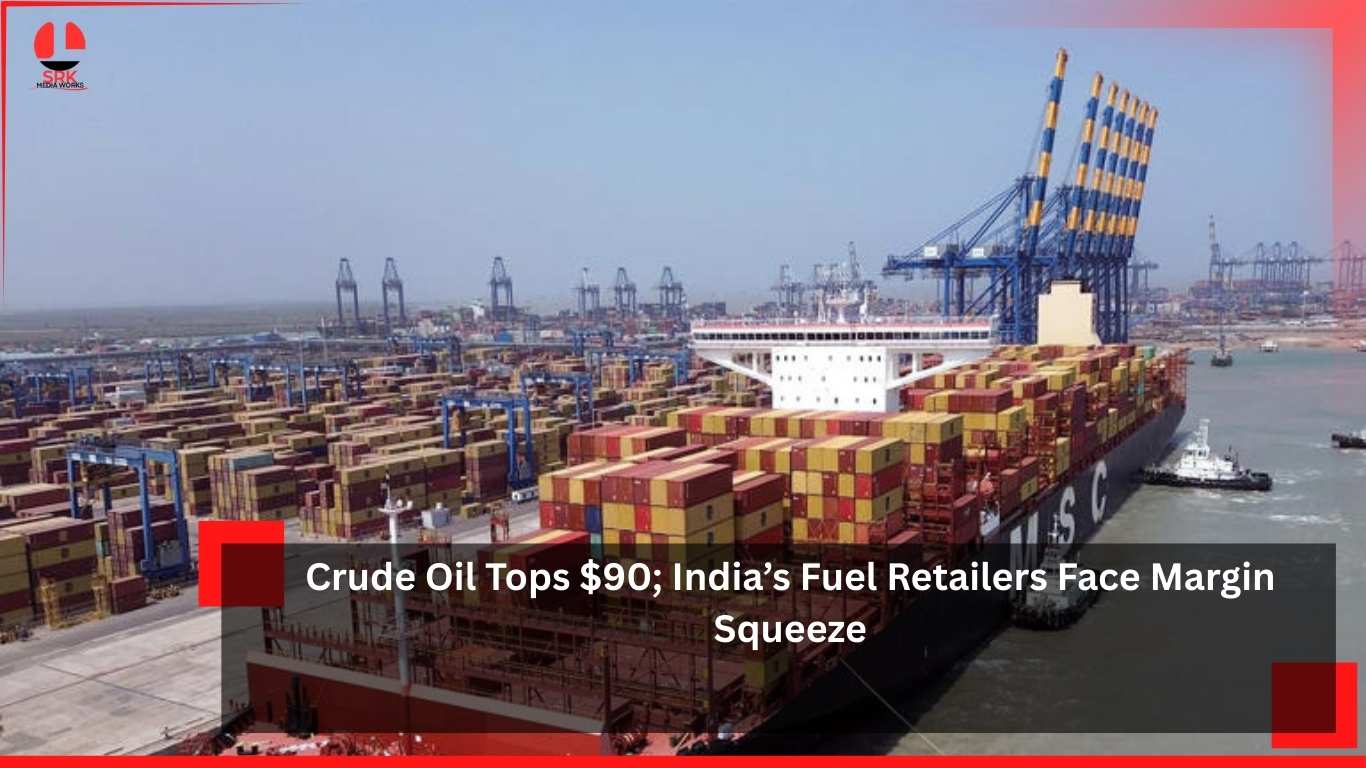
Global crude oil prices have surged past the $90 per barrel mark, creating significant challenges for India’s fuel retailers. The sharp rise in international oil prices is squeezing margins for state-owned oil marketing companies (OMCs) and private fuel distributors, who are caught between rising input costs and regulated consumer prices.
Background of the Price Surge
Crude oil prices have been climbing steadily due to a combination of geopolitical tensions, supply constraints from major producers, and rising global demand. For India, which imports nearly 85% of its crude oil requirements, this surge has direct implications on fuel pricing, inflation, and the broader economy.
Fuel retailers in India, including Indian Oil Corporation (IOC), Bharat Petroleum Corporation Limited (BPCL), and Hindustan Petroleum Corporation Limited (HPCL), are particularly vulnerable. While international crude prices fluctuate daily, retail fuel prices in India often remain unchanged for long periods due to government intervention, leading to margin compression.
Key Factors Behind the Surge
1. Geopolitical Tensions
- Conflicts in oil-producing regions have disrupted supply chains.
- Sanctions on certain countries have reduced global availability.
2. OPEC+ Production Cuts
- The Organization of the Petroleum Exporting Countries (OPEC) and allies have maintained production discipline.
- Reduced supply has kept prices elevated despite global demand fluctuations.
3. Rising Global Demand
- Post-pandemic recovery has boosted industrial activity.
- Increased transportation and aviation fuel consumption have added pressure.
Impact on India’s Fuel Retailers
Margin Squeeze
Fuel retailers buy crude oil at international prices but sell refined products at government-regulated rates. When crude prices rise sharply, retailers face losses unless retail prices are adjusted.
Inflationary Pressure
Higher crude prices translate into increased costs for transportation, manufacturing, and agriculture. This fuels inflation, impacting consumers directly.
Fiscal Challenges
The government often absorbs part of the burden through subsidies or excise duty adjustments, straining fiscal resources.
Comparative Analysis of Retail Margins
| Company | Average Retail Margin (2024) | Current Margin (2026) | Change (%) |
|---|---|---|---|
| IOC | ₹3.5 per litre | ₹1.2 per litre | -65% |
| BPCL | ₹3.2 per litre | ₹1.0 per litre | -68% |
| HPCL | ₹3.0 per litre | ₹0.9 per litre | -70% |
This table highlights the steep decline in margins, underscoring the financial stress faced by OMCs.
Sector-Wise Impact of Crude Oil Surge
| Sector | Impact Description |
|---|---|
| Transportation | Increased fuel costs raise freight and passenger fares |
| Manufacturing | Higher input costs affect profitability |
| Agriculture | Rising diesel prices increase irrigation and logistics |
| Aviation | Jet fuel costs surge, impacting ticket prices |
| Consumers | Inflationary pressure reduces disposable income |
Analytical View: Price Trends
| Year | Average Crude Price ($/barrel) | Impact on India’s Retail Fuel Prices |
|---|---|---|
| 2022 | 75 | Moderate inflation |
| 2023 | 82 | Rising transport costs |
| 2024 | 85 | Controlled retail adjustments |
| 2025 | 88 | Margins begin to shrink |
| 2026 | 90+ | Severe margin squeeze |
Government’s Dilemma
The government faces a balancing act:
- Protecting consumers from sharp fuel price hikes.
- Ensuring financial viability of OMCs.
- Managing fiscal deficit while maintaining subsidies.
Excise duty cuts and subsidies are likely policy tools, but they come at the cost of reduced government revenue.
Possible Solutions
- Dynamic Pricing Enforcement
- Allow fuel retailers to adjust prices daily in line with crude fluctuations.
- Diversification of Energy Sources
- Accelerate adoption of renewable energy and electric mobility.
- Strategic Oil Reserves
- Utilize reserves to stabilize supply during price surges.
- Tax Rationalization
- Reduce excise duties to ease consumer burden while balancing fiscal needs.
Conclusion
The surge in crude oil prices beyond $90 per barrel has created a margin squeeze for India’s fuel retailers, highlighting the vulnerability of an import-dependent economy. While OMCs struggle with shrinking profits, consumers face inflationary pressures, and the government grapples with fiscal challenges.
India’s path forward lies in balancing immediate relief measures with long-term strategies such as renewable energy adoption, diversification of supply sources, and rationalized taxation. The consultation and policy decisions taken now will shape the resilience of India’s energy sector in the years ahead.
Disclaimer
This article is intended for informational purposes only. It does not constitute financial or investment advice. Readers should consult qualified professionals before making decisions related to crude oil, fuel pricing, or energy investments. The content is based on publicly available information and economic analysis.