





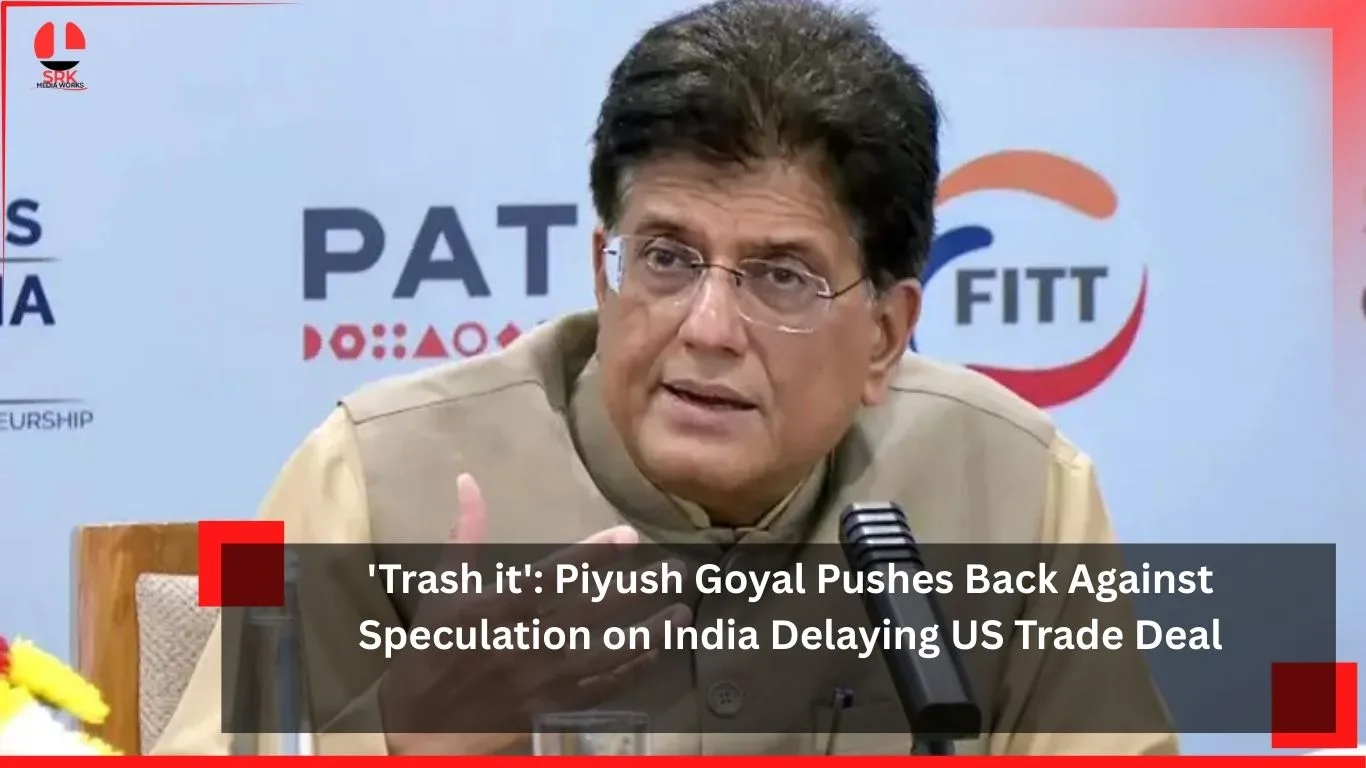
India’s Commerce and Industry Minister Piyush Goyal has firmly dismissed speculation that New Delhi is delaying a potential trade agreement with the United States. His sharp response—“Trash it”—was aimed at quelling rumors that India is hesitant or dragging its feet in finalizing trade negotiations. The statement underscores India’s commitment to strengthening bilateral economic ties with the US while also protecting its domestic interests.
Background: India-US Trade Relations
India and the United States share one of the largest trade partnerships in the world. Over the past decade, bilateral trade has grown significantly, spanning sectors such as technology, pharmaceuticals, defense, agriculture, and services.
The two nations have been exploring ways to deepen cooperation through a structured trade deal. However, speculation has emerged that India might be delaying progress due to concerns over tariffs, market access, and regulatory frameworks.
Piyush Goyal’s Strong Rebuttal
Speaking at a recent event, Goyal categorically rejected the idea that India is stalling negotiations. His “Trash it” remark was directed at reports suggesting India was reluctant to move forward.
Goyal emphasized that India remains committed to fair and balanced trade agreements that benefit both sides. He also highlighted that discussions with the US are ongoing and constructive, with both nations working toward mutually beneficial outcomes.
Why the Trade Deal Matters
A comprehensive trade agreement between India and the US could reshape global economic dynamics.
Key Benefits:
- Market Access: Indian exporters would gain easier access to US markets, particularly in textiles, pharmaceuticals, and IT services.
- Technology Transfer: US companies could collaborate with Indian firms in areas like AI, defense, and clean energy.
- Investment Boost: A trade deal could encourage greater US investment in India’s manufacturing and infrastructure sectors.
- Geopolitical Strengthening: Enhanced trade ties would reinforce the strategic partnership between the two democracies.
Challenges in Negotiations
Despite optimism, several challenges remain:
- Tariff Disputes: The US has raised concerns about India’s tariffs on certain goods, while India seeks fair treatment for its exports.
- Agricultural Access: US farmers want greater access to Indian markets, but India is cautious about protecting its domestic agriculture.
- Digital Trade Rules: Differences over data localization and digital taxation remain unresolved.
- Intellectual Property Rights: The US demands stronger IP protections, while India balances affordability in pharmaceuticals.
Comparative Trade Analysis
| Country Pair | Trade Volume (2025 est.) | Key Sectors | Current Status |
|---|---|---|---|
| India–US | $200 billion+ | IT, pharma, defense, agriculture | Negotiations ongoing |
| India–EU | $150 billion+ | Textiles, machinery, services | FTA talks progressing |
| India–UK | $50 billion+ | Services, automobiles, textiles | FTA nearing conclusion |
| India–ASEAN | $110 billion+ | Electronics, agriculture, energy | Active trade agreements |
This comparison shows that India’s trade with the US is among its most significant, making the deal strategically vital.
Sector-Wise Impact of a Potential Deal
| Sector | Impact on India | Impact on US |
|---|---|---|
| IT Services | Greater access to US clients | Cost-effective outsourcing |
| Pharmaceuticals | Expanded exports | Affordable generics |
| Agriculture | Protection of domestic farmers | Access for US producers |
| Defense & Aerospace | Technology collaboration | Strategic partnerships |
| Clean Energy | Investment in renewables | Market expansion |
Expert Opinions
- Economists: A trade deal could add billions to India’s GDP and strengthen its export base.
- Industry Leaders: Indian businesses are eager for reduced tariffs and smoother market entry.
- Policy Analysts: The deal is as much about geopolitics as economics, reinforcing India-US ties against global challenges.
India’s Strategic Position
India is balancing multiple trade negotiations simultaneously—with the EU, UK, and ASEAN—while also strengthening domestic manufacturing under the “Make in India” initiative. Goyal’s firm dismissal of speculation reflects India’s confidence in negotiating from a position of strength.
Conclusion
Piyush Goyal’s “Trash it” remark sends a clear message: India is not delaying the US trade deal but is negotiating with determination to ensure fairness and balance. The outcome of these talks will have far-reaching implications for global trade, investment, and geopolitics.
India’s stance highlights its growing role as a major economic power, capable of shaping international trade rules while safeguarding domestic interests.
Disclaimer
This article is based on publicly available information and expert analysis. It is intended for informational purposes only and does not represent financial, investment, or policy advice. Readers should consult official government releases and trade policy documents for verified details before making business or investment decisions.