





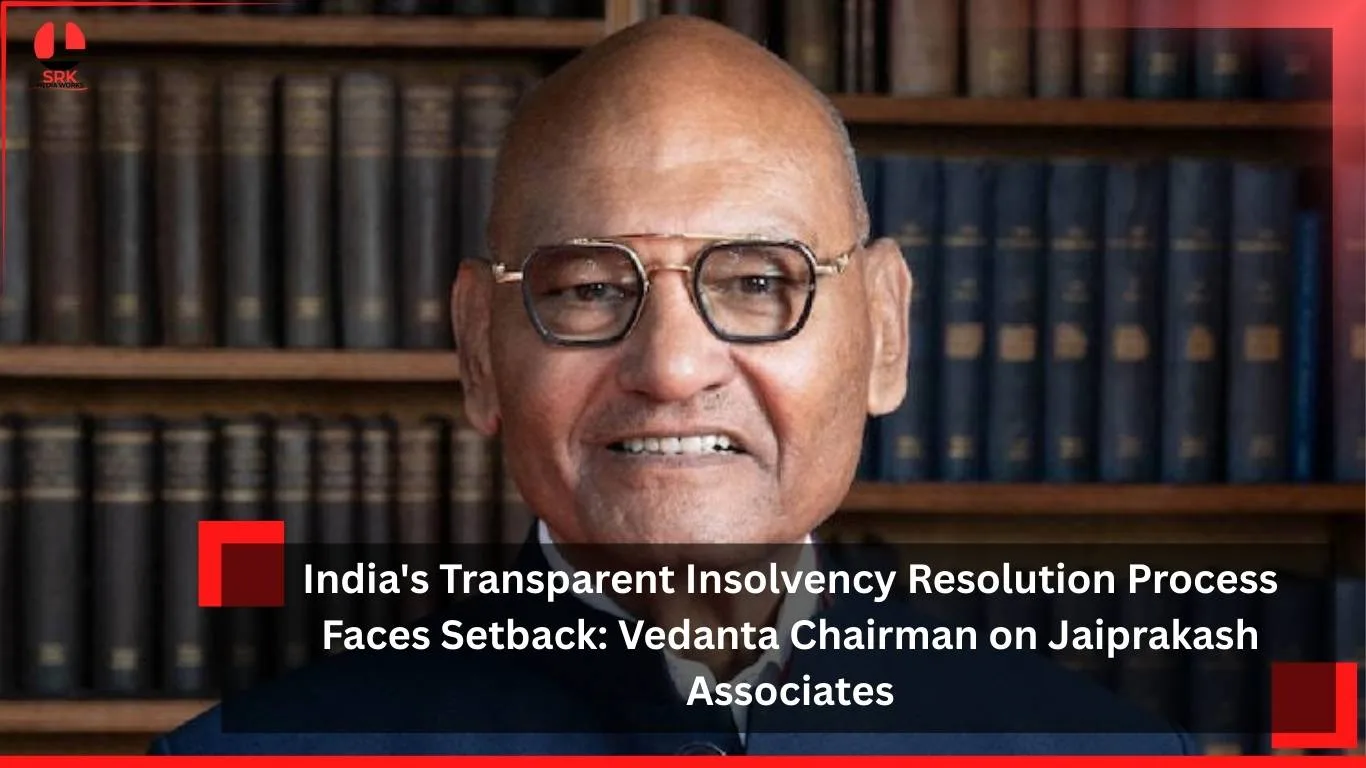
India’s insolvency resolution framework, once hailed as a transparent and efficient mechanism for corporate restructuring, has come under scrutiny after Vedanta Chairman Anil Agarwal expressed concerns over the handling of Jaiprakash Associates’ case. His remarks highlight the growing debate around the credibility, speed, and fairness of the Insolvency and Bankruptcy Code (IBC), which was introduced in 2016 to streamline debt resolution and reduce the burden of non-performing assets (NPAs) on banks.
Background: The Promise of IBC
The Insolvency and Bankruptcy Code was designed to provide a time-bound, transparent, and creditor-friendly process. It aimed to resolve insolvency within 180–270 days, ensuring that distressed companies could either be revived or liquidated without prolonged litigation. For years, the IBC was considered a landmark reform, strengthening India’s financial ecosystem and boosting investor confidence.
However, recent developments, particularly in the case of Jaiprakash Associates, have raised questions about whether the system is losing its effectiveness.
Vedanta Chairman’s Concerns
Anil Agarwal, speaking on the matter, noted that India’s transparent insolvency resolution process has “taken a hit.” His statement reflects frustration over delays, inconsistent rulings, and the perception that certain cases are not being handled with the intended clarity and fairness.
Jaiprakash Associates, a major player in infrastructure and real estate, has faced mounting debt and prolonged insolvency proceedings. The drawn-out process has not only impacted creditors but also shaken investor confidence in the IBC framework.
Why Jaiprakash Associates Matters
Jaiprakash Associates is not just another corporate debtor—it is a company with significant exposure in real estate, cement, and infrastructure. Its insolvency case involves thousands of homebuyers, multiple banks, and institutional creditors. The complexity of the case has made it a litmus test for the IBC’s ability to handle large-scale corporate distress.
Key Issues in the Case:
- Delays in Resolution: The process has exceeded the stipulated timelines, undermining the IBC’s credibility.
- Stakeholder Conflicts: Homebuyers, banks, and institutional investors have conflicting interests, complicating resolution.
- Judicial Intervention: Frequent court battles have slowed down progress, raising concerns about excessive litigation.
Impact on Investor Confidence
The IBC was meant to assure investors that India had a reliable system for handling corporate distress. However, prolonged cases like Jaiprakash Associates risk eroding that confidence. Investors, both domestic and foreign, may hesitate to commit capital if they perceive the insolvency process as unpredictable or biased.
Comparative Analysis: India vs Global Insolvency Practices
| Country | Average Resolution Time | Transparency Level | Investor Confidence |
|---|---|---|---|
| India (IBC) | 2–4 years (in complex cases) | Moderate, declining in recent cases | Mixed, cautious |
| USA (Chapter 11) | 1–2 years | High | Strong |
| UK (Administration) | 1–1.5 years | High | Strong |
| Singapore | 1 year | Very High | Strong |
This comparison shows that while India’s IBC started strong, delays and inconsistencies have weakened its global standing.
Financial Implications of Jaiprakash Associates’ Insolvency
| Stakeholder Group | Exposure (Approx.) | Impact |
|---|---|---|
| Banks & Lenders | ₹30,000 crore+ | Rising NPAs, reduced recovery |
| Homebuyers | 20,000+ families | Delayed possession, financial stress |
| Institutional Investors | ₹5,000 crore+ | Reduced confidence in IBC |
| Employees | 10,000+ jobs | Job insecurity, wage delays |
The scale of exposure underscores why this case is critical for India’s insolvency framework.
Broader Implications for India’s Economy
- Banking Sector Stress: Prolonged insolvency cases increase NPAs, weakening banks’ balance sheets.
- Real Estate Sector Impact: Homebuyers lose trust in developers, slowing down housing demand.
- Foreign Investment Concerns: Global investors may view India as a risky destination if insolvency resolutions remain inconsistent.
- Policy Credibility: The government’s reform agenda could be questioned if IBC fails to deliver.
Expert Opinions
- Financial Analysts: Many argue that the IBC needs stricter enforcement of timelines and reduced judicial intervention.
- Legal Experts: Courts must balance fairness with efficiency, ensuring that cases do not drag on indefinitely.
- Industry Leaders: Transparency and predictability are key to restoring confidence in the system.
Suggested Reforms
To restore credibility, experts recommend:
- Strict Adherence to Timelines: Enforce the 270-day resolution limit more effectively.
- Strengthening NCLT Capacity: Increase manpower and resources at the National Company Law Tribunal.
- Reducing Litigation: Limit the scope for endless appeals and counter-appeals.
- Stakeholder Protection: Ensure fair treatment of homebuyers and small creditors.
- Global Best Practices: Adopt elements from successful insolvency frameworks in the US, UK, and Singapore.
Conclusion
Vedanta Chairman Anil Agarwal’s remarks on Jaiprakash Associates highlight a critical moment for India’s insolvency resolution framework. While the IBC remains a landmark reform, its credibility is at stake. The government, regulators, and judiciary must act swiftly to restore transparency, enforce timelines, and rebuild investor confidence.
India’s economic growth story depends not just on reforms but on their effective implementation. The Jaiprakash Associates case is a reminder that credibility is as important as legislation.
Disclaimer
This article is a journalistic analysis based on publicly available information and expert opinions. It does not represent financial, legal, or investment advice. Readers are encouraged to consult professional advisors before making decisions related to insolvency, investments, or corporate restructuring.