





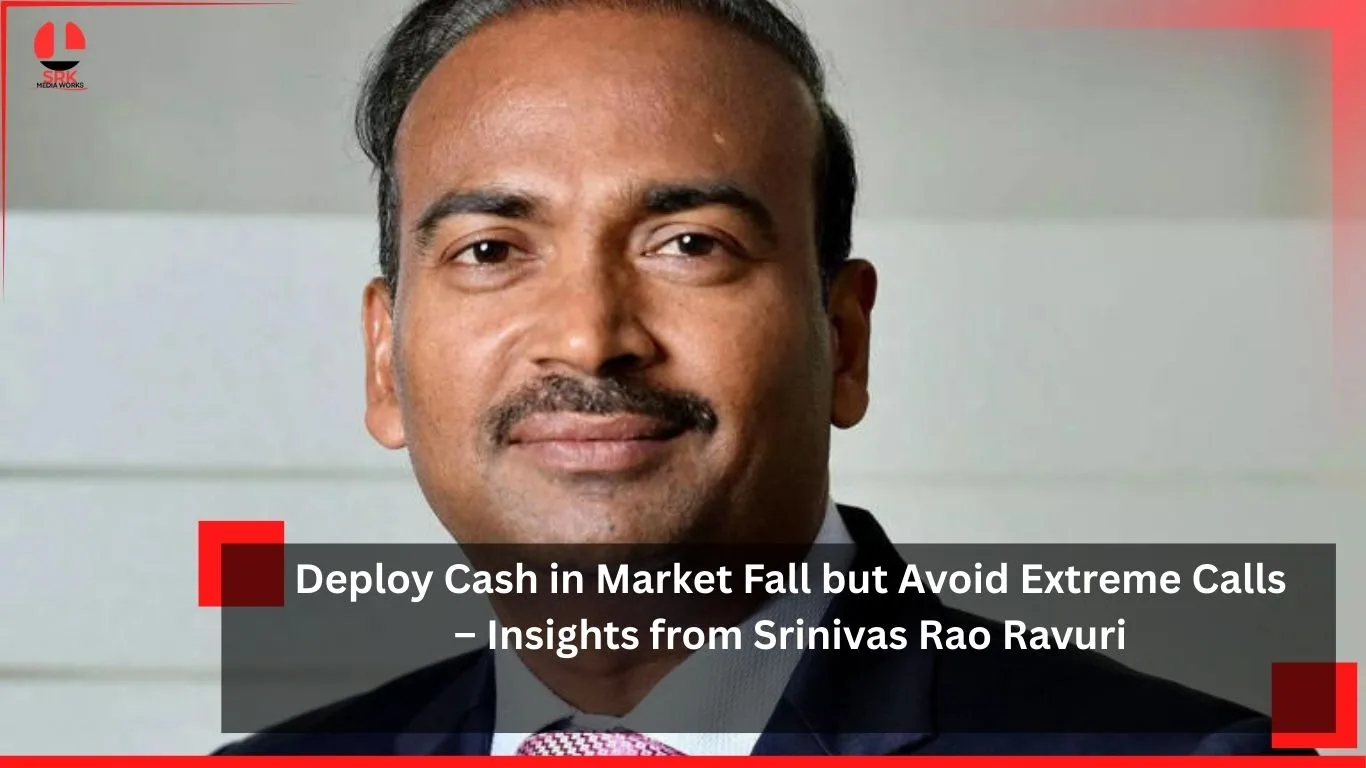
In the midst of ongoing market volatility, seasoned investor Srinivas Rao Ravuri has advised investors to deploy cash during market corrections but cautioned against making extreme calls. His perspective emphasizes a balanced approach to investing, where opportunities are seized during downturns, yet risks are managed prudently to avoid overexposure.
Market Context
Global and domestic markets are currently navigating:
- Rising crude oil prices.
- Inflationary pressures leading to tighter monetary policies.
- Geopolitical uncertainties impacting investor sentiment.
- Currency fluctuations affecting import-heavy industries.
Despite these challenges, India’s long-term growth story remains intact, supported by strong domestic demand, infrastructure investments, and digital transformation. Ravuri’s advice is rooted in the belief that volatility creates opportunities but requires disciplined execution.
Key Insights from Srinivas Rao Ravuri
1. Deploy Cash Strategically
- Market corrections often present attractive entry points.
- Investors should use cash reserves to buy quality stocks at lower valuations.
2. Avoid Extreme Calls
- Overreacting to short-term volatility can lead to poor investment decisions.
- Extreme bearish or bullish positions increase risk exposure unnecessarily.
3. Focus on Fundamentals
- Companies with strong balance sheets and sustainable earnings should be prioritized.
- Long-term growth sectors remain resilient despite short-term turbulence.
4. Diversification is Key
- Spreading investments across sectors reduces risk.
- Balanced portfolios perform better in volatile environments.
Sectoral Outlook
| Sector | FY26 Growth (%) | FY27 Projected Growth (%) | Investor Sentiment |
|---|---|---|---|
| Banking & Financials | 12 | 14 | Positive |
| Infrastructure | 10 | 13 | Strong |
| Pharmaceuticals | 9 | 11 | Stable |
| IT Services | 8 | 9 | Moderate |
| FMCG | 7 | 8 | Cautious |
Comparative Investment Strategies
| Strategy | Risk Level | Potential Return | Suitability |
|---|---|---|---|
| Deploying Cash in Falls | Medium | High | Opportunistic investors |
| Extreme Bullish Calls | High | Variable | Risk-takers |
| Extreme Bearish Calls | High | Limited | Defensive investors |
| Balanced Diversification | Low-Medium | Consistent | Long-term investors |
This comparison highlights why Ravuri advises against extreme calls, favoring balanced strategies instead.
Analytical Pivot: Market Behavior
| Fiscal Year | Market Volatility Index | Investor Strategy Trend |
|---|---|---|
| FY24 | Moderate | Growth-focused |
| FY25 | High | Defensive positioning |
| FY26 | Elevated | Cash deployment in falls |
| FY27 | Projected Moderate | Balanced diversification |
Investor Strategy Recommendations
- Use Corrections Wisely: Deploy cash when valuations are attractive.
- Stay Disciplined: Avoid chasing momentum or panic selling.
- Focus on Quality: Invest in companies with strong fundamentals.
- Diversify: Spread investments across sectors to mitigate risks.
Risks to Watch
- Global Slowdown: Could impact export-oriented sectors.
- Commodity Price Volatility: Rising crude oil prices may pressure margins.
- Regulatory Changes: Policy shifts in banking and healthcare could affect performance.
Long-Term Outlook
Ravuri believes that India’s long-term growth trajectory remains strong. While volatility will persist, disciplined investors who deploy cash during downturns and avoid extreme calls are likely to benefit. The focus should remain on fundamentals, diversification, and patience.
Conclusion
Srinivas Rao Ravuri’s advice to deploy cash in market falls but avoid extreme calls reflects a pragmatic approach to investing in volatile times. By balancing opportunity with caution, investors can navigate uncertainty while positioning themselves for long-term gains. His insights highlight the importance of discipline, fundamentals, and diversification in building resilient portfolios.
Disclaimer
This article is based on market insights and projections. The figures and interpretations are intended for informational purposes only and should not be considered financial or investment advice. Readers are encouraged to consult professional experts before making investment decisions.