
Redmond-based startup AIM Intelligent Machines is transforming traditional earthmoving industries by equipping conventional excavators and bulldozers with advanced physical artificial intelligence to operate entirely without human drivers. Founded in 2021 by former Google AI researcher Adam Sadilek, the company is deploying its self-driving technology across high-risk job sites in North America to drive down infrastructure costs and enhance worker safety, while building the long-term technological foundation required for autonomous construction on Mars.
The Unseen Frontiers of Autonomous Heavy Equipment
While self-driving passenger vehicles from companies like Waymo and Tesla dominate headlines, heavy machinery operating in construction, mining, and agriculture represents a massive, underserved global market. Legacy manufacturing giants like Caterpillar and Komatsu have gradually introduced automated features, but AIM is approaching the sector from a hardware-agnostic perspective.
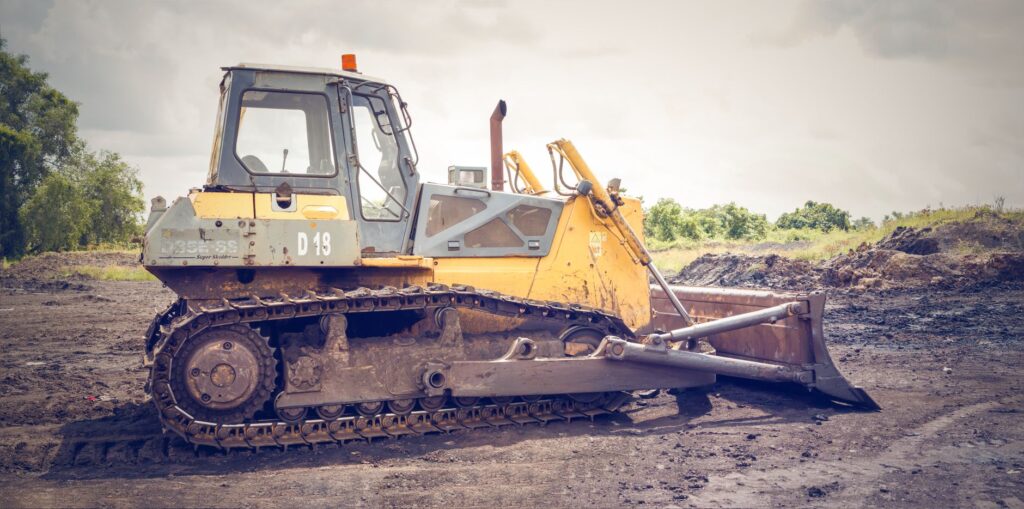
Rather than manufacturing new heavy iron, AIM produces retrofit kits containing edge computing hardware and advanced sensor arrays that can be installed on existing contractor fleets. This platform converts traditional heavy equipment into fully autonomous units capable of carrying out complex land-grading, digging, and hauling tasks with minimal human intervention.
By targeting heavy industry, AIM aims to tackle urgent economic bottlenecks on Earth. Automated earthmoving can significantly reduce the costs associated with site preparation for housing developments, data centers, wildfire breaks, and flood mitigation projects.
Solving the Paradox of Changing Environments
Engineering autonomy for heavy equipment introduces technical hurdles that traditional self-driving cars never encounter. Passenger vehicles rely heavily on pre-mapped roadways, stable lanes, and predictable traffic patterns. In contrast, an earthmoving machine’s fundamental objective is to alter its physical environment continuously.
To overcome this, AIM’s physical AI platform generates real-time 3D spatial maps using onboard 360-degree LiDAR sensors combined with localized edge computing. The system makes localized operational decisions instantaneously without depending on continuous cloud connectivity or persistent GPS signals, which are frequently unavailable in remote regions.
To ensure reliability under severe operational conditions, AIM conducts rigorous stress testing at its dedicated proving grounds near Monroe, Washington. Exposing equipment to heavy mud, snow, and inclement weather early in development guarantees the physical AI can withstand harsh environments before field deployment.
Capital Injection, Military Contracts, and Regional Talent
AIM’s rapid growth is backed by substantial venture capital and defense investment. The startup recently secured a $50 million funding round led by Khosla Ventures, General Catalyst, and Human Capital, propelling the firm to No. 110 on the GeekWire 200 ranking of Pacific Northwest startups.
In addition to commercial funding, AIM secured a $4.9 million contract with the U.S. Air Force earlier this year. The military agreement focuses on deploying autonomous excavators for high-risk operations, including base construction and rapid airfield repair in contested or hazardous environments.
To support its expanding portfolio, AIM doubled its workforce in recent months to roughly 80 employees. Operating out of a 25,000-square-foot facility in Redmond, Washington—formerly occupied by SpaceX—AIM purposely chose the Pacific Northwest over Silicon Valley to draw from the region’s deep pool of aerospace, hardware, and AI engineering talent from firms like Boeing and Amazon.
The competitive landscape for automated construction is accelerating rapidly. Austin-based startup TerraFirma, also founded by former SpaceX engineers, recently closed a $115 million funding round, underscoring growing investor appetite for physical AI applications in heavy industry.
Industrial Safety and the Shift to Zero-Entry Sites
Beyond efficiency gains, autonomous heavy equipment addresses pressing labor shortages and chronic safety hazards in physical construction. Traditional earthmoving involves high rates of workplace injury due to equipment rollovers, structural collapses, and heavy dust exposure.
AIM’s architecture enables the creation of “zero-entry” work sites, which completely remove human operators from the cabs of high-risk machines. Traditional equipment operators transition into remote site supervisors, monitoring entire fleets of autonomous vehicles from safe, climate-controlled environments miles away.
This shift from manual operation to fleet supervision allows contractors to scale operations while drastically reducing workplace casualties and operational downtime.
What to Watch Next: The Road from Infrastructure to Off-Planet Terraforming
As AIM continues scaling its commercial deployments for data center site preparation and defense infrastructure, the broader heavy equipment industry is closely watching how regulatory bodies adapt to fully uncrewed job sites. Key indicators of progress over the coming years will include the widespread safety certification of zero-entry construction zones and expanded adoption by commercial mining conglomerates.
Longer term, AIM’s technology serves as a testing ground for space exploration. Founder Adam Sadilek views the company’s earthly applications as the direct precursor to off-world infrastructure development. When planetary missions land crew or equipment on the Moon or Mars, autonomous earthmoving machines will be required to build habitats, landing pads, and radiation shields long before human crews arrive, making physical AI an essential pillar of interplanetary colonization.