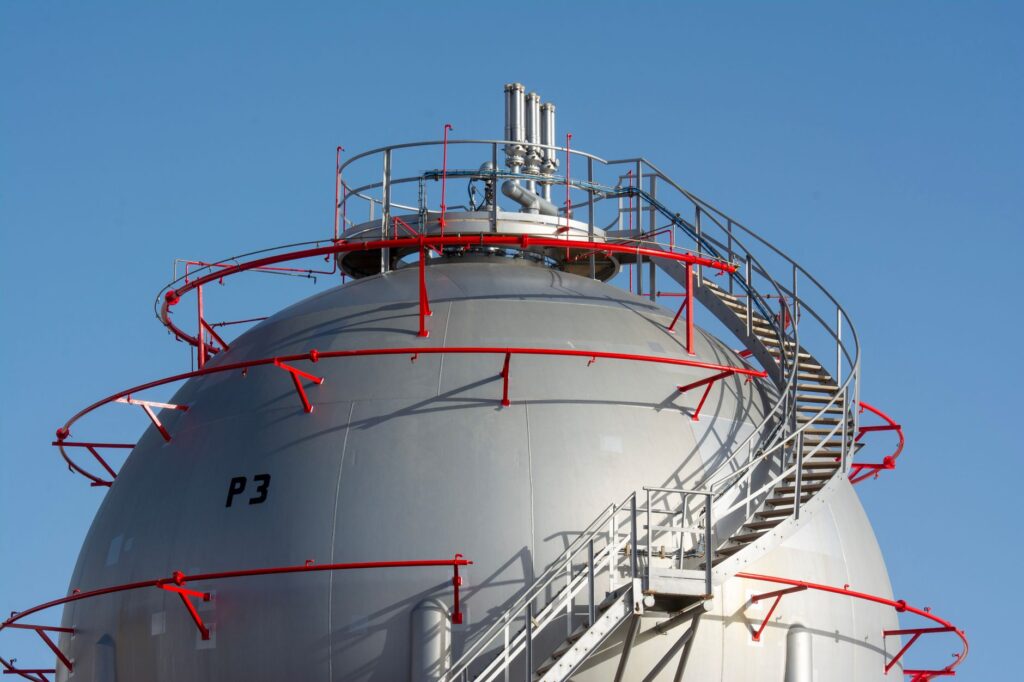

State-owned Oil and Natural Gas Corporation (ONGC) has initiated plans to establish India’s first strategic natural gas reserve to cushion the country against supply disruptions triggered by escalating conflict in West Asia. The strategic facility aims to create an emergency fuel cushion as volatile global energy corridors threaten New Delhi’s energy security and economic stability.
Context: Escalating Geopolitics and Vulnerable Supply Chains
Natural gas currently accounts for roughly 6 percent of India’s primary energy basket, with the federal government targeting a expansion to 15 percent by 2030. To meet current consumption demands, India imports over 50 percent of its daily natural gas requirements, predominantly in the form of Liquefied Natural Gas (LNG) transported via maritime routes.
The current military conflict in West Asia has significantly heightened risk premiums on energy shipments passing through critical choke points, such as the Strait of Hormuz. Disruptions in global shipping lanes and sudden spikes in spot LNG prices have exposed the structural vulnerability of import-dependent nations across South Asia.
While India maintains Strategic Petroleum Reserves (SPRs) for crude oil in underground rock caverns across Visakhapatnam, Mangaluru, and Padur, it lacks an equivalent emergency buffer for natural gas. The absence of gas storage leaves critical national infrastructure vulnerable to sudden supply cutoffs.
Building the Buffer: ONGC’s Underground Gas Storage Strategy
ONGC is evaluating depleted offshore and onshore oil and gas reservoirs, alongside deep underground salt caverns, to build Underground Gas Storage (UGS) facilities. Unlike liquid crude, natural gas requires high-pressure containment and specialized geological structures to prevent leakage and guarantee rapid extraction.
Initial technical feasibility assessments focus on depleted fields in the Western Offshore basin and the state of Gujarat. These strategic locations sit adjacent to existing pipeline networks and major industrial corridors, allowing for rapid injection into the national gas grid during crisis events.
Engineers are analyzing rock porosity, caprock integrity, and pressure thresholds in these mature fields. Repurposing brownfield assets reduces upfront development timelines and capital expenditures compared to greenfield salt cavern construction.
Data Points and Expert Insights on Energy Resilience
Data from the Petroleum Planning and Analysis Cell (PPAC) indicates that India consumed nearly 65 billion cubic meters (BCM) of natural gas during the last fiscal year. Energy analysts calculate that a initial strategic reserve capacity of 3 to 5 BCM could provide a crucial 15-to-30-day supply buffer during severe international supply disruptions.