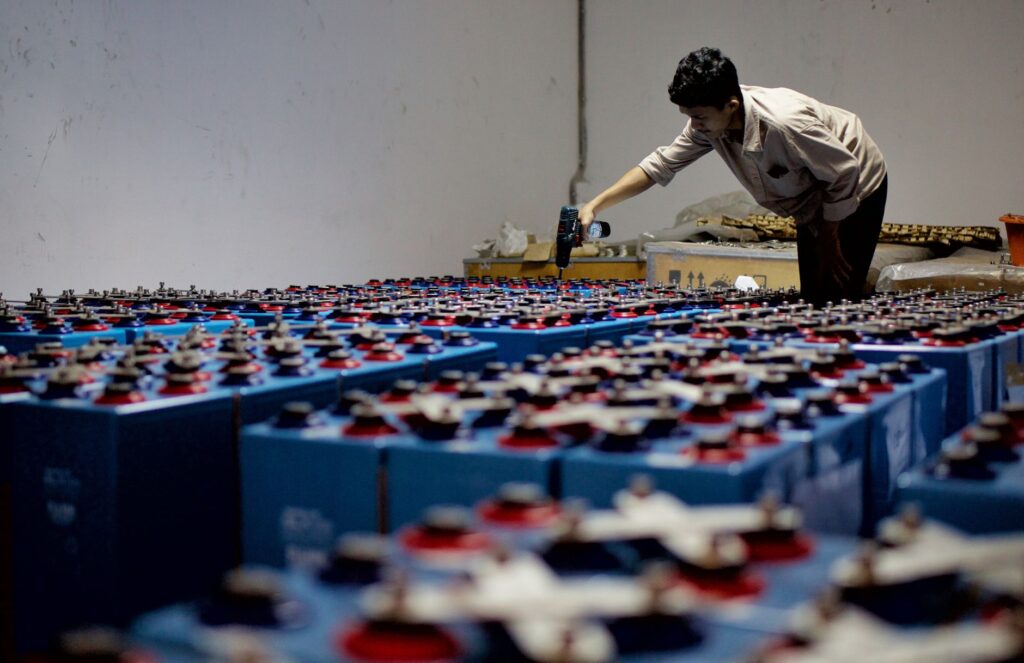

Indian clean technology company Ampere Hour Energy is aggressively expanding its deployment of utility-scale battery storage solutions across India this year, transitioning from localized microgrids to massive grid-connected systems to solve the critical intermittency challenges threatening the nation’s rapid renewable energy expansion.
The Growing Grid Intermittency Challenge
India has established itself as one of the world’s fastest-growing renewable energy markets, aiming to reach 500 gigawatts (GW) of non-fossil power capacity by 2030.
However, the rapid installation of solar and wind assets has exposed severe structural vulnerabilities within the national electricity grid.
Because solar generation peaks during midday hours while national electricity demand crests in the evening, power distribution companies frequently face severe supply-demand mismatches, leading to energy curtailment and continued reliance on coal-fired peaking plants.
The Evolution of Energy Storage Infrastructure
To address this systemic bottleneck, Ampere Hour Energy, led by co-founder and Chief Executive Officer Ayush Misra, has pivoted its engineering focus toward utility-scale Battery Energy Storage Systems (BESS).
The company initially built its technological foundation by deploying decentralized microgrids in off-grid rural regions and commercial industrial facilities.
These early microgrid installations served as a testing ground for Ampere Hour’s proprietary energy management software and hardware integration capabilities, paving the way for larger grid-level interventions.
The transition from kilowatt-hour scale rural systems to megawatt-hour scale utility BESS represents a crucial evolution for India’s domestic energy manufacturing ecosystem.
By integrating advanced lithium-ion chemistries with intelligent grid controllers, these large-scale systems store excess solar energy during daytime peak production and discharge it back into the grid during high-demand hours.
Data Points and Market Requirements
According to projections from India’s Central Electricity Authority (CEA), the country will require at least 41.65 GW / 208.25 gigawatt-hours (GWh) of BESS capacity by 2031-2032 to maintain grid stability.
Industry analysts estimate that meeting these targets will require over $15 billion in capital investment across hardware manufacturing, software development, and system integration.
Market data indicates that energy curtailment in solar-heavy states like Rajasthan and Gujarat has occasionally reached 10 to 15 percent during peak generation months without local storage intervention.
By deploying utility-scale BESS, project developers can capture this otherwise wasted energy, improving the overall internal rate of return for commercial renewable installations.
Technological Integration and Domestic Capabilities
A central component of Ampere Hour Energy’s strategy is developing localized system integration and control software tailored specifically to India’s harsh climate conditions and volatile grid frequency environments.
While battery cell chemistry is predominantly imported, the proprietary algorithms governing charge-discharge cycles, thermal management, and predictive maintenance are designed and built domestically.
This localized approach reduces reliance on foreign system integrators and lowers total cost of ownership for Indian independent power producers.
The integration of artificial intelligence and machine learning into battery management systems allows utilities to forecast demand spikes and automate energy dispatch in real time.
Industry Implications and Financial Drivers
The acceleration of utility-scale storage adoption is reshaping the financial landscape of Indian clean energy development.
The Government of India recently introduced Viability Gap Funding (VGF) schemes covering up to 40 percent of the capital cost for 4,000 megawatt-hours of BESS projects, significantly improving project economics.
Furthermore, state regulatory commissions are increasingly mandating storage-linked renewable tenders, forcing developers to offer round-the-clock clean energy rather than simple daytime solar power.
For independent power producers, incorporating enterprise storage reduces financial exposure to imbalance penalties imposed by grid operators when actual generation deviates from forecasted output.
What to Watch Next
In the coming quarters, watch for the rollout of India’s first wave of mega-watt-scale storage tenders executed under the Viability Gap Funding framework, which will serve as a bellwether for institutional investor confidence.
Industry observers will also closely monitor domestic battery cell assembly developments and the evolution of ancillary service markets, which could allow BESS operators to sell frequency regulation services directly to national grid dispatchers.