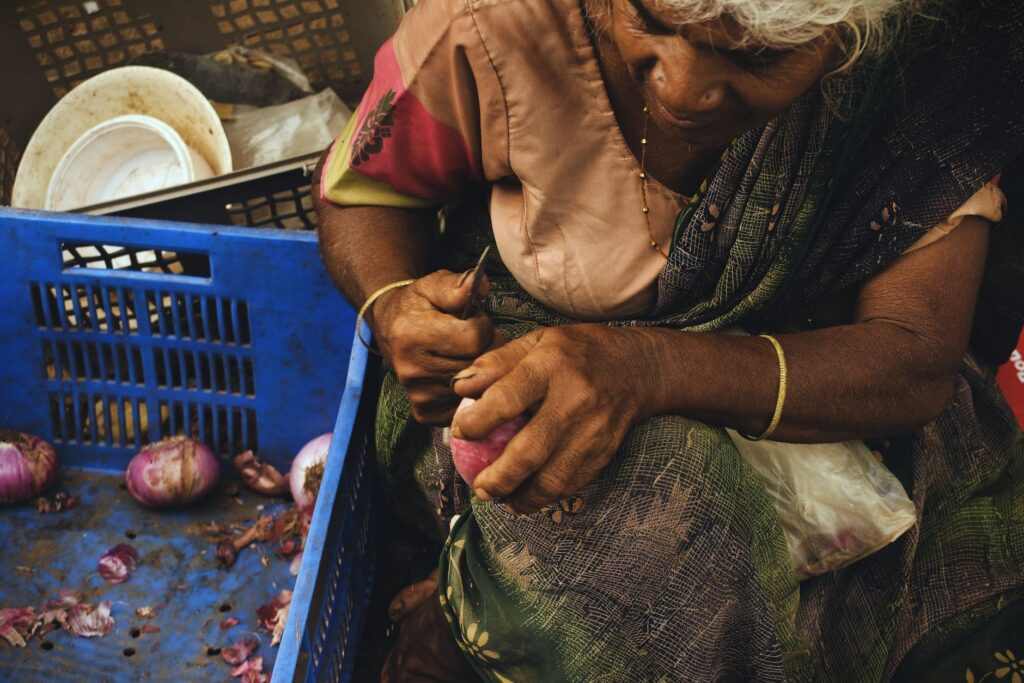

Millions of consumers across India face severe pressure on household budgets this month as sudden price spikes in onion and rice—two foundational kitchen staples—threaten to push food inflation higher. Unseasonal deluge across key growing districts in Maharashtra has severely damaged onion harvests, while erratic monsoon rainfall in primary grain belts has constrained paddy production, forcing wholesale and retail prices upward nationwide.
Background to the Agricultural Shock
Onion and rice form the core of daily nutrition for well over a billion people in South Asia. Any disruption to their supply chain creates immediate ripples throughout the domestic economy, making food prices a sensitive barometer for consumer sentiment.
Maharashtra accounts for more than a third of national onion output, with the Nashik belt serving as the commercial epicenter for distribution. Meanwhile, major producing states like West Bengal, Uttar Pradesh, Telangana, and Andhra Pradesh generate the vast majority of India’s rice supply, relying heavily on predictable monsoon cycles for field inundation.
Over recent agricultural seasons, increasingly unpredictable climate patterns have repeatedly exposed the vulnerability of India’s fresh produce supply chains. The current convergence of excessive rain in the west and moisture deficits in central and eastern regions represents a complex dual-shock scenario for agricultural logistics.
Maharashtra Rain Damages Onion Reserves
Torrential downpours across western Maharashtra during the critical harvest window flooded standing late-kharif crops and compromised stored rabi reserves. Farmers in Nashik, Ahmednagar, and Pune report extensive rot in field stocks, drastically reducing the volume of marketable produce available for interstate trade.
At the Lasalgaon Wholesale Market—Asia’s largest onion trading hub—daily arrivals dropped by nearly 35 percent over a two-week period. Wholesale prices responded instantly, surging to multi-month highs as regional traders scrambled to secure available quality stock before supplies dwindled further.
Retail vendors in major urban centers including Mumbai, Delhi, and Bengaluru quickly passed these procurement costs down to consumers. In neighborhood markets, retail onion prices have spiked by 25 to 40 percent in a matter of weeks, forcing households to alter daily purchasing habits and meal planning.
Deficient Rainfall Strains Rice Yields
Simultaneously, key paddy-growing provinces experienced prolonged dry spells during essential germination and transplantation stages. Deficient rainfall delayed planting schedules and restricted total cultivated acreage across several prominent agricultural districts.
Preliminary acreage data from state agriculture departments indicates a notable contraction in total paddy coverage compared to the previous year’s figures. The lower planted area, combined with reduced water levels in key irrigation reservoirs, has fueled market expectations of a diminished winter harvest.
Rice millers and wholesalers have responded by elevating prices across non-basmati and coarse varieties. The immediate impact is particularly acute for lower-income households, who spend a higher proportion of their monthly income on baseline cereal grains.
Economic Analysis and Market Projections
Macroeconomic experts warn that the simultaneous surge in onion and rice valuations could trigger a wider spike in the Consumer Price Index (CPI). Food and beverage items account for nearly half of the Indian CPI basket, with vegetables and cereals exerting a disproportionate influence on overall headline inflation rates.
“When two core food categories experience supply side shocks simultaneously, household inflation expectations jump rapidly,” stated Dr. Arpita Banerjee, senior agricultural economist at the Institute for Economic Growth. “Onions possess high price elasticity at the retail level, while rice price hikes hit baseline monthly consumption immediately across urban and rural demographics alike.”
Data from the Ministry of Consumer Affairs reveals that average retail prices for non-basmati rice have risen steadily over consecutive quarters, compounding the sudden price shock seen in fresh produce. Financial institutions have adjusted their near-term inflation forecasts upward, citing persistent weather volatility as the primary threat to domestic price stability.
Government Measures and Future Outlook
In response to growing market anxiety, central authorities are evaluating aggressive market intervention mechanisms to stabilize retail rates. Policy options under active consideration include releasing subsidized onions from strategic government reserves managed by the National Agricultural Cooperative Marketing Federation of India (NAFED).
Trade officials are also monitoring international export channels, considering potential adjustments to minimum export prices or export tariffs on key commodities to prioritize domestic supply. However, export curbs often trigger trade friction and lower profit margins for export-oriented farming communities.
Market observers and commodity traders are closely tracking upcoming winter crop sowings and official government buffer releases over the coming weeks. Whether weather conditions stabilize for early winter harvests will dictate whether retail food costs ease or escalate further into the next quarter.