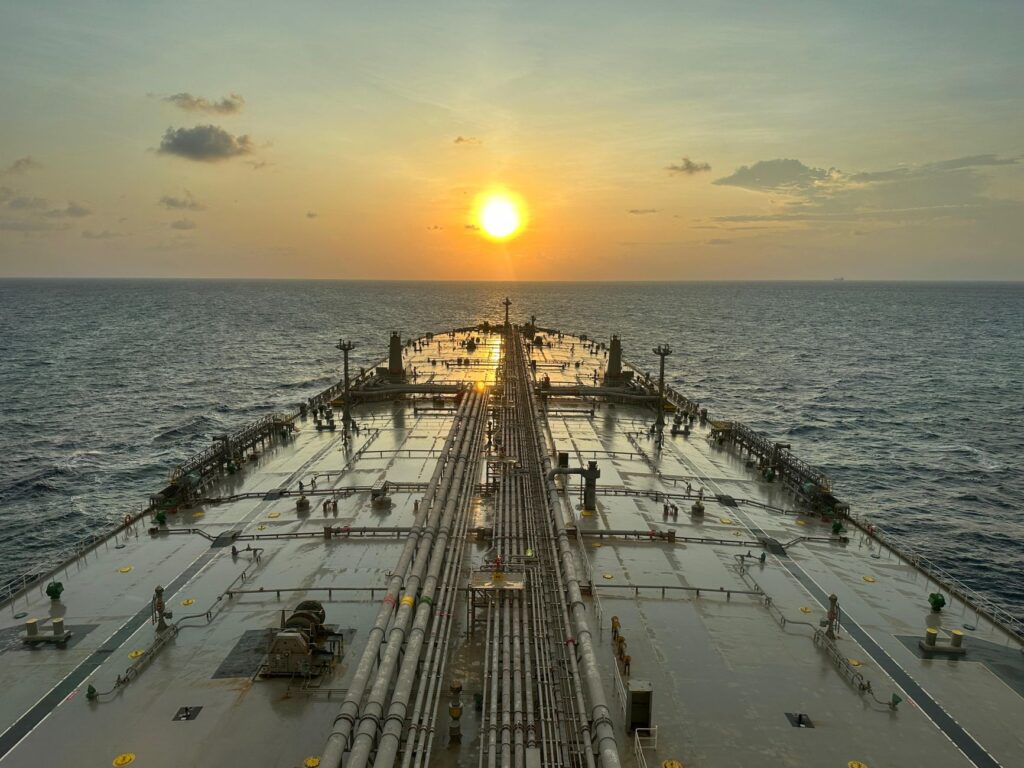

Global crude oil benchmarks surged past $95 per barrel this week as escalating military tensions and a threatened naval blockade in the critical Red Sea shipping lane raised fears of severe disruptions to international energy supplies.
The price rally reflects growing anxiety among commodity traders that prolonged conflict in the Middle East could directly impact oil production facilities and choke off vital maritime trade routes. With energy markets already tightly balanced, geopolitical risk premiums are rapidly rising as diplomatic efforts struggle to defuse the regional crisis.
The Geopolitical Flashpoint in the Red Sea
The Red Sea, specifically the narrow Bab-el-Mandeb Strait, serves as a vital artery for global commerce, facilitating the passage of nearly 10 percent of the world’s seaborne oil trade. Recent threats of a blockade by regional militant groups have forced major shipping conglomerates to reassess the safety of this route.
Historically, disruptions in this corridor force tankers to divert around the southern tip of Africa, via the Cape of Good Hope. This detour adds approximately 10 to 14 days to transit times, significantly increasing fuel consumption, labor costs, and tightening global vessel capacity.
Market analysts note that the current escalation represents the most significant threat to maritime energy transit since the supply chain disruptions of the early 2020s, raising fears of a prolonged shipping crisis.
Market Reaction and Price Dynamics
In response to the heightened risk, Brent crude futures, the international benchmark, jumped 3.5 percent to settle at $95.20 a barrel. Simultaneously, West Texas Intermediate (WTI), the U.S. standard, rose to $91.80, its highest level in several months.
Energy trading desks report a surge in options volume as investors rush to hedge against the possibility of oil breaching the $100 threshold. The rapid price appreciation is driven not by an immediate physical shortage, but by a substantial risk premium being priced into near-term contracts.
According to data from the Intercontinental Exchange (ICE), commercial long positions have reached their highest levels since last autumn, indicating strong bullish sentiment among institutional investors who anticipate further volatility.
Expert Perspectives on Supply Chain Strain
“The market is pricing in a worst-case scenario where shipping lanes are closed indefinitely,” says Sarah Jenkins, chief energy strategist at Apex Commodities. “Even if a total blockade does not materialize, the threat alone has driven maritime insurance premiums up by over 200 percent in the last fortnight.”
The International Energy Agency (IEA) recently cautioned that while global oil inventories remain relatively stable, the buffer capacity of non-OPEC producers may not be sufficient to offset a major, prolonged disruption in Middle Eastern flows.
Furthermore, shipping industry representatives warn that the logistics sector is already operating near maximum capacity. Diverting cargo not only delays oil deliveries but also disrupts the return of empty tankers, compounding global supply chain friction across multiple sectors.
Economic Implications for Consumers and Industry
For global economies still recovering from recent inflationary cycles, the return of $95 oil poses a significant challenge. Higher crude prices translate directly to increased costs for gasoline, diesel, and aviation fuel, threatening to trigger a secondary wave of consumer inflation.
Central banks, which have spent the last two years raising interest rates to curb inflation, now face a delicate balancing act. Persistent energy inflation could force policymakers to keep interest rates elevated for longer than previously anticipated, potentially slowing global economic growth.
Industries heavily reliant on transport and logistics, such as manufacturing and agriculture, are already preparing to pass these increased input costs down to end consumers, further squeezing household budgets.
What to Watch Next
In the coming weeks, market observers will closely monitor the deployment of international naval coalitions designed to patrol and secure the Red Sea passage. The effectiveness of these security measures will be critical in determining whether shipping companies resume normal routing.
Attention will also turn to the upcoming OPEC+ ministerial meeting, where member nations must decide whether to maintain current production cuts or release additional supply to stabilize prices.
Ultimately, the trajectory of global oil prices hinges on whether diplomatic efforts can de-escalate regional hostilities before a physical disruption to oil extraction or transport infrastructure occurs.