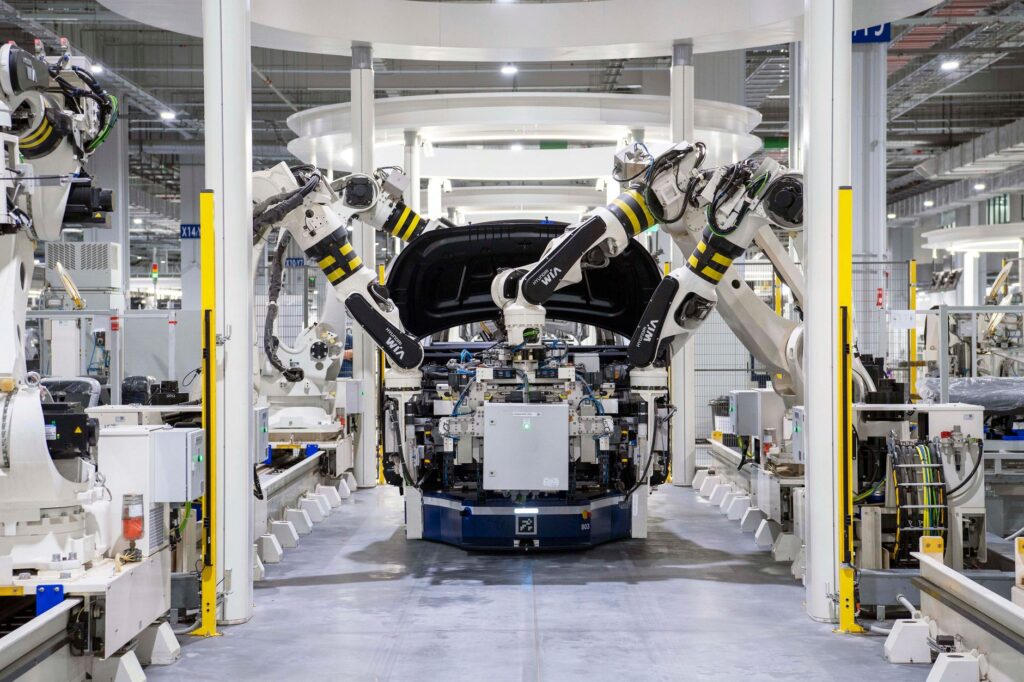

Detroit-based General Motors is scheduled to report its second-quarter financial results before the opening bell on Tuesday, facing high expectations from Wall Street as the automaker balances legacy gas-powered truck profits with its costly transition to electric vehicles. Analysts expect the Detroit giant to demonstrate continued resilience in its core combustion-engine business while providing crucial updates on its electric vehicle production targets and autonomous driving unit, Cruise.
According to consensus estimates compiled by LSEG, Wall Street analysts expect General Motors to report adjusted earnings per share of $3.20 and revenue of $47.01 billion. These projections reflect a robust demand environment for GM’s high-margin crossovers, SUVs, and pickup trucks, which continue to fund the company’s expensive pivot toward electrification and digital software integration.
The Core Profit Engine: Trucks and SUVs
The financial foundation of General Motors remains its highly profitable internal combustion engine (ICE) lineup. Sales of the Chevrolet Silverado and GMC Sierra pickup trucks, alongside full-size SUVs like the Chevrolet Tahoe and Cadillac Escalade, have remained remarkably steady despite macroeconomic headwinds, including elevated interest rates and persistent inflation.
Dealer inventories have gradually normalized over the past year, allowing GM to maintain strong pricing power. While some industry competitors have resorted to heavy discounting to move inventory, GM has managed to keep its incentives relatively disciplined, protecting its North American profit margins. This pricing resilience is expected to be a primary driver behind the projected $47.01 billion in quarterly revenue.
Navigating the Electric Vehicle Transition
While gas-powered vehicles pay the bills, Wall Street remains highly focused on GM’s electric vehicle (EV) trajectory. The automaker has faced a series of challenges over the past eighteen months, including battery module assembly bottlenecks and software glitches that temporarily halted sales of the highly anticipated Chevrolet Blazer EV.
Investors will look for signs that GM is successfully scaling its proprietary Ultium battery platform. Chief Executive Mary Barra has previously stated that 2024 is the “year of execution” for GM’s EV lineup. The company hopes to prove that it can build momentum with newer models, including the Chevrolet Equinox EV and the Cadillac Lyriq, while aiming for positive variable EV margins by the end of the year.
Expert Perspectives and Financial Metrics
Automotive analysts remain cautiously optimistic about GM’s near-term performance but express concern over long-term industry trends. Analysts at Wedbush Securities highlight that GM’s disciplined capital allocation, including a massive $6 billion share buyback program announced earlier this year, has helped boost investor confidence and support the stock price amid broader market volatility.
However, some analysts warn that the overall U.S. auto market may be cooling. “We are watching transaction prices closely,” noted one veteran industry analyst. “While GM has defied gravity with its pricing power so far, rising consumer credit delinquency rates and high borrowing costs could eventually force the automaker to increase promotional spending, squeezing margins in the second half of the year.”
The Cruise Factor and Capital Allocation
Beyond vehicle sales, GM’s autonomous vehicle division, Cruise, remains a major focal point for investors. Cruise resumed supervised manual testing in several U.S. cities earlier this spring following a high-profile pedestrian accident in San Francisco late last year, which led to a temporary grounding of its entire fleet and leadership restructuring.
Investors are eager to hear how much progress Cruise has made toward regaining regulatory trust and public confidence. The division has historically been a significant cash burn for GM, and any updates regarding its path to commercialization, or potential spending reductions, could heavily influence how the market reacts to the overall earnings report.
Implications and What to Watch Next
The upcoming earnings report will serve as a critical bellwether for the entire legacy automotive sector. If GM meets or exceeds the $3.20 adjusted EPS target, it will signal to the market that traditional automakers can successfully self-fund their electric transitions using the cash flows generated by traditional combustion engines.
In the coming months, industry observers should closely monitor GM’s full-year guidance adjustments, particularly regarding EV production targets. Any downward revision in EV outlook or signs of escalating price wars in the domestic market could quickly overshadow strong second-quarter numbers, shifting the focus back to the long-term viability of GM’s dual-track vehicle strategy.