




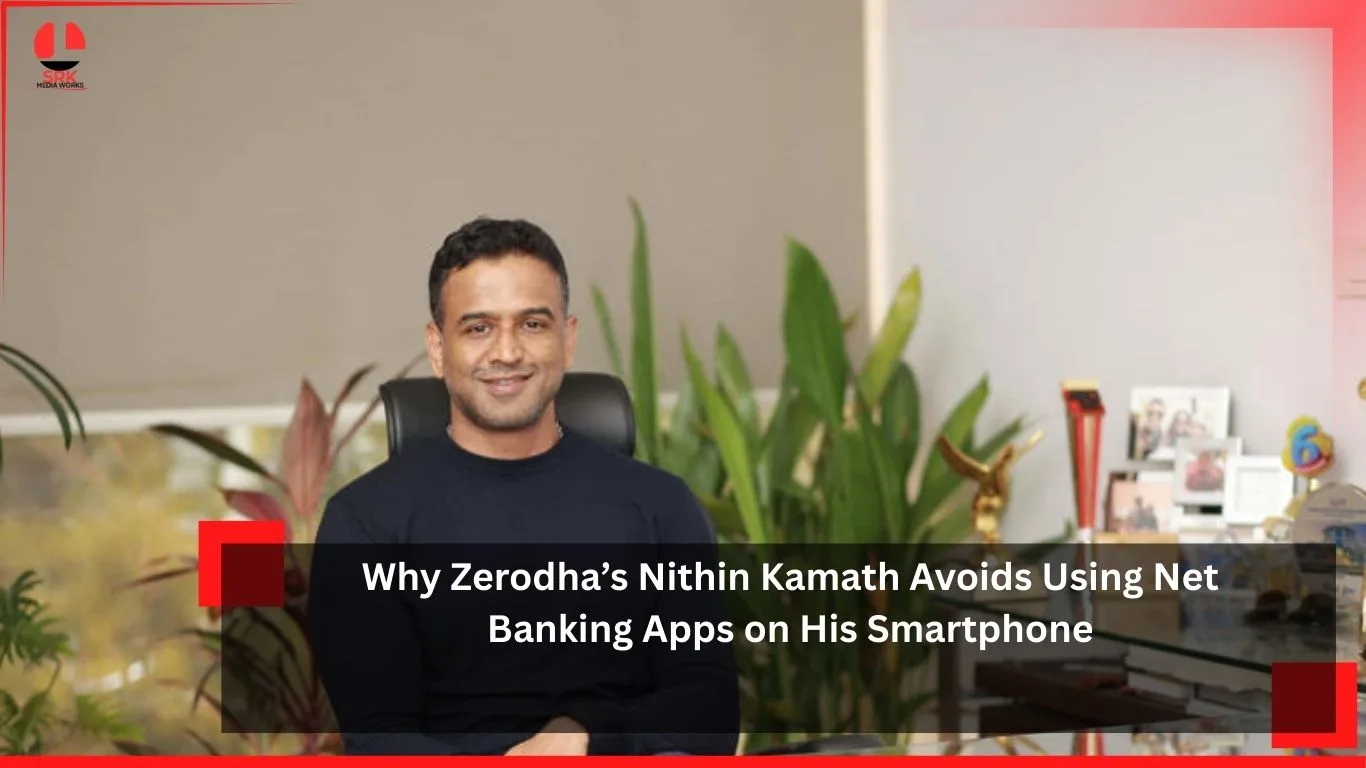
Zerodha’s founder and CEO, Nithin Kamath, has revealed that he avoids using net banking apps on his smartphone due to concerns over privacy, security, and excessive permissions demanded by these applications. His stance has sparked discussions in the fintech and banking community about the balance between convenience and cybersecurity in India’s digital financial ecosystem.
Reasons Behind Kamath’s Decision
1. Excessive Permissions
- Many net banking apps request access to SMS, contacts, and phone data.
- Kamath believes such permissions are unnecessary and compromise user privacy.
2. Cybersecurity Concerns
- Global cybersecurity norms discourage apps from demanding intrusive permissions.
- Kamath argues that these practices expose users to risks of data misuse and fraud.
3. Privacy-First Approach
- Zerodha itself has adopted a minimal permissions policy for its trading app.
- Kamath emphasizes that fintech platforms should prioritize user trust over convenience.
4. Alternative Practices
- Instead of mobile apps, Kamath prefers using desktop banking portals.
- He believes desktops offer better control and reduced exposure to mobile vulnerabilities.
Comparative Analysis: Permissions in Banking vs Fintech Apps
| App Type | Typical Permissions Requested | Privacy Risk Level |
|---|---|---|
| Net Banking Apps | SMS, Contacts, Location, Phone State | High |
| Fintech Trading Apps | Limited (Login, Notifications) | Low |
| Payment Wallets | SMS, Location, Camera, Contacts | Moderate |
This comparison highlights why Kamath avoids net banking apps while promoting privacy-first fintech solutions.
Impact on Digital Banking Ecosystem
For Users
- Raises awareness about data privacy risks.
- Encourages users to question app permissions before granting access.
For Banks
- Pushes banks to rethink app design and align with global standards.
- May lead to reduced reliance on intrusive permissions.
For Fintechs
- Provides an opportunity to differentiate by adopting privacy-first policies.
- Builds stronger trust among tech-savvy investors.
Analytical View: User Trust in Digital Finance
| Factor | Importance for Users | Current Banking Apps | Fintech Platforms |
|---|---|---|---|
| Security | Very High | Moderate | High |
| Privacy | Very High | Low | High |
| Convenience | High | High | High |
| Transparency | High | Moderate | High |
Kamath’s views reflect the growing demand for security and privacy in digital finance, where users increasingly value trust over convenience.
Broader Implications
- Regulatory Push – Authorities may tighten rules on app permissions.
- Consumer Awareness – Users may become more cautious about granting access.
- Industry Shift – Banks may adopt fintech-like privacy-first models.
Conclusion
Nithin Kamath’s decision to avoid net banking apps on his smartphone is not about rejecting technology but about prioritizing privacy and security. His stance highlights the need for banks to align with global cybersecurity norms and reduce reliance on intrusive permissions.
As India’s digital finance ecosystem grows, Kamath’s perspective could influence both consumers and institutions to adopt safer, more transparent practices. The debate he has sparked may well shape the future of digital banking in India.
Disclaimer
This article is intended for informational purposes only. It does not constitute financial or cybersecurity advice. Readers are encouraged to consult professionals before making decisions related to digital banking, app usage, or cybersecurity practices. The content is based on publicly available information and industry analysis.