




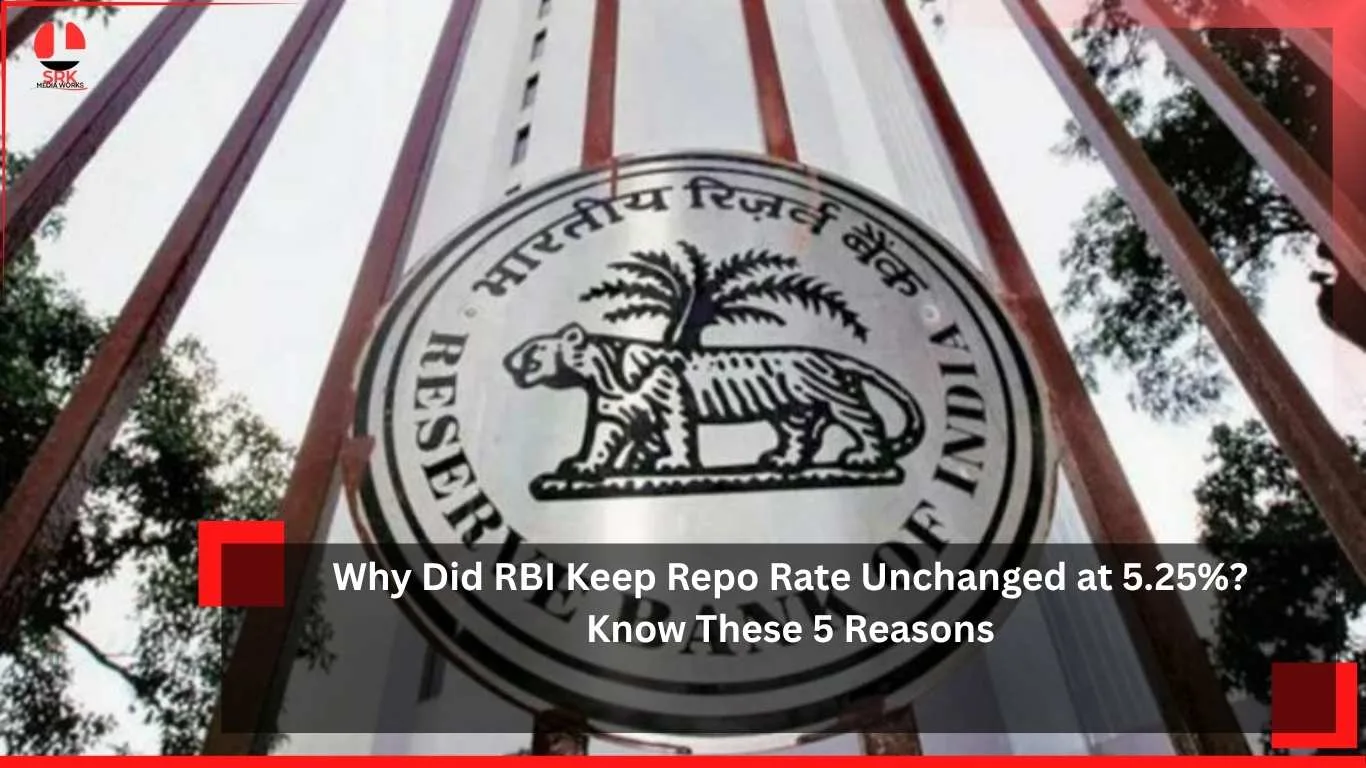
The Reserve Bank of India (RBI) decided on April 8, 2026, to keep the repo rate unchanged at 5.25% and maintain a neutral stance. The Monetary Policy Committee (MPC), led by Governor Sanjay Malhotra, cited inflationary risks, global uncertainties, and the need to balance growth with stability as the key drivers behind this decision.
1. Inflation Risks Remain Elevated
- RBI projected FY27 CPI inflation at 4.6%, slightly above its medium-term target of 4%.
- Geopolitical tensions and supply chain disruptions continue to pose risks to food and energy prices.
- Holding rates steady allows RBI to monitor inflation trends without prematurely easing policy.
2. Strong Economic Growth Outlook
- RBI expects GDP growth at 6.9% in FY27, with quarterly growth ranging between 6.7% and 7.2%.
- The economy remains resilient, supported by domestic demand and government infrastructure spending.
- Cutting rates could overstimulate demand and worsen inflation, while hiking rates might dampen growth.
3. Neutral Policy Stance for Flexibility
- The MPC unanimously voted to maintain a neutral stance, giving RBI flexibility to respond to evolving conditions.
- This approach allows RBI to pivot quickly if inflation spikes or growth slows.
- A neutral stance signals caution but avoids locking into a tightening or loosening cycle.
4. Assessing Impact of Past Rate Cuts
- RBI has cut rates in previous cycles to support growth.
- Keeping the repo rate unchanged provides time to evaluate the full impact of earlier decisions on credit growth, consumption, and investment.
- This cautious approach ensures monetary policy remains effective without overshooting.
5. Global Uncertainties and Geopolitical Risks
- Ongoing geopolitical tensions, particularly in energy markets, create volatility in global prices.
- Uncertainty in advanced economies’ monetary policies (like the US Federal Reserve) also influences RBI’s cautious stance.
- By holding rates, RBI aims to shield India’s economy from external shocks while maintaining stability.
Comparative Table: RBI’s Decision in Context
| Factor | RBI’s Current Approach | Alternative (Rate Cut) | Alternative (Rate Hike) |
|---|---|---|---|
| Inflation Control | Balanced, cautious | Risk of higher inflation | Stronger inflation control but risks growth |
| Growth Support | Sustained at 6.9% | Boosts demand further | Slows demand, risks slowdown |
| Policy Flexibility | Neutral stance | Less room to tighten later | Less room to ease later |
| Global Risks | Shields economy | Vulnerable to shocks | Overreaction to external risks |
Conclusion
The RBI’s decision to keep the repo rate unchanged at 5.25% reflects a careful balancing act between inflation control, growth support, and global uncertainties. By maintaining a neutral stance, the central bank has signaled caution while preserving flexibility to act as conditions evolve. For households and businesses, this means borrowing costs remain stable, but vigilance on inflation continues.
Disclaimer
This article is an analytical overview based on publicly available information and RBI’s monetary policy announcements. It does not provide financial advice. Readers should consult professional advisors before making investment or borrowing decisions.