



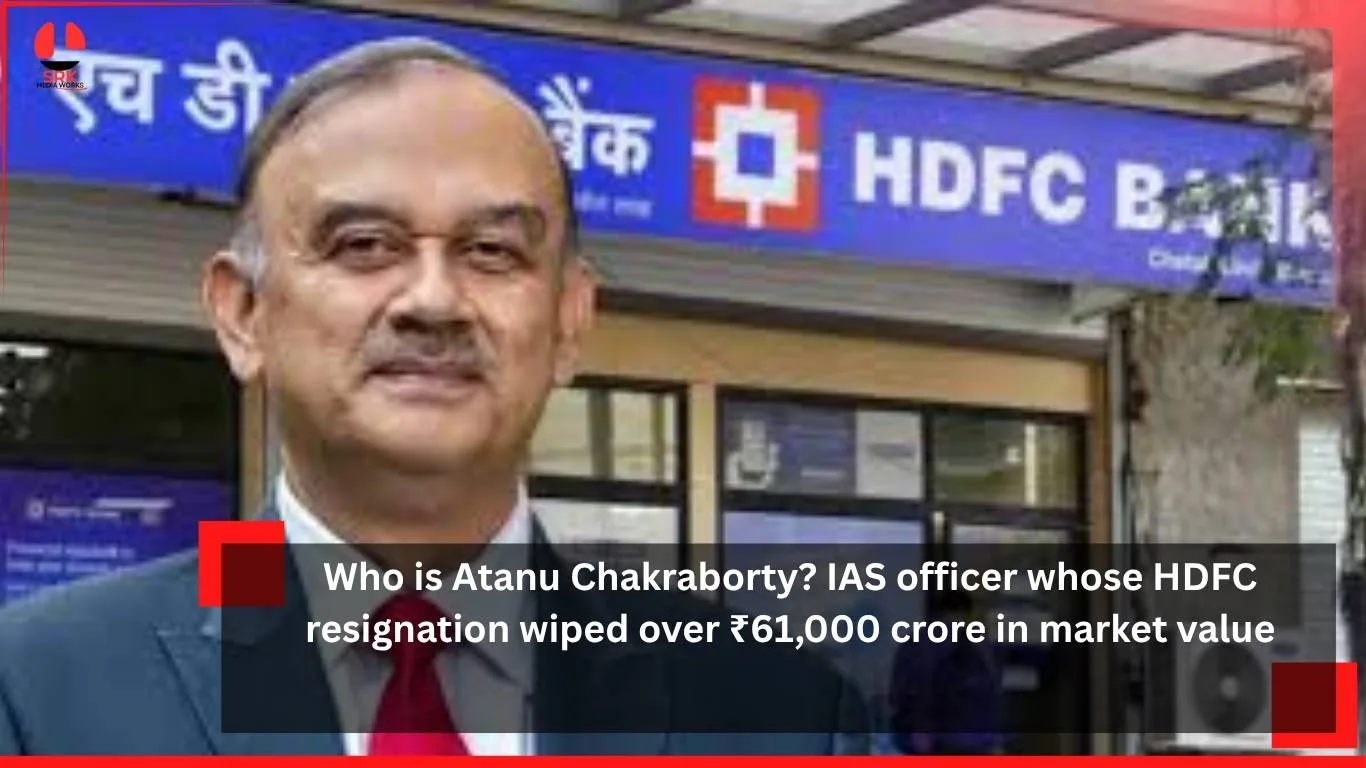
Atanu Chakraborty, a retired Indian Administrative Service (IAS) officer of the 1985 Gujarat cadre, has become the center of attention in India’s financial markets after his sudden resignation from HDFC Bank as part-time Chairman and Independent Director. His exit on March 18, 2026, triggered a massive sell-off in HDFC Bank shares, erasing more than ₹61,000 crore in market capitalization in a single trading session.
Career Journey of Atanu Chakraborty
Atanu Chakraborty has had a distinguished career in public service and finance.
- He served as Economic Affairs Secretary in the Ministry of Finance, where he played a key role in shaping India’s economic policies.
- He was also the Director General of Hydrocarbons, overseeing India’s oil and gas exploration sector.
- His tenure in the Department of Investment and Public Asset Management (DIPAM) was marked by major disinvestment initiatives, including strategic sales of public sector enterprises.
- After retiring from the IAS, Chakraborty transitioned into corporate governance, joining HDFC Bank’s board in 2021.
Why His Resignation Matters
Chakraborty’s resignation is not just another boardroom exit—it has raised serious concerns about governance and transparency in India’s largest private lender. His statement cited “ethical concerns,” which immediately spooked investors. The market interpreted this as a red flag, leading to panic selling.
HDFC Bank, known for its strong fundamentals and consistent performance, rarely faces such governance shocks. The sudden departure of a respected bureaucrat with deep financial expertise has amplified worries about internal issues that may not yet be visible to the public.
Impact on HDFC Bank’s Market Value
| Date | Event | Market Cap Change | Investor Sentiment |
|---|---|---|---|
| March 18, 2026 | Chakraborty resignation | -₹61,000 crore | Panic selling |
| March 19, 2026 | Recovery attempts | +₹12,000 crore | Partial rebound |
| March 20, 2026 | Continued volatility | -₹8,000 crore | Cautious outlook |
The immediate erosion of ₹61,000 crore in value highlights how sensitive investors are to governance-related developments.
Comparative Analysis of Leadership Exits in Indian Banks
| Bank | Key Exit Event | Market Impact | Recovery Timeline |
|---|---|---|---|
| HDFC Bank | Atanu Chakraborty resignation | -₹61,000 crore | Ongoing |
| ICICI Bank | Chanda Kochhar exit | -₹30,000 crore | 6 months |
| Yes Bank | Rana Kapoor removal | -₹40,000 crore | 1 year |
This comparison shows that leadership exits tied to governance concerns often trigger sharp declines, with recovery timelines varying based on transparency and corrective measures.
Investor Outlook
Analysts believe that the resignation could lead to short-term volatility in HDFC Bank’s stock. However, the bank’s strong fundamentals, retail banking dominance, and digital expansion strategy remain intact. The key concern is whether Chakraborty’s exit signals deeper governance issues or was an isolated ethical stand.
Institutional investors are expected to seek clarity from the bank’s management, while retail investors may remain cautious until stability returns.
Broader Implications for Corporate Governance
Chakraborty’s resignation underscores the importance of ethical leadership in India’s banking sector. As regulators tighten oversight, board members are expected to uphold transparency and accountability. His decision may set a precedent for other independent directors to take a stronger stance on governance matters.
Key Takeaways
- Atanu Chakraborty is a seasoned IAS officer with extensive experience in finance and governance.
- His resignation from HDFC Bank wiped out over ₹61,000 crore in market value.
- Ethical concerns cited in his exit have raised questions about transparency in India’s largest private lender.
- Investor sentiment remains cautious, with analysts awaiting clarity from the bank’s management.
- The incident highlights the critical role of independent directors in safeguarding corporate governance.
Disclaimer: This article is intended for informational purposes only and does not constitute investment advice. Stock markets are inherently volatile, and readers should consult financial advisors before making investment decisions. The views expressed are based on market trends and public information, and future outcomes may differ significantly.