


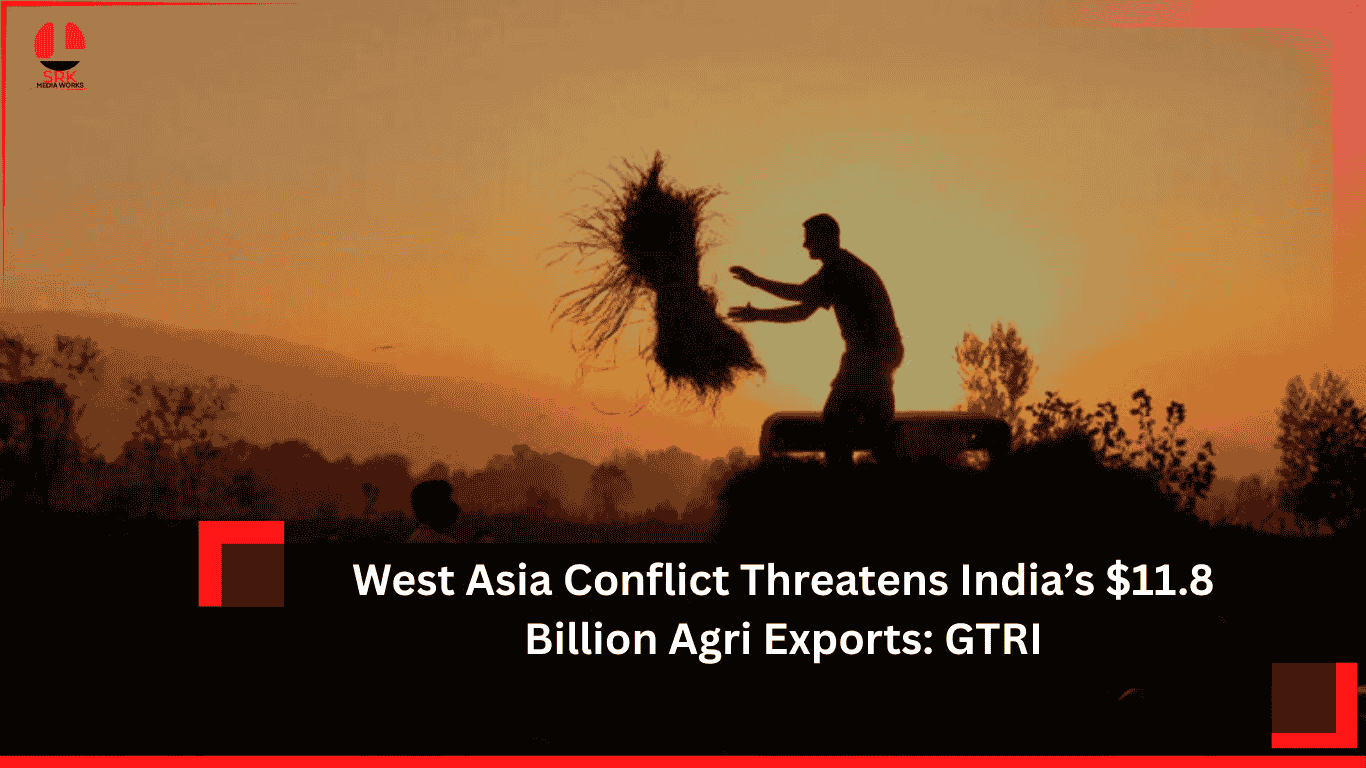
The ongoing conflict in West Asia has raised serious concerns for India’s agricultural export sector, valued at approximately $11.8 billion annually. According to the Global Trade Research Initiative (GTRI), disruptions in shipping routes, rising insurance costs, and geopolitical instability could significantly impact India’s ability to maintain its export momentum in key markets.
🌍 Background
India exports a wide range of agricultural products to West Asia, including rice, sugar, spices, tea, coffee, and marine products. The region has traditionally been one of India’s largest buyers due to proximity, cultural ties, and strong demand for staples. However, the current conflict threatens supply chains, creating uncertainty for exporters and importers alike.
🏛️ Key Risks Highlighted by GTRI
- Shipping Disruptions: Conflict in the region has led to rerouting of vessels, increasing transit times and costs.
- Insurance Premiums: War-risk premiums have surged, raising the cost of exporting goods.
- Payment Delays: Financial instability in affected countries could lead to delayed payments for Indian exporters.
- Market Volatility: Demand fluctuations due to political uncertainty may reduce export volumes.
📊 Comparative Overview of India’s Agri Exports to West Asia
| Product Category | Export Value (USD Billion) | Key Markets in West Asia | Risk Level |
|---|---|---|---|
| Rice | 4.2 | UAE, Saudi Arabia, Iran | High |
| Sugar | 1.8 | Oman, Bahrain, Kuwait | Moderate |
| Spices | 2.1 | UAE, Qatar, Saudi Arabia | High |
| Tea & Coffee | 1.2 | Iran, UAE, Lebanon | Moderate |
| Marine Products | 2.5 | UAE, Saudi Arabia | High |
📈 Pivot Analysis: Conflict Impact vs Export Opportunities
| Factor | Conflict Impact | Export Opportunities |
|---|---|---|
| Shipping Routes | Longer transit, higher costs | Explore alternative ports in Africa/Europe |
| Insurance Costs | Rising premiums | Negotiate collective insurance packages |
| Payment Security | Risk of delays | Use secured trade finance instruments |
| Market Demand | Volatile | Diversify into Southeast Asia & Africa |
🔎 Broader Implications
- Economic Impact: A slowdown in exports could affect India’s foreign exchange earnings and rural incomes.
- Policy Response: The government may need to provide support through subsidies, credit facilities, and diplomatic engagement.
- Global Trade Shifts: India might look to diversify its agricultural export markets to reduce dependency on West Asia.
🗣️ Expert Opinions
- Trade Analysts: Stress that India must quickly diversify markets to mitigate risks.
- Economists: Highlight that rising costs could erode competitiveness of Indian exports.
- Industry Leaders: Call for government intervention to stabilize shipping and insurance costs.
🌐 Impact on Farmers and Exporters
Farmers producing rice, sugar, and spices could face reduced demand if exports slow down. Exporters, particularly small and medium enterprises, may struggle with rising costs and delayed payments. This could lead to reduced profitability and job losses in the sector.
📝 Conclusion
The West Asia conflict poses a significant threat to India’s $11.8 billion agricultural exports. With shipping disruptions, rising insurance costs, and market volatility, India must adopt a proactive strategy to safeguard its exporters and farmers. Diversification of markets, government support, and diplomatic engagement will be crucial in ensuring that India’s agricultural sector remains resilient in the face of global challenges.
Disclaimer
This article is based on public reports and trade analysis. It does not represent endorsement of any political figure or government. The content is intended for informational and educational purposes only, highlighting the risks posed by the West Asia conflict to India’s agricultural exports. Readers are encouraged to consult multiple perspectives for a comprehensive understanding.