



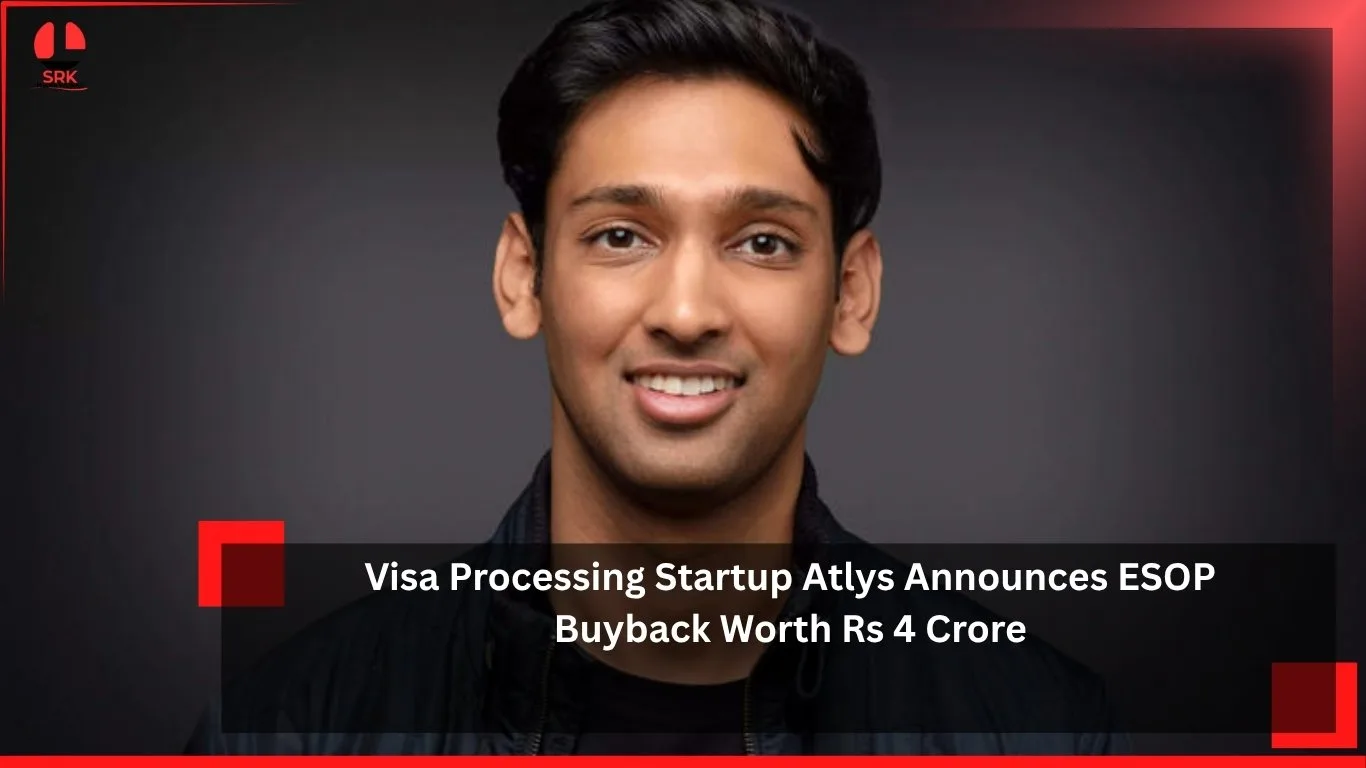
Visa processing startup Atlys has announced an Employee Stock Ownership Plan (ESOP) buyback worth Rs 4 crore, signaling its commitment to rewarding employees and strengthening retention. The move highlights the company’s growth trajectory in the travel-tech sector and its focus on building long-term value for both employees and investors.
What Is an ESOP Buyback?
An ESOP buyback allows employees to sell a portion of their vested shares back to the company. This provides:
- Liquidity for Employees: Converts paper wealth into real financial gains.
- Retention Incentive: Encourages employees to stay longer and contribute to growth.
- Investor Confidence: Demonstrates financial stability and maturity.
- Market Signaling: Shows that the company values its workforce as stakeholders.
Why Atlys Opted for ESOP Buyback
Sources close to the company highlight five key reasons:
- Employee Reward: Recognizing contributions of early employees who helped scale operations.
- Talent Retention: Strengthening loyalty in a competitive startup ecosystem.
- Financial Strength: Reflecting Atlys’ stable cash flows and investor backing.
- Market Positioning: Signaling maturity ahead of potential fundraising or expansion.
- Cultural Commitment: Reinforcing employee-first values in organizational culture.
Comparative Analysis: ESOP Buyback vs. Fresh ESOP Grant
| Dimension | ESOP Buyback | Fresh ESOP Grant |
|---|---|---|
| Employee Benefit | Immediate liquidity | Future potential wealth |
| Retention Impact | Rewards loyalty | Encourages long-term stay |
| Company Signal | Shows financial strength | Shows growth ambition |
| Market Perception | Mature, stable | Aggressive, expansion-focused |
Pivot Analysis: Impact on Employees vs. Company
| Factor | Impact on Employees | Impact on Company |
|---|---|---|
| Financial Gain | Converts ESOPs into cash | Demonstrates cash reserves |
| Morale | Boosts motivation | Strengthens employer brand |
| Retention | Encourages loyalty | Reduces attrition risk |
| Future Outlook | Builds trust | Positions for expansion and IPO readiness |
Atlys’ Growth Story
Founded to simplify visa processing, Atlys has rapidly scaled by offering:
- Digital Visa Applications: Streamlined processes for multiple countries.
- AI-Powered Document Verification: Reducing errors and delays.
- Global Partnerships: Collaborations with embassies and travel agencies.
- Customer-Centric Services: Focus on speed, transparency, and reliability.
The ESOP buyback reflects the company’s confidence in its business model and growth trajectory.
Market Reaction
- Employees: Welcomed the buyback as recognition of their contributions.
- Investors: Viewed the move as a sign of financial maturity.
- Industry Analysts: Highlighted Atlys as a rising player in the travel-tech ecosystem.
Challenges Ahead
Despite the positive move, Atlys faces challenges:
- Regulatory Compliance: Navigating visa regulations across multiple jurisdictions.
- Competition: Facing rivals in both fintech and travel-tech sectors.
- Scaling Operations: Managing growth while maintaining service quality.
- Global Uncertainty: Travel demand remains sensitive to geopolitical and economic shifts.
Future Outlook
Atlys’ ESOP buyback sets the stage for:
- Talent Retention: Stronger employee loyalty and reduced attrition.
- Expansion Plans: Entry into new geographies and services.
- Fundraising Potential: Enhanced credibility for future capital raises.
- IPO Readiness: Building a track record of employee-centric policies.
Conclusion
The announcement that Atlys has launched an ESOP buyback worth Rs 4 crore underscores the company’s commitment to employees and its confidence in future growth. By rewarding its workforce, Atlys strengthens its brand as a travel-tech innovator while positioning itself for expansion and potential public listing in the years ahead.
Disclaimer
This article is an analytical overview based on publicly available information and market assessments. It does not provide investment advice. Readers should consult financial experts before making investment or career decisions.