




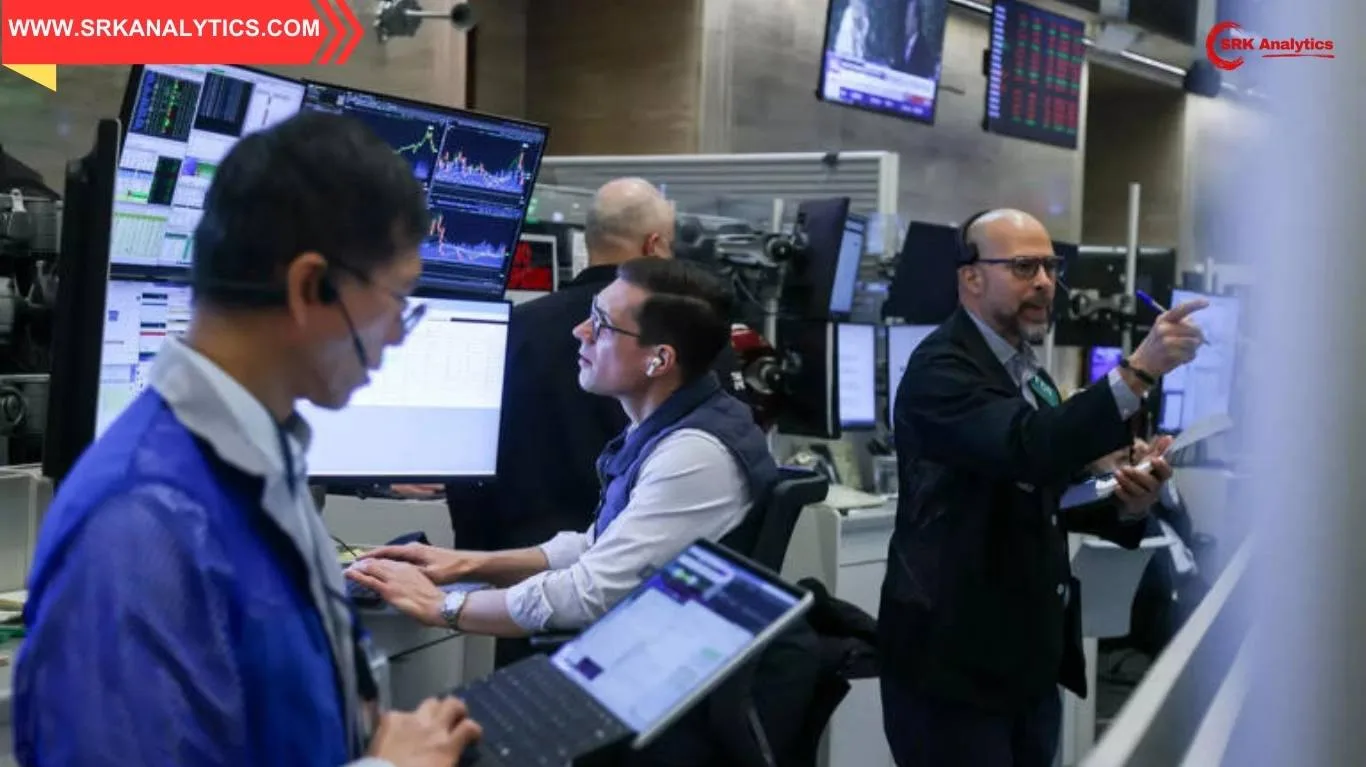
The US wealth management industry has become the latest sector to face disruption fears from artificial intelligence, triggering a sharp selloff in major brokerage and advisory stocks. On February 10, 2026, shares of Raymond James Financial, Charles Schwab, LPL Financial Holdings, and Stifel Financial Corp. plunged between 7% and 9%, marking their worst trading sessions in years.
The rout was sparked by Altruist Corp., a fintech startup that introduced an AI-powered tax strategy tool, raising concerns that automated financial advice could erode the traditional wealth management business model. Investors reacted by unloading shares, mirroring recent selloffs in software, private credit, and insurance brokerage firms that were also hit by AI-driven disruption fears.
Key Highlights
- AI Trigger: Altruist’s AI tax strategy tool raised fears of automation replacing human advisors.
- Stock Impact: Raymond James fell 8.8%, Schwab dropped 7.4%, LPL Financial lost 8.3%, and Stifel Financial slid nearly 7%.
- Investor Sentiment: Concerns that wealth managers could be the next casualty of AI disruption.
- Market Context: Similar selloffs recently hit insurance brokers and software firms.
- Wall Street Reaction: Analysts warn of long-term structural risks but note AI adoption could also create new opportunities.
Analysis of Wealth Manager Selloff
| Factor | Before AI Tool Launch | After AI Tool Launch | Outcome Observed |
|---|---|---|---|
| Investor Sentiment | Stable, cautious optimism | Panic selling, fear of disruption | Sharp decline |
| Stock Prices | Steady growth trajectory | 7–9% fall in major firms | Worst day since 2020–21 |
| Industry Outlook | Traditional advisory model | AI-driven automation threat | Uncertainty |
| Market Context | Insurance, software hit by AI | Wealth managers next in line | Sector-wide selloff |
| Long-Term Impact | Human advisor dominance | AI reshaping advisory landscape | Structural change |
Comparative Analysis of AI’s Impact Across Sectors
| Sector | AI Innovation Introduced | Market Reaction | Long-Term Risk |
|---|---|---|---|
| Software | AI coding assistants | Selloff in tech stocks | Job displacement fears |
| Insurance Brokers | AI claims automation | Sharp declines | Reduced need for intermediaries |
| Private Credit | AI risk assessment tools | Investor panic | Margin compression |
| Wealth Management | AI tax strategy/advice tools | 7–9% stock plunge | Threat to advisory fees |
Drivers Behind Investor Panic
- Automation Threat: AI tools can replicate tax planning and advisory services at lower costs.
- Margin Pressure: Wealth managers rely on advisory fees, which may shrink if AI tools dominate.
- Historical Pattern: Similar AI-driven selloffs in other sectors amplified fears.
- Uncertainty: Lack of clarity on regulatory oversight of AI-driven financial advice.
- Market Psychology: Traders reacting preemptively to avoid being caught in structural decline.
Public and Market Reaction
- Investors: Many retail and institutional investors rushed to exit positions in wealth management firms.
- Analysts: Some argue the selloff is overdone, noting AI adoption could enhance efficiency rather than eliminate advisors.
- Media Coverage: Framed the event as part of a broader AI disruption wave hitting multiple industries.
- Public Sentiment: Mixed, with younger investors welcoming AI tools while traditional clients remain skeptical.
Future Outlook
- Short-Term: Volatility in wealth manager stocks likely to persist as AI adoption accelerates.
- Medium-Term: Firms may integrate AI tools to complement human advisors, stabilizing margins.
- Long-Term: Hybrid advisory models combining AI efficiency with human expertise could emerge as the industry standard.
Challenges ahead:
- Regulatory clarity on AI-driven financial advice.
- Balancing cost efficiency with personalized client service.
- Managing investor confidence amid rapid technological change.
Conclusion
The sharp decline in US wealth manager stocks underscores growing investor anxiety about AI’s disruptive potential. With Altruist’s AI tax strategy tool putting wealth managers in the crosshairs, the industry faces a pivotal moment. While fears of automation replacing human advisors triggered panic selling, the long-term outlook may hinge on how effectively firms integrate AI into their business models. The selloff highlights both the risks and opportunities of AI-driven transformation in financial services.
Disclaimer
This article is intended for informational and analytical purposes only. It summarizes publicly available updates on the US wealth management sector’s recent selloff triggered by AI disruption fears. It does not constitute investment advice, insider information, or professional consultation. Readers are encouraged to verify facts independently and consult financial experts before making investment decisions.