





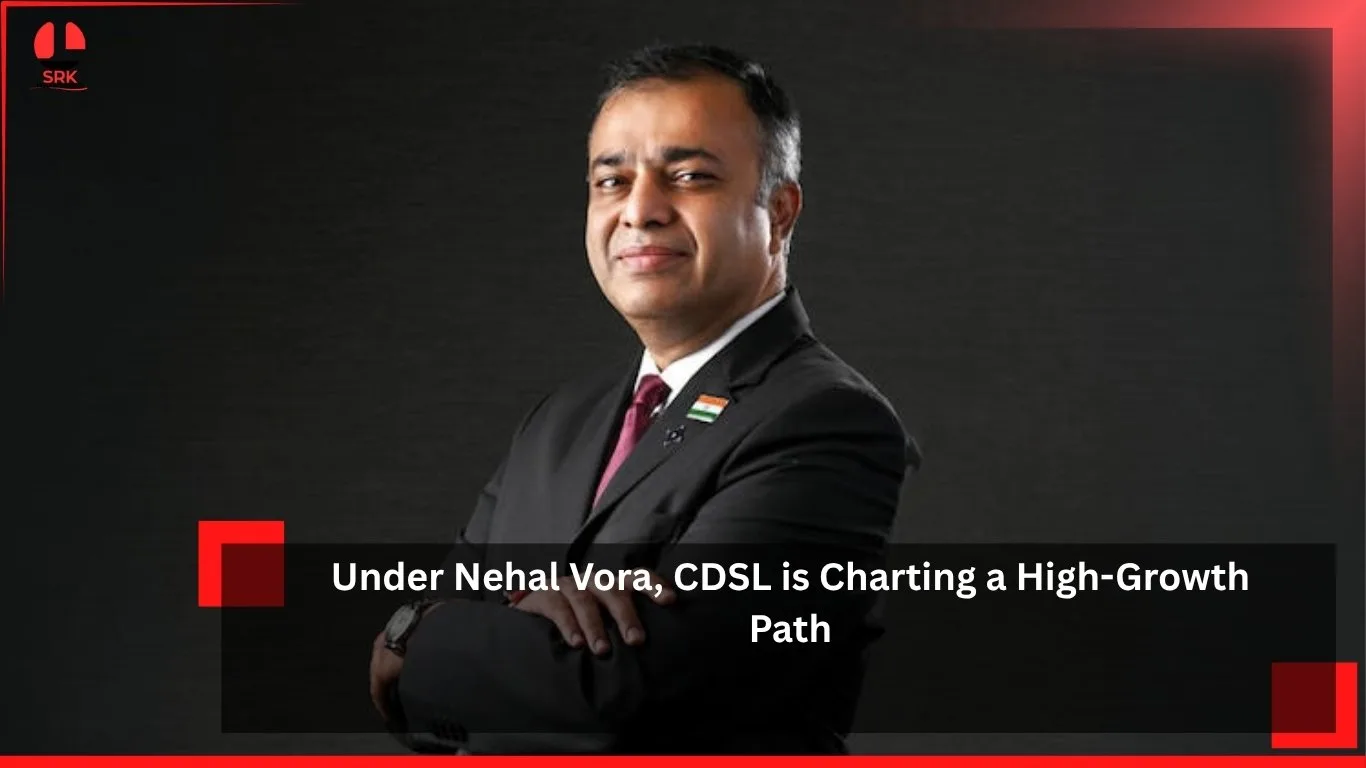
Central Depository Services (India) Limited (CDSL), one of the country’s leading securities depositories, is witnessing a remarkable transformation under the leadership of its Managing Director and CEO, Nehal Vora. With a focus on innovation, digital expansion, and investor-centric services, CDSL is charting a high-growth path that aligns with India’s rapidly evolving capital markets.
Background: CDSL’s Role in Indian Markets
CDSL plays a critical role in India’s financial ecosystem by providing depository services for securities. It enables investors to hold shares, bonds, and other instruments in electronic form, ensuring transparency, efficiency, and security. Alongside NSDL, CDSL has been instrumental in digitizing India’s securities market.
Nehal Vora’s Leadership Vision
Nehal Vora, with extensive experience in regulatory and market operations, has steered CDSL toward a future defined by:
- Digital innovation: Expanding online services for investors.
- Market inclusivity: Bringing more retail investors into the fold.
- Operational efficiency: Streamlining processes for brokers and intermediaries.
- Global competitiveness: Positioning CDSL as a benchmark in depository services.
Key Growth Drivers
1. Rise in Retail Participation
India has seen a surge in retail investors, particularly post-pandemic. CDSL has capitalized on this trend by simplifying account opening and enhancing user-friendly platforms.
2. Technology Integration
From e-voting to e-locker services, CDSL has embraced digital tools to improve accessibility and security.
3. Regulatory Alignment
Close collaboration with SEBI ensures compliance and strengthens investor confidence.
4. Expansion of Services
Beyond equities, CDSL now offers services for mutual funds, bonds, and insurance policies, diversifying its portfolio.
Timeline of CDSL’s Growth Under Nehal Vora
| Year | Development | Impact |
|---|---|---|
| 2019 | Nehal Vora appointed MD & CEO | Strategic leadership begins |
| 2020 | Surge in retail investors | Rapid increase in demat accounts |
| 2022 | Digital services expansion | Enhanced investor convenience |
| 2024 | Record demat account openings | Market penetration deepens |
| 2026 | Focus on innovation & growth | CDSL charts high-growth path |
Comparative Analysis: CDSL vs NSDL
| Factor | CDSL | NSDL |
|---|---|---|
| Retail Investor Base | Larger, rapidly growing | Strong institutional presence |
| Digital Innovation | Aggressive expansion | Steady adoption |
| Market Share | Increasing steadily | Established dominance |
| Leadership Approach | Investor-centric, inclusive | Institutional-focused |
Investor Confidence and Market Impact
CDSL’s growth trajectory has boosted investor confidence in India’s capital markets. The ease of opening demat accounts, coupled with secure digital services, has encouraged millions of first-time investors. This democratization of investing is reshaping India’s financial landscape.
Challenges Ahead
Despite its success, CDSL faces challenges:
- Cybersecurity risks: Growing reliance on digital platforms requires robust safeguards.
- Competition: NSDL and emerging fintech players remain strong rivals.
- Regulatory changes: Adapting swiftly to evolving compliance norms.
Future Outlook
Under Nehal Vora’s leadership, CDSL is expected to:
- Expand into new financial instruments.
- Strengthen partnerships with fintech firms.
- Enhance investor education initiatives.
- Continue leveraging technology for efficiency and transparency.
Conclusion
CDSL’s journey under Nehal Vora reflects a blend of visionary leadership, technological innovation, and investor-centric strategies. As India’s capital markets expand, CDSL is poised to play a pivotal role in shaping the future of securities depositories. Its high-growth path not only strengthens the financial ecosystem but also empowers millions of investors across the country.
Disclaimer
This article is based on reported corporate developments and independent financial analysis. It does not confirm or deny specific internal strategies or financial results. Readers should treat the content as interpretative reporting rather than definitive corporate documentation.