


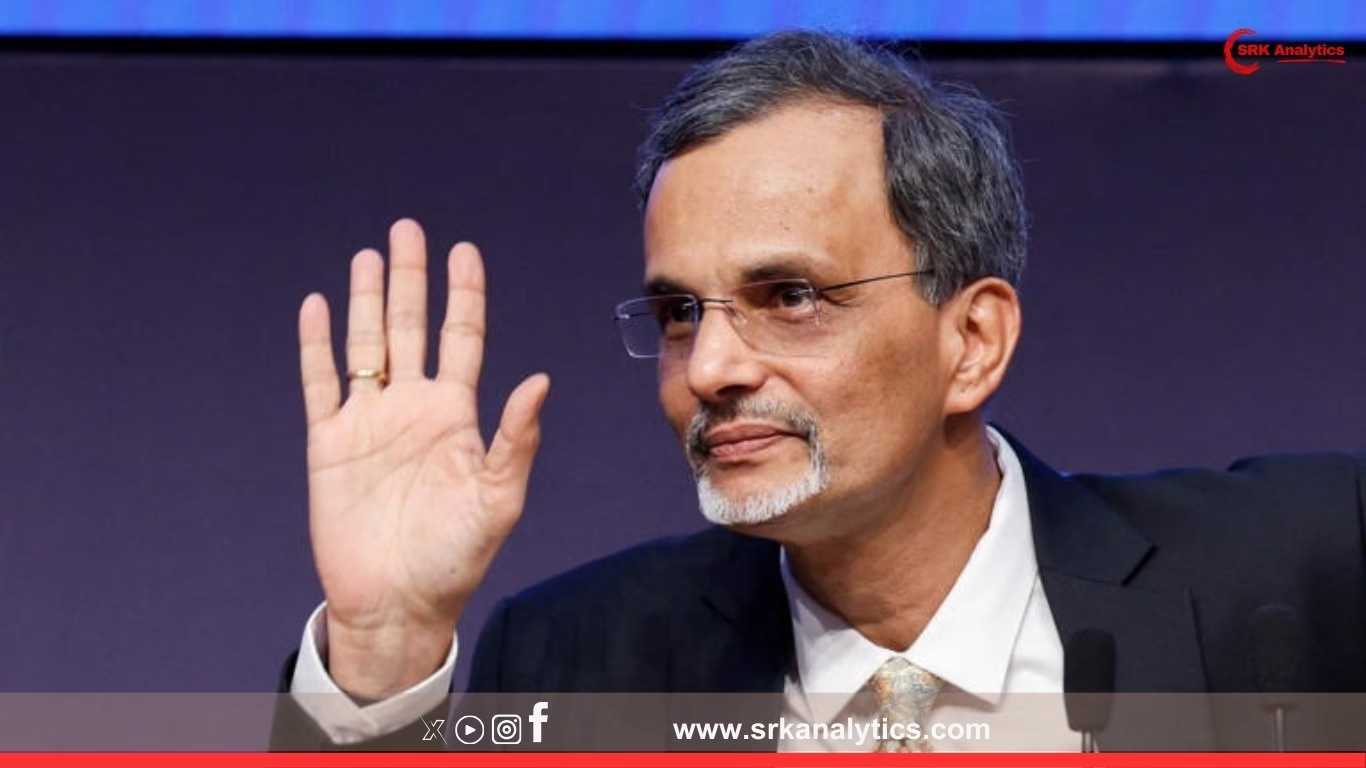
Chief Economic Adviser (CEA) V Anantha Nageswaran has downplayed fears of widespread job losses stemming from the recent 50% tariff hike imposed by the United States on Indian exports, stating that the impact will be “largely confined to export-oriented units” and is unlikely to be significant. However, he cautioned that the upcoming quarters could see ripple effects across the external sector, potentially affecting domestic production and capital formation.
Speaking to ANI on August 30, 2025, Nageswaran emphasized that India’s robust domestic demand, aided by a good monsoon and strong rural consumption, will help cushion the blow. He also pointed to several “silver linings” in the economy, including policy reforms, tax cuts, and employment-linked incentives, which are expected to support growth despite external headwinds.
🧭 Key Highlights from CEA’s Statement
| Theme | Summary Statement | Implication |
|---|---|---|
| Job Losses | “Unlikely to be significant” | Limited to export-heavy sectors |
| Domestic Demand | “Strong rural consumption and monsoon support” | Offsets external weakness |
| Export Spillover | “May affect production and capital formation” | Risk to manufacturing and investment |
| Policy Support | “Tax cuts, GST reforms, employment incentives” | Structural resilience |
| Global Diversification | “Firms may explore alternative markets” | Long-term mitigation strategy |
Nageswaran’s remarks come amid growing concern over the impact of Trump’s tariffs, which took effect on August 27, 2025, and apply to a wide range of Indian goods including textiles, gems, shrimp, and leather.
📊 Sectoral Exposure to US Tariffs
| Sector | Export Value to US ($ Billion) | Tariff Impact (%) | Job Risk Level |
|---|---|---|---|
| Textiles & Apparel | 10.8 | 50% | High |
| Gems & Jewellery | 10.0 | 50% | High |
| Shrimp & Seafood | 2.4 | 50% | Moderate |
| Leather Goods | 1.6 | 50% | Moderate |
| Carpets & Handicrafts | 2.8 | 50% | Moderate |
| Pharmaceuticals | 6.5 | Exempt | Low |
| Electronics & Machinery | 4.7 | Exempt | Low |
According to the Global Trade Research Initiative (GTRI), nearly 66% of India’s $86.5 billion exports to the US will now face the full 50% tariff, potentially reducing competitiveness and triggering production halts.
🔍 CEA’s Economic Outlook and Growth Projections
Despite the tariff shock, Nageswaran reaffirmed India’s growth trajectory, citing the 7.8% GDP expansion in Q1 FY2025–26 as evidence of economic resilience. He noted that manufacturing and services led the charge, supported by a favorable base effect and easing inflation.
| Indicator | Q1 FY2025–26 Value | Commentary |
|---|---|---|
| GDP Growth Rate | 7.8% | Highest in five quarters |
| Manufacturing Growth | 7.7% | Strong rebound |
| Services Growth | 9.3% | Driven by financial and government services |
| Government Consumption | 7.5% | Boosted by front-loaded spending |
| Inflation (GDP Deflator) | Eased | Supported real growth |
The CEA projected India’s full-year growth to remain in the 6.3–6.8% range, barring any major external shocks.
📉 Risks and Spillover Effects
While job losses may be limited, Nageswaran warned of secondary and tertiary effects that could impact the broader economy.
| Risk Factor | Potential Impact | Mitigation Strategy |
|---|---|---|
| Export Slowdown | Reduced production, lower capex | Explore new markets, diversify product mix |
| Liquidity Crunch | Delay in payments, working capital stress | Credit support, trade finance reforms |
| Investment Sentiment | Cautious outlook among manufacturers | Incentives for domestic expansion |
| Employment Retention | Uncertainty in export units | Retain workers if tariffs prove temporary |
He also noted that some firms may take a medium-to-long-term view and choose to retain workers, anticipating that tariff-related uncertainties may not last.
🔥 Industry Reactions and Policy Recommendations
| Stakeholder | Reaction Summary | Suggested Action |
|---|---|---|
| FIEO (Exporters’ Body) | “Tariffs hurt competitiveness” | Relaunch MEIS or similar support scheme |
| Commerce Ministry | “Exploring long-term solutions” | No subsidies, focus on sustainability |
| Finance Ministry | “Reviewing relief measures” | Trade facilitation, logistics optimization |
| Industry Leaders | “Need to absorb tariff shock” | Share burden between govt and exporters |
Exporters have urged the government to consider a revival of the Merchandise Exports from India Scheme (MEIS), which was discontinued due to WTO compliance issues.
🧠 Expert Opinions on Tariff Impact
| Expert Name | Designation | Comment |
|---|---|---|
| Dr. Rakesh Sinha | Trade Economist | “Tariffs will test India’s export resilience.” |
| Prof. Meera Iyer | Policy Analyst | “Job losses may be muted, but growth could slow.” |
| Manish Gupta | Crisil Ratings | “Profitability of exporters may contract 300–500 bps” |
Experts agree that while the immediate job impact may be contained, the broader economic implications require close monitoring.
📌 Conclusion
Chief Economic Adviser V Anantha Nageswaran’s assessment of the Trump tariffs offers a balanced perspective—while job losses are expected to be minimal and confined to export-heavy sectors, the broader economy may face spillover risks in production, investment, and external demand.
India’s strong domestic fundamentals, policy support, and diversification efforts provide a cushion against external shocks. However, sustained vigilance and strategic recalibration will be essential to navigate the evolving trade landscape.
—
Disclaimer: This article is based on publicly available news reports and official statements as of August 31, 2025. It is intended for informational purposes only and does not constitute financial, economic, or policy advice.