



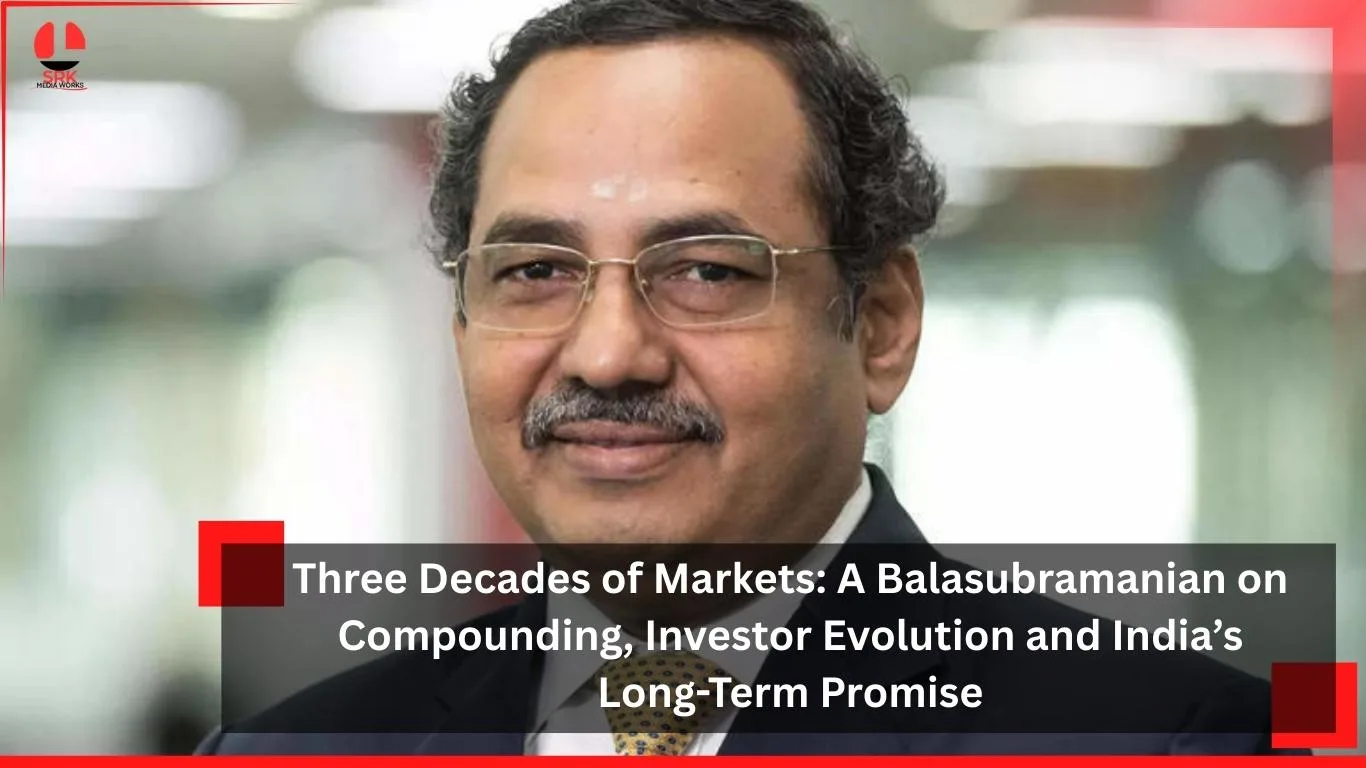
A Balasubramanian, one of India’s most respected voices in the mutual fund industry, has reflected on his three-decade journey in financial markets, sharing insights on the power of compounding, the evolution of Indian investors, and the country’s long-term economic promise. His perspective highlights how India’s capital markets have matured, how investor behavior has transformed, and why disciplined investing remains the cornerstone of wealth creation.
The Journey of Three Decades
Balasubramanian’s career spans a period when India’s financial markets transitioned from being nascent to becoming globally significant. From the early 1990s liberalization era to the present day, he has witnessed the rise of mutual funds, the democratization of equity investing, and the increasing participation of retail investors.
Key Milestones:
- 1990s: Liberalization opened doors for capital markets.
- 2000s: Rise of mutual funds as a mainstream investment vehicle.
- 2010s: Surge in retail participation and SIP culture.
- 2020s: Digital platforms revolutionizing access to investments.
The Power of Compounding
Balasubramanian emphasized that compounding remains the most powerful tool for wealth creation. He explained that consistent investing, even in small amounts, can lead to exponential growth over time.
Example of Compounding:
- Investing ₹10,000 monthly for 20 years at 12% annual returns can grow to over ₹1 crore.
- The longer the investment horizon, the greater the impact of compounding.
Comparative Analysis of Investor Evolution
| Decade | Investor Behavior | Market Participation | Key Trend |
|---|---|---|---|
| 1990s | Limited awareness | Low retail presence | Focus on fixed deposits |
| 2000s | Growing awareness | Rise of mutual funds | Equity exposure increases |
| 2010s | SIP culture emerges | Strong retail inflows | Long-term investing mindset |
| 2020s | Digital-first investors | Widespread participation | Tech-driven financial inclusion |
This comparison shows how Indian investors have evolved from conservative savers to confident participants in equity markets.
Pivot Analysis: Impact of Investor Evolution
| Stakeholder | Immediate Impact | Long-Term Outcome |
|---|---|---|
| Retail Investors | Greater access to markets | Wealth creation through discipline |
| Mutual Funds | Rising inflows | Industry expansion and innovation |
| Financial Advisors | Increased demand | Professionalization of advisory services |
| Markets | Higher liquidity | Stability and resilience |
| Economy | Stronger capital formation | Sustained growth trajectory |
India’s Long-Term Promise
Balasubramanian highlighted India’s demographic advantage, growing middle class, and digital transformation as key drivers of long-term growth. He believes that disciplined investing in equities and mutual funds will allow investors to benefit from India’s economic expansion.
Growth Drivers:
- Demographics: Young population fueling consumption.
- Digitalization: Expanding access to financial products.
- Infrastructure: Government focus on capital expenditure.
- Global Positioning: India emerging as a preferred investment destination.
Economic and Social Dimensions
The rise of retail investors has not only transformed markets but also contributed to financial inclusion. Systematic Investment Plans (SIPs) have become household terms, enabling millions to participate in wealth creation.
Broader Impacts:
- Financial Literacy: Increased awareness among youth.
- Household Wealth: Shift from gold and real estate to equities.
- Capital Markets: Strengthened depth and resilience.
- National Growth: Retail savings channelized into productive investments.
Public Sentiment
Investors today are more confident, informed, and digitally empowered. Social media discussions around SIPs, ETFs, and stock markets reflect a cultural shift where investing is no longer seen as risky speculation but as a disciplined path to financial independence.
Historical Context
India’s capital markets have come a long way since the early 1990s. From limited participation and low transparency to robust regulation and global recognition, the journey reflects the country’s economic transformation. Balasubramanian’s career mirrors this evolution, making his insights particularly valuable.
Global Context
India’s investor evolution aligns with global trends where retail participation has grown significantly. Countries like the US and China have seen similar transitions, with technology playing a pivotal role in democratizing access.
Global Comparisons of Investor Evolution
| Country | Investor Evolution | Key Trend |
|---|---|---|
| USA | Rise of 401(k) plans | Retirement-focused investing |
| China | Surge in retail trading | Tech-driven participation |
| India | SIP culture and digital access | Long-term disciplined investing |
Conclusion
A Balasubramanian’s reflections on compounding, investor evolution, and India’s long-term promise underscore the importance of patience, discipline, and vision in investing. His journey through three decades of markets highlights how India has matured into a resilient financial ecosystem, offering immense opportunities for investors who stay committed to the power of compounding and the country’s growth story.
Disclaimer
This article is based on publicly available reports and expert analysis. It is intended for informational purposes only and does not represent official financial advice. Readers should consult certified financial advisors before making investment decisions, as market performance is subject to risks and uncertainties.